Austria
Updated October 19, 2026
Austria, a landlocked country at the centre of the Alps, is known for its mountains, lakes, imperial palaces, classical music and coffee house culture. It has about 9.2 million people, and the Alps cover about two-thirds of its territory, making it one of Europe's leading destinations for skiing in …



Must-See Places in Austria

Schönbrunn Palace
Schönbrunn Palace, the summer residence of the Habsburgs in Vienna and a UNESCO site, has about 1,441 rooms, of which about 40 can be visited, including the rooms of Maria Theresa, Franz Joseph and Sisi. The Baroque gardens, the Gloriette and the world's oldest zoo are highlights. Tickets cost about €30–45. Book a timed ticket online, and visit the gardens for free.

Hohensalzburg Fortress
Hohensalzburg Fortress, above Salzburg's old town, begun in 1077, is one of the largest fully preserved medieval castles in Europe, with state rooms, museums and views over the city and the Alps. A funicular climbs to it from the old town. Tickets cost about €14–19, including the funicular. Visit early, and stay for a concert in the evening.

Hallstatt Village
Hallstatt, a village on a lake in the Salzkammergut, is one of the most photographed places in the world, with pastel houses, a church spire and mountains reflected in the water, and a salt mine about 7,000 years old. It is part of a UNESCO site. Visit early in the morning or in the evening to avoid crowds, and respect residents.

Golden Roof
The Golden Roof, Goldenes Dachl, in Innsbruck's old town, is a balcony covered with about 2,657 gilded copper tiles, built in about 1500 for Emperor Maximilian I to watch tournaments and festivals in the square below. A small museum inside tells his story. Entry costs about €6. Combine it with the Hofburg and the cable car to the Nordkette.

Melk Abbey
Melk Abbey, a Benedictine monastery on a rock above the Danube in the Wachau Valley, rebuilt in Baroque style between 1702 and 1736, is one of the most beautiful Baroque buildings in Europe, with a golden church and a magnificent library. It is part of a UNESCO site. Tickets cost about €15–17. Combine it with a Danube cruise to Krems.

Graz Old Town and Schlossberg
Graz, Austria's second-largest city, has a UNESCO-listed old town with Renaissance courtyards, red roofs and the Clock Tower, Uhrturm, on the Schlossberg hill, reached by a funicular, a glass lift or steps. The modern Kunsthaus, nicknamed the Friendly Alien, contrasts with the historic centre. Most sights are free. Climb the Schlossberg at sunset.

Grossglockner High Alpine Road
The Grossglockner High Alpine Road, about 48 km long, opened in 1935, crosses the Alps between Salzburg and Carinthia, reaching about 2,504 m, with views of Austria's highest mountain, the Grossglockner, at 3,798 m, and the Pasterze glacier. It is open from about May to October. The toll costs about €45 per car. It is easily reached from Zell am See.

Hahnenkamm Streif
The Streif, on the Hahnenkamm mountain above Kitzbühel, is one of the most famous and dangerous ski downhill courses in the world, hosting the Hahnenkamm Race each January since 1931. In summer, visitors can hike the course and take the Hahnenkamm cable car for views of the Kitzbühel Alps. The cable car costs about €30–40 return.
Must-Visit Attractions in Austria
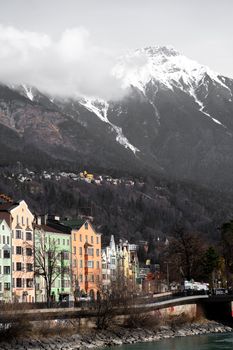
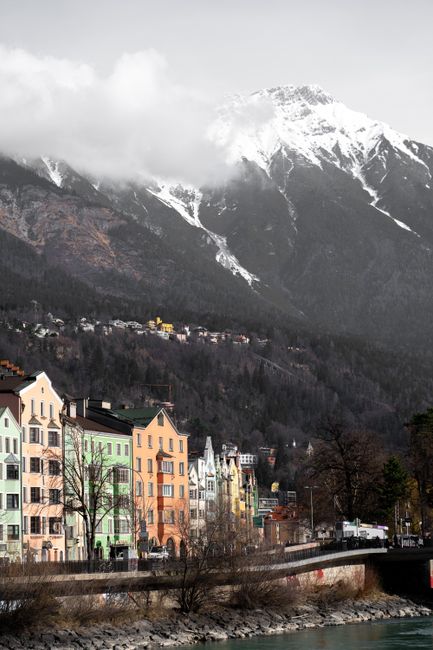
Innsbruck, the capital of Tyrol, in the Inn Valley surrounded by the A
It hosted the Winter Olympics in 1964 and 1976. Its medieval old town has the Golden Roof, built for Emperor Maximilian I, the Hofburg, the imperial palace, and colourful houses along the Inn River. The Hofkirche has the tomb of Maximilian I with 28 bronze statues. The Bergisel ski jump, designed by Zaha Hadid, offers views over the city. Swarovski Crystal Worlds is nearby in Wattens. Insider tip: buy the Innsbruck Card for the cable cars, museums and public transport.
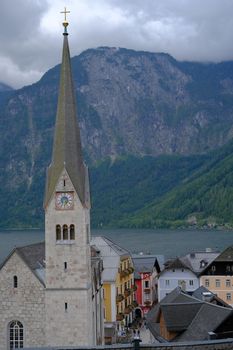
Hallstatt, a village of about 750 people on the shore of the Hallstätt
It is part of the Hallstatt-Dachstein/Salzkammergut UNESCO site. The Hallstatt salt mine, about 7,000 years old, is one of the oldest in the world, and visitors can ride a miners' slide inside. The Skywalk viewing platform offers views over the lake. The Beinhaus, bone house, displays about 600 decorated skulls. The village has introduced measures to limit overtourism. Ferries cross the lake from the railway station. Insider tip: arrive before 9:00 or stay overnight, as day-trip crowds can be very large.

Graz, Austria's second-largest city, the capital of Styria, has one of
The Schlossberg hill, with the Clock Tower, Uhrturm, the city's symbol, offers views over the old town, and Schloss Eggenberg, a Baroque palace, is also listed by UNESCO. Modern architecture includes the Kunsthaus, nicknamed the Friendly Alien, and the Murinsel, an artificial island in the Mur River. Graz is a university city with a young atmosphere, and it was named a UNESCO City of Design. Styria is known for pumpkin seed oil, wine and food, and Graz is called Austria's culinary capital. Insider tip: try pumpkin seed oil on salads and ice cream at the Kaiser-Josef-Markt.
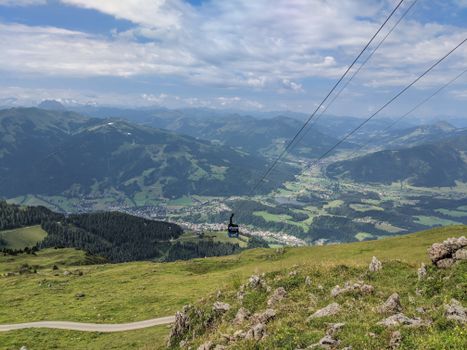
Kitzbühel, in Tyrol, is one of the world's most famous ski resorts, wi
It is home to the Hahnenkamm Race on the Streif, held each January since 1931, one of the most spectacular and dangerous downhill races in the world. In summer, the area offers hiking, mountain biking and golf, and the Schwarzsee lake is popular for swimming. The Kitzbüheler Horn and the Hahnenkamm cable cars offer views. The town has attracted royalty and celebrities since the early 20th century. Insider tip: watch the Hahnenkamm Race in January, or hike the Streif in summer to see how steep it is.

Bregenz, the capital of Vorarlberg, Austria's westernmost state, lies
It is famous for the Bregenz Festival, held each July and August since 1946, with operas performed on the Seebühne, the world's largest floating stage, with spectacular sets on the lake. The Kunsthaus Bregenz, designed by Peter Zumthor, is a leading contemporary art museum. The Pfänder cable car climbs to about 1,064 m, with views over the lake and the Alps of three countries. The upper town, Oberstadt, has a medieval tower and old houses. Boats connect Bregenz with Lindau in Germany and other lake towns. Insider tip: book Bregenz Festival tickets months in advance, and take a lake cruise to Lindau.
Unique Experiences in Austria
Ski in the Austrian Alps
Ski or snowboard in world-famous resorts, such as St Anton, Kitzbühel, Ischgl, Sölden and Zell am See-Kaprun, with excellent slopes, ski schools and lively après-ski.
Attend a Concert in Vienna
Hear classical music in the city of Mozart, Beethoven and Strauss, at the Vienna State Opera, the Musikverein or at concerts of the Vienna Boys' Choir.
Relax in a Viennese Coffee House
Spend an afternoon in a traditional Viennese coffee house, such as Café Central, Café Sperl or Café Hawelka, reading newspapers over a Melange and a slice of cake.
Hike the Alps and Stay in a Mountain Hut
Hike through Alpine meadows, past lakes and glaciers, and stay overnight in a mountain hut, Hütte, enjoying hearty food and spectacular views.
Cruise the Wachau Valley
Sail along the Danube through the Wachau Valley, a UNESCO site, between Melk and Krems, past vineyards, apricot orchards, castles and medieval villages.
Travel Tips for Austria
Use Austria's Excellent Trains
Austria's railways, run by ÖBB and Westbahn, are fast, punctual and scenic, connecting Vienna, Salzburg, Innsbruck, Graz…
Respect Quiet Sundays and Shop Hours
Most shops in Austria are closed on Sundays and public holidays, except at railway stations and airports, so plan shoppi…
Get a Motorway Vignette if Driving
To drive on Austrian motorways and expressways, you must buy a toll sticker, the Vignette, or a digital vignette online,…
Book Popular Sights and Concerts in Advance
Book timed tickets for popular sights, such as Schönbrunn Palace, the Spanish Riding School and the Imperial Treasury, a…
Respect Mountain Safety Rules
When hiking or skiing in the Alps, check weather forecasts and avalanche warnings, stay on marked trails and slopes, car…
Learn Basic Austrian Etiquette
Austrians value politeness, punctuality and formality. Greet people with Grüß Gott or Guten Tag, use titles, such as Her…
Must-Try Local Dishes

Wiener Schnitzel
Austria's national dish: a thin veal cutlet, coated in breadcrumbs and fried in butter or lard until golden and puffy, served with lemon, potato salad or parsley potatoes and cranberry jam. By law, Wiener Schnitzel must be made with veal; pork versions are called Schnitzel Wiener Art. Figlmüller in Vienna is famous for huge schnitzels. A schnitzel costs about €18–28.
Sachertorte
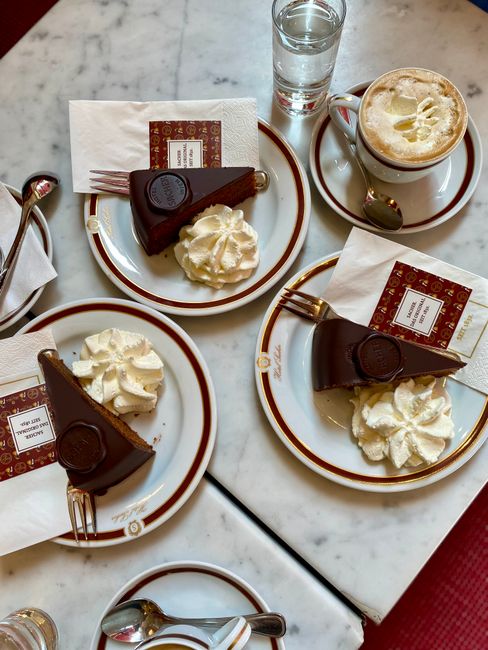
A dense chocolate cake with a thin layer of apricot jam, covered in dark chocolate icing, created in 1832 by Franz Sacher, a 16-year-old apprentice, for Prince Metternich. It is served with unsweetened whipped cream. The Hotel Sacher and Café Demel in Vienna fought a long legal battle over the original recipe. A slice costs about €7–9 at the Hotel Sacher.

Apfelstrudel
Thin, stretched pastry rolled around a filling of apples, raisins, cinnamon, sugar and breadcrumbs, baked until golden and served warm with vanilla sauce, whipped cream or ice cream. The pastry should be so thin that you can read a newspaper through it. Cafés across Austria serve it. A slice costs about €5–8. The Schönbrunn Palace bakery shows how it is made.
Tafelspitz
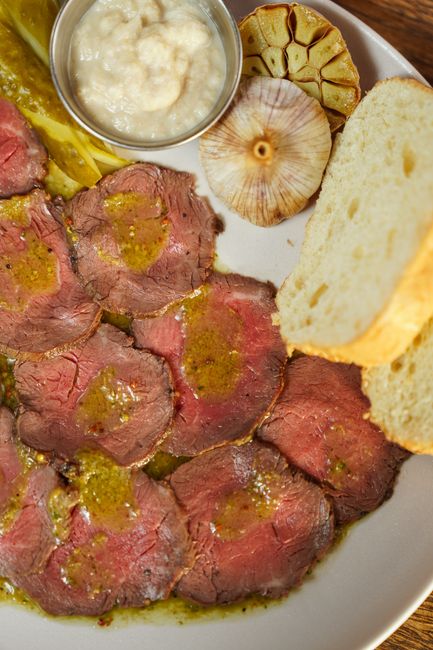
Boiled beef, usually the cut from the top of the rump, simmered in broth with root vegetables and spices, served with apple-horseradish sauce, chive sauce, roasted potatoes and creamed spinach. The broth is served first as a soup. It was a favourite of Emperor Franz Joseph. Plachutta in Vienna is famous for it. A portion costs about €25–35.

Käsespätzle
Soft egg noodles, Spätzle, mixed with melted mountain cheese, such as Vorarlberger Bergkäse, and topped with crispy fried onions, a hearty dish from western Austria, especially Vorarlberg and Tyrol. It is served in mountain huts, often with a green salad. A portion costs about €12–16, perfect after skiing or hiking.

Kaiserschmarrn
A fluffy, caramelised shredded pancake, often with raisins, dusted with icing sugar and served with plum compote, Zwetschkenröster, or apple sauce. Its name means the emperor's mess, and legend links it to Emperor Franz Joseph. It is a favourite in mountain huts and cafés. A portion costs about €10–15, often enough to share.

Würstel and Käsekrainer
Sausage stands, Würstelstände, are part of Vienna's street life, serving sausages such as Käsekrainer, a smoked pork sausage filled with melted cheese, Bosna, a spicy sausage in bread with onions and curry, and Frankfurter, called Wiener elsewhere. The Bitzinger stand near the State Opera is famous. A sausage costs about €4–7.

Austrian Wine and Coffee
Austria produces excellent wines, especially white Grüner Veltliner and Riesling from the Wachau and red Blaufränkisch from Burgenland, served in Heuriger, wine taverns. Viennese coffee house culture, a UNESCO Intangible Heritage, offers drinks such as the Melange, similar to cappuccino, and Einspänner, with whipped cream. A glass of wine costs about €4–7, and a coffee €4–6.
History
Celts, Romans and the Babenbergs
The Alpine region of today's Austria has been inhabited since the Stone Age. In 1991 hikers found Ötzi, a man who lived about 5,300 years ago, preserved in a glacier on the border with Italy. In the Iron Age, the Hallstatt culture, named after a salt-mining village in the Salzkammergut, flourished from about 800 to 450 BC, and Celtic tribes later formed the kingdom of Noricum.
Roman frontier
From 15 BC, the Romans controlled the area, and the Danube became the border of the empire. Roman towns, such as Vindobona, today's Vienna, Juvavum, today's Salzburg, and Carnuntum, a military and civilian centre, were founded.
The birth of Austria
- In 976 the Babenberg family was granted the Eastern March, Ostarrichi, first mentioned by that name in 996.
- The Babenbergs made Vienna their residence in the 12th century.
- In 1156 Austria became a duchy.
Visit the Roman ruins of Carnuntum, east of Vienna, with reconstructed Roman houses and baths, to see Austria's Roman past.
Climate & Best Time to Visit
Spring
2–20°C
March to May brings mild 10–20°C days in the lowlands, blossoming orchards in the Wachau and green meadows, while skiing…
Summer
12–28°C
June to August is warm, with 22–28°C days in the lowlands and cooler temperatures in the mountains, ideal for hiking, sw…
Autumn
2–20°C
September to November brings 8–20°C days, golden forests, the wine harvest in the Wachau and Styria, with Heuriger wine …
Winter
-6–5°C
December to February is cold, with -2 to 5°C days in the lowlands and heavy snow in the Alps, ideal for skiing in resort…
Fascinating Fun Facts
The home of the croissant's ancestor
According to a popular legend, the croissant was inspired by the Viennese kipferl, a crescent-shaped pastry said to have…
The world's oldest zoo
The Tiergarten Schönbrunn, in the grounds of Schönbrunn Palace in Vienna, founded in 1752 as an imperial menagerie by Em…
The Sound of Music was set here
The Sound of Music, the 1965 film starring Julie Andrews, is based on the true story of the von Trapp family, who lived …
Thousands of years of salt mining
Salt has been mined in the mountains of the Salzkammergut, meaning salt estate, for about 7,000 years, making the Hallst…
A country of classical music
Austria was home to many of the world's greatest composers, including Joseph Haydn, Wolfgang Amadeus Mozart, born in Sal…
More than 450 balls a year
Vienna hosts more than 450 balls each year, especially during the carnival season, Fasching, from January to February, a…
Traveler Reviews (0 reviews)
Sign in to leave a review and share your experience.
Sign InNo reviews yet. Be the first to share your experience!