Innsbruck
Updated October 19, 2026
Also known as: Capital of the Alps, Oeniponte, INN
Main Landmarks in Innsbruck

Golden Roof
The Golden Roof, Goldenes Dachl, in the centre of Innsbruck's old town, is a balcony built around 1500 for Emperor Maximilian I, covered with 2,657 fire-gilded copper tiles, from which the emperor watched events in the square below. Inside, the Golden Roof Museum tells the story of Maximilian and his time, with an audio guide. The surrounding Herzog-Friedrich-Strasse is lined with Gothic houses, arcades, shops and cafés. Entry to the museum costs about €6. Visit in the morning, and enjoy the Christmas market in the square in winter.
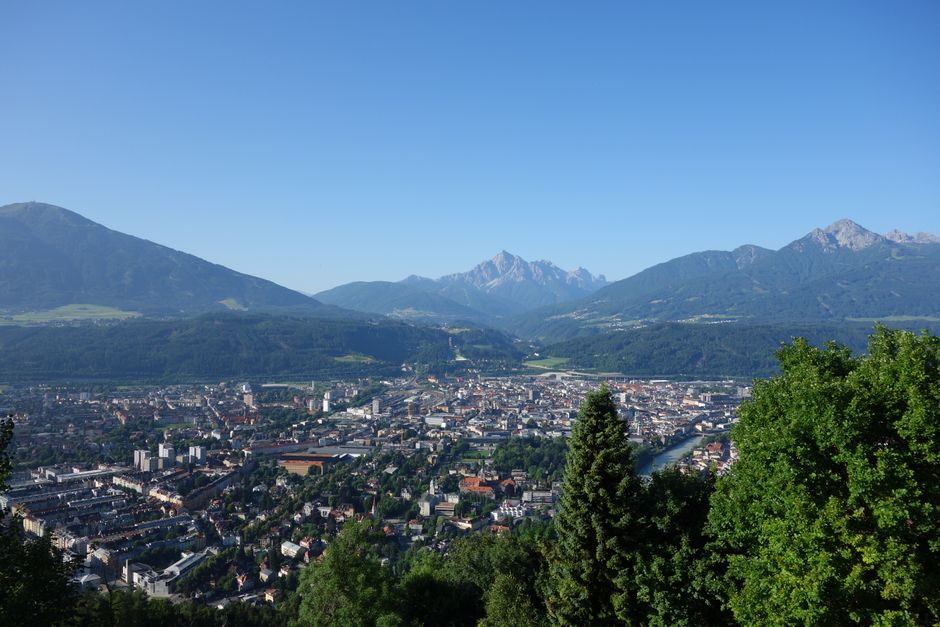
Nordkette Cable Cars
The Nordkette cable cars take visitors from the city centre to the Hafelekar, at about 2,256 m, in about 30 minutes, via the Hungerburg funicular, with stations designed by Zaha Hadid, and two cable cars to the Seegrube and the Hafelekar. At the top, visitors can enjoy panoramic views, hike, have lunch at the Seegrube restaurant, or ski and snowboard in winter. The Alpine Zoo is at the Hungerburg stop. A return ticket to the Hafelekar costs about €45–50, included in the Innsbruck Card. Check the weather before going, and bring warm clothing.
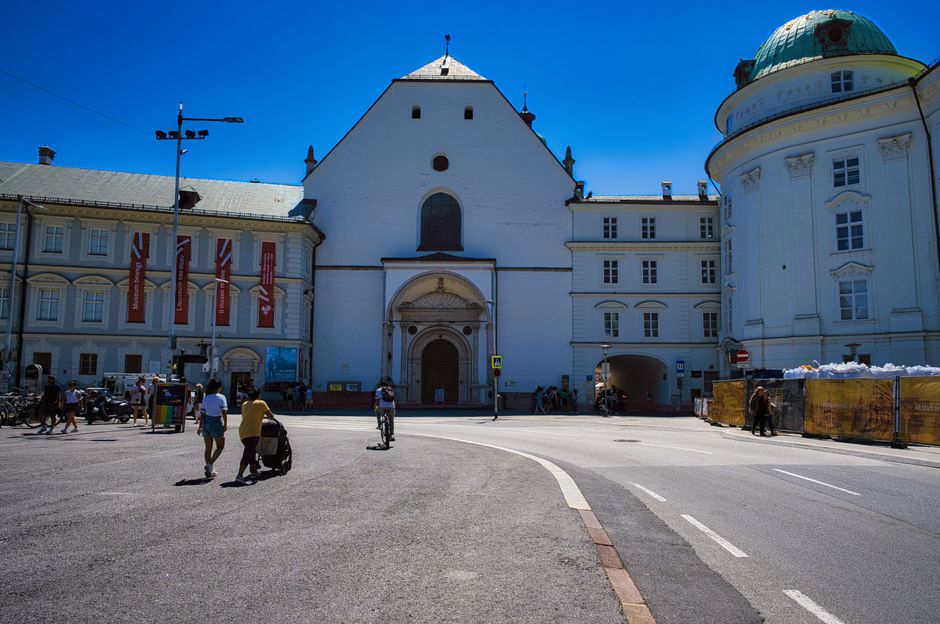
Hofburg Imperial Palace
The Hofburg, the Imperial Palace of Innsbruck, built in the 15th century and remodelled in Baroque and Rococo style under Empress Maria Theresa in the 18th century, is one of Austria's three most important cultural buildings, along with the Hofburg and Schönbrunn in Vienna. Visitors can see the Giant's Hall, with ceiling frescoes and portraits of the Habsburgs, the imperial apartments of Maria Theresa and Sisi and the chapel. Tickets cost about €12–15. Allow about one hour. The Hofgarten, a park behind the palace, is free.

Hofkirche
The Hofkirche, the Court Church, built from 1553 to 1563, contains the cenotaph of Emperor Maximilian I, surrounded by 28 larger-than-life bronze statues of his ancestors, relatives and legendary heroes, such as King Arthur, one of the most important works of Renaissance sculpture in Europe. The church also has the Silver Chapel and the tomb of Andreas Hofer, the Tyrolean freedom fighter. Tickets cost about €8–10, with combined tickets for the Tyrolean Folk Art Museum next door. Allow about one hour.

Ambras Castle
Ambras Castle, on a hill about 3 km south-east of the centre, was rebuilt in the 16th century by Archduke Ferdinand II for his wife Philippine Welser, as a Renaissance palace. It houses one of the oldest museums in the world, the Chamber of Art and Curiosities, with armour, weapons, curiosities and portraits of unusual people, as well as the Spanish Hall, a magnificent Renaissance hall with a coffered ceiling. The castle is surrounded by a park with peacocks. Tickets cost about €16–18. Allow about two hours. Shuttle buses run from the centre.

Bergisel Ski Jump
The Bergisel ski jump, rebuilt in 2002 by Zaha Hadid on the hill where Andreas Hofer fought in 1809, is a modern tower with a curved jump, hosting the Four Hills Tournament each January. A funicular and lift take visitors to the panoramic platform and café at the top, about 50 m high, with views over Innsbruck and the mountains, and of the Olympic venues. Next to it, the Tirol Panorama museum displays a huge circular painting of the Battle of Bergisel. Tickets cost about €12–14. Visit on a clear day.
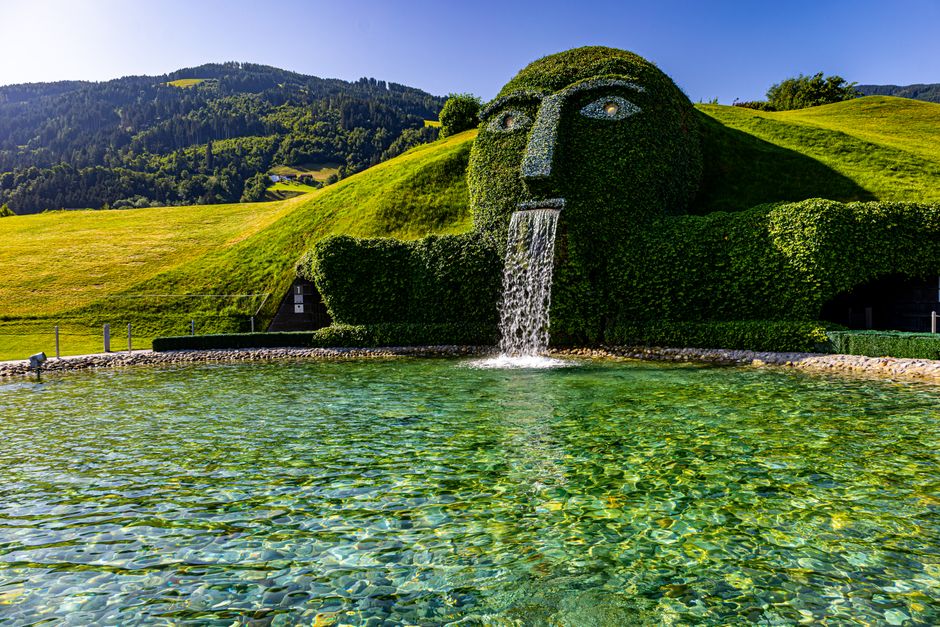
Swarovski Crystal Worlds
Swarovski Crystal Worlds, Kristallwelten, in Wattens, about 15 km east of Innsbruck, opened in 1995 for the company's centenary, is an attraction of art and crystal, with a giant grass-covered head spouting water, designed by artist André Heller, and Chambers of Wonder, rooms created by artists, such as Keith Haring and Yayoi Kusama, with crystal installations. The garden has a crystal cloud of about 800,000 crystals and a playground. Tickets cost about €25. Shuttle buses run from Innsbruck. Allow about two to three hours.
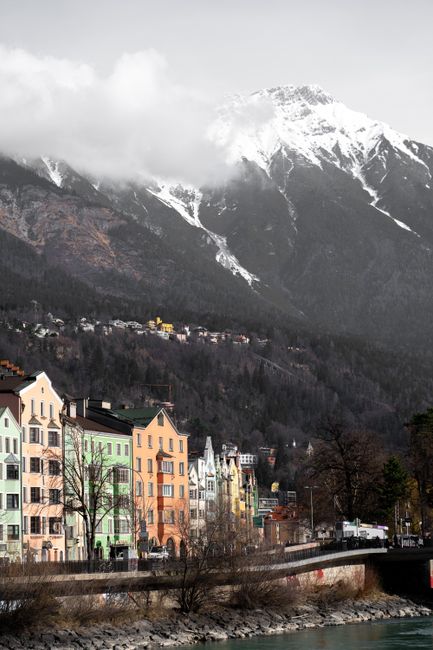
Old Town and Inn Riverbank
Innsbruck's old town, the Altstadt, is a compact medieval centre with Gothic houses, arcades, painted façades and narrow lanes, leading to the Inn River. Highlights include the City Tower, Stadtturm, with 133 steps to a viewing platform, the Helblinghaus, with Rococo stucco, and the Cathedral of St James, with Cranach's Madonna painting. Along the river, the colourful houses of Mariahilf, on the opposite bank, against the Nordkette mountains, form one of Innsbruck's best-known views. Entry is free, and the City Tower costs about €4–5.
History
Innsbruck, whose name means bridge over the Inn, grew around a bridge across the Inn River, on an important trade route between Germany and Italy over the Brenner Pass. The Romans had a military station called Veldidena nearby, in today's Wilten district. In 1180 the Counts of Andechs founded a market town on the north bank, and in 1239 Innsbruck received town rights. In 1363 Tyrol passed to the Habsburgs, and in 1420 Innsbruck became the residence of the Tyrolean line of the family. Its golden age came under Emperor Maximilian I, who ruled from 1493 to 1519 and made Innsbruck an important centre of the Holy Roman Empire, building the Golden Roof and planning his grand tomb in the Hofkirche, with 28 bronze statues. Archduke Ferdinand II rebuilt Ambras Castle in the 16th century, and Empress Maria Theresa remodelled the Hofburg in the 18th century. In 1809 the Tyrolean freedom fighter Andreas Hofer led an uprising against Bavarian and French rule and won battles at the Bergisel, before being executed in 1810. The railway over the Brenner Pass opened in 1867. Innsbruck hosted the Winter Olympics in 1964 and 1976 and the first Winter Youth Olympics in 2012. Today about 130,000 people live in the city.
Culture
Innsbruck, the capital of Tyrol, is often called the capital of the Alps, as it combines a historic city with mountains rising directly above its rooftops, and residents can ski, hike or climb within minutes of the centre. Tyrolean culture is proud and traditional, with brass bands, traditional costumes, Tracht, folk music, yodelling and Schuhplattler dances, performed at evening Tyrolean shows and village festivals. Catholic traditions are strong, with processions and festivals, such as Corpus Christi. Innsbruck has a young population, thanks to its university, founded in 1669, and it has a lively atmosphere of cafés, bars and outdoor sports. The city has a long Olympic history, and the Bergisel ski jump, rebuilt by Zaha Hadid in 2002, hosts the Four Hills Tournament each January. Its imperial heritage, from Emperor Maximilian I and Maria Theresa, is visible in the Golden Roof, the Hofburg and the Hofkirche. Tyrolean food is hearty, with dishes such as Tiroler Gröstl, Speckknödel and Kaiserschmarrn, and Tyrolean Speck, cured ham. The Swarovski crystal company was founded in nearby Wattens in 1895. Innsbruck's Christmas markets, especially in the old town under the Golden Roof, are among the most beautiful in Austria.
Climate
Spring
1–19°C
March to May brings 10–19°C days in the city, while skiing continues on the Nordkette and glaciers until April or May. M…
Summer
12–27°C
June to August is warm, with 22–27°C days in the city and cooler temperatures in the mountains, ideal for hiking, mounta…
Autumn
1–19°C
September to November brings 8–19°C days, golden larch forests in the mountains and the Almabtrieb, when cattle decorate…
Winter
-7–4°C
December to February is cold, with -2 to 4°C days and plenty of snow in the mountains, ideal for skiing in the nine ski …
Fun Facts
From city centre to 2,000 m in 30 minutes
The Nordkette cable cars, combining the Hungerburg funicular designed by Zaha Hadid with two cable cars, take visitors f…
Two Winter Olympics
Innsbruck hosted the Winter Olympic Games in 1964 and 1976, one of only three cities to host the Winter Olympics twice, …
A golden balcony for an emperor
The Golden Roof, Goldenes Dachl, was built around 1500 for Emperor Maximilian I to celebrate his marriage to Bianca Mari…
An emperor's tomb with bronze giants
The Hofkirche, the Court Church, was built in the 1550s to house the cenotaph of Emperor Maximilian I, surrounded by 28 …
The birthplace of Swarovski crystal
In 1895 Daniel Swarovski, a Bohemian glass cutter, founded his crystal company in Wattens, about 15 km east of Innsbruck…
A ski jump by a famous architect
The Bergisel ski jump, rebuilt in 2002 by the architect Zaha Hadid, is a striking tower about 50 m tall with a curved ju…
Local Cuisine in Innsbruck
Tiroler Gröstl
A hearty Tyrolean dish of fried potatoes, onions and pieces of pork or beef, seasoned with marjoram and caraway, topped with a fried egg, served with cabbage salad. It was originally a way to use leftovers. Traditional inns and mountain huts serve it. A portion costs about €12–16, perfect after skiing or hiking.

Speckknödel
Bread dumplings made with Tyrolean Speck, smoked ham, onions, parsley and eggs, served in clear beef broth or with sauerkraut and butter. They are a staple of Tyrolean cuisine, found in every traditional inn. A portion costs about €10–14. Variations include Kasknödel, with cheese, and Spinatknödel, with spinach. Ask locals for their favourite place to try it.

Tiroler Speck
Tyrolean bacon, a cured and lightly smoked ham, seasoned with garlic, juniper, bay leaves and pepper, and air-dried, with protected geographical status. It is served thinly sliced on a wooden board with bread, cheese and pickles, called a Brettljause. Farmers' markets and butchers sell it. A Brettljause costs about €12–18.
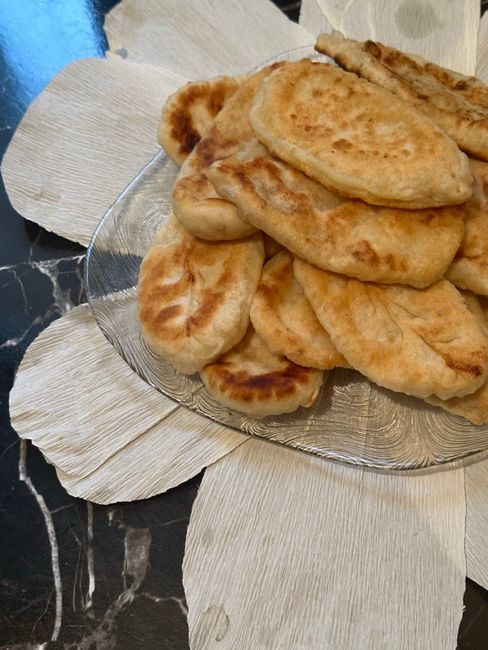
Kiachl
Deep-fried yeast dough pastries, crispy outside and soft inside, served sweet with cranberry jam and icing sugar or savoury with sauerkraut. They are a traditional snack at markets, especially Christmas markets and festivals. A Kiachl costs about €4–6, best eaten hot. Ask locals for their favourite place to try it.

Kaiserschmarrn
A fluffy, caramelised shredded pancake with raisins, dusted with icing sugar and served with plum compote or apple sauce, a favourite in mountain huts after skiing or hiking. It is often enough for two people. A portion costs about €10–15. Try it at the Seegrube on the Nordkette, with a view.

Tyrolean Schnapps and Beer
Tyrol is known for fruit schnapps, made from apricots, pears, plums and Zirbe, Swiss stone pine, offered as a digestif. Local breweries, such as Zillertal Bier, produce beers served in traditional inns. A schnapps costs about €3–5, and a beer about €4–6. Try a Zirbenschnaps for a local taste. Ask locals for their favourite place to try it.
Practical Travel Information
Transport & Accessibility
International Transport
Innsbruck Airport, Kranebitten (INN), about 4 km west of the city centre, has flights from European cities, especially in the ski season, with buses to the centre in about 20 minutes. Munich Airport is about 2 hours away by car or train. Innsbruck Hauptbahnhof has Railjet trains to Vienna in about 4 hours 15 minutes, Salzburg in about 2 hours, Munich in about 1.75 hours, Zurich in about 3.5 hours and trains over the Brenner Pass to Verona, Bologna and Venice. The Brenner Base Tunnel, under construction, will shorten journeys to Italy.
Local Transport
Innsbruck's old town and main sights are compact and walkable, about 10 minutes from the main station. Trams and buses, run by IVB, connect the centre with Bergisel, Ambras, the Hungerburg and suburbs, costing about €3 per ride, and day tickets are available. The Innsbruck Card includes public transport. The Hungerburg funicular and Nordkette cable cars start in the centre. In winter, free ski buses run to the ski areas with the Ski Plus City Pass. Bike-sharing and cycle paths along the Inn are popular. Taxis are available.
Safety & Health
Personal Safety
Innsbruck is a very safe city, with low crime rates. Pickpockets can operate in crowded places, such as the old town and the Christmas markets, so keep valuables secure. The main risks are related to the mountains: check weather forecasts and avalanche warnings, stay on marked trails and slopes, and never go off-piste without proper equipment and a guide. Weather can change quickly in the Alps, with thunderstorms in summer and snowstorms in winter. Make sure your insurance covers skiing and mountain rescue. In an emergency, call 112 or 140 for mountain rescue.
Medical Services
Innsbruck has excellent medical facilities, including the Innsbruck University Hospital, one of Austria's largest, with a 24-hour emergency department and specialists in sports and mountain injuries. EU citizens can use the European Health Insurance Card, while others need travel insurance, including coverage for skiing and mountain rescue, which can be very expensive. For non-urgent medical advice, call 1450. Pharmacies, marked with a red A, are common in the centre. Tap water is excellent and safe to drink. Protect yourself from the strong mountain sun.
Budget & Costs
Travel Costs
Innsbruck is moderately expensive, especially in the ski season. A hostel bed costs about €30–50, a mid-range hotel €100–180 and a luxury hotel from €250 per night. A Kiachl costs about €4–6, a lunch menu €12–18 and dinner at a traditional inn €25–40 per person. A beer costs about €4–6. A bus or tram ride costs about €3, the Nordkette cable cars about €45–50 return, the Golden Roof Museum about €6, Ambras Castle about €16–18, Swarovski Crystal Worlds about €25 and a day ski pass about €55–70. A mid-range traveller should budget about €120–200 per day.
Budget Tips
Buy the Innsbruck Card, which includes the Nordkette cable cars, major attractions and public transport, and saves money if you visit several sights. Many hotels give guests the Welcome Card, with free guided hikes and discounts in summer. Walk around the old town and the Hofgarten for free. Eat lunch menus in traditional inns. Use the Ski Plus City Pass for skiing in several areas. Stay in nearby villages, such as Igls or Mutters, for lower prices. Walking is free and often the best way to explore.
Culture & Traditions
Social Norms
Tyroleans are friendly, proud and traditional, and they value politeness. Greet people with Grüß Gott or Servus. When hiking, greet other hikers on the trail. Respect mountain rules, such as closing gates on pastures and not disturbing cattle. In mountain huts, sharing tables is common. Tip about 5–10% by rounding up. Respect Catholic traditions and quiet Sundays, when most shops are closed. Traditional costumes, Tracht, are worn at festivals and special occasions, and visitors are welcome to admire them. A few words of the local language are always appreciated.
Cultural Activities
Watch a Tyrolean evening show with folk music, yodelling and Schuhplattler dancing. Visit the Tyrolean Folk Art Museum. Attend the Four Hills Tournament ski jump at Bergisel in January. Visit the Christmas markets. Attend the Innsbruck Festival of Early Music in summer. Watch the Almabtrieb in autumn. Explore the Tirol Panorama and the Battle of Bergisel painting. Visit Ambras Castle. Celebrate Corpus Christi with processions. Attend a brass band concert in the old town in summer. Visit the Alpine Zoo, with Alpine animals.
Unique Experiences in Innsbruck
Ride the Nordkette cable cars from the city centre to the Hafelekar, at about 2,256 m, in about 30 minutes, and enjoy panoramic views over Innsbruck and the Karwendel mountains, then hike or have lunch at the Seegrube. A return ticket costs about €45–50, included in the Innsbruck Card. Go on a clear morning, and bring warm layers.
Ski or snowboard in the nine ski areas around Innsbruck, from the steep runs of the Nordkette, above the city, to the Stubai Glacier, with free ski buses included in the Ski Plus City Pass. Day passes cost about €55–70. Book ski rental and lessons in advance in peak season.
Watch a Tyrolean evening show, with brass bands, folk music, yodelling and Schuhplattler, a dance of slapping shoes and thighs, often with dinner. Shows cost about €35–60. Book in advance, and enjoy traditional dishes, such as Tiroler Gröstl, before the show.
Explore Swarovski Crystal Worlds in Wattens, entering through a giant grass-covered head into Chambers of Wonder designed by artists, with crystal installations, and walk through the crystal cloud garden. Tickets cost about €25. Take the shuttle bus from Innsbruck, and allow about three hours.
Hike in the mountains around Innsbruck, such as the Nordkette, Patscherkofel and the Stubai Valley, following marked trails to mountain huts, where you can enjoy Kaiserschmarrn and views. Hikes are free, and cable cars cost extra. Join the free guided hikes offered with the Welcome Card in summer.
Travel Recommendations for Innsbruck
Buy the Innsbruck Card, which includes one return trip on the Nordkette cable cars, entry to the main museums and attrac…
Go up the Nordkette on a clear day for the best views, and check the weather and webcams before buying tickets. In summe…
Stay in Innsbruck as a base for skiing in several areas, using the Ski Plus City Pass and free ski buses. This combines …
Visit the Christmas markets from mid-November to early January, especially the market in the old town under the Golden R…
Respect mountain safety rules when hiking or skiing. Check weather forecasts and avalanche warnings, carry water, a map …