Bregenz
Updated October 19, 2026
Also known as: Brigantium, Festival City on Lake Constance, Bregenz am Bodensee
Main Landmarks in Bregenz

Bregenz Festival Lake Stage
The Seebühne, the lake stage of the Bregenz Festival, is the world's largest floating stage, on Lake Constance, where operas are performed each summer, from mid-July to late August, with spectacular sets and lighting, for about 7,000 spectators. Productions change every two years. Outside the festival, visitors can see the stage from the lakeside and take guided tours behind the scenes, costing about €10–15. Festival tickets cost about €40–300. Book months in advance, and bring a jacket for evening performances.

Kunsthaus Bregenz
The Kunsthaus Bregenz, designed by Peter Zumthor and opened in 1997, is a contemporary art museum in a glass and concrete cube near the lakeshore, with three floors of exhibition spaces lit by daylight through the glass ceilings. It hosts changing exhibitions by leading international artists, and the KUB Arena on the ground floor is free. Tickets cost about €14–16. Allow about one to two hours. It is closed on Mondays outside summer. Visit in the evening, when the building glows.

Pfänder Mountain
The Pfänder, about 1,064 m high, above Bregenz, is reached by the Pfänderbahn cable car in about six minutes, offering panoramic views over Lake Constance and about 240 peaks in Austria, Germany and Switzerland. At the top, an Alpine wildlife park with deer, ibex and marmots is free, and a bird of prey show, the Adlerwarte, runs from May to October. Hiking trails lead back down to the city. A return ticket costs about €17–20. Go on a clear day, and watch the sunset over the lake.

Upper Town (Oberstadt)
The Oberstadt, the upper town, on a hill above the lake, is the oldest part of Bregenz, a medieval quarter with narrow streets, old houses and the Martinsturm, a tower with one of the largest onion domes in Central Europe, built in 1599–1601, which houses a small military museum and offers views over the lake. The Old Town Hall, from 1662, and remains of the city walls are nearby. Entry to the quarter is free, and the tower costs a few euros. Walk up from the lakeside, and enjoy the quiet atmosphere.
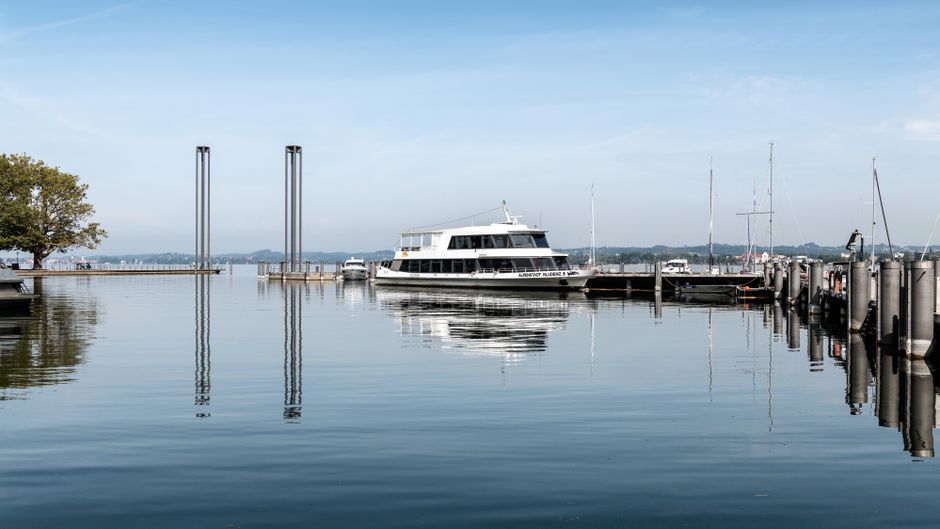
Lakeside Promenade and Harbour
Bregenz's lakeside promenade runs along Lake Constance from the harbour past the Festspielhaus and the lake stage, with gardens, sculptures, cafés and bathing areas, popular for walking, cycling and watching the sunset. The harbour has boats to Lindau, Konstanz and other lake towns, and the Mili, a small lighthouse on the pier, is a landmark. The Seebad, a historic bathing establishment, offers swimming in the lake. Entry is free. Walk at sunset, and take a boat to Lindau. Allow extra time in the high season.

vorarlberg museum
The vorarlberg museum, the state museum, in a building with a façade decorated with about 16,000 concrete flowers, designed by Cukrowicz Nachbaur Architects and opened in 2013, tells the history of Vorarlberg, from prehistoric times and Roman Brigantium to the present, with archaeological finds, art and exhibitions on everyday life. The top floor has a large window with views over the lake. Tickets cost about €9–11. Allow about two hours. It is next to the Kunsthaus, so visit both together.

Lindau
Lindau, in Germany, about 10 km west of Bregenz, is a historic town on an island in Lake Constance, connected to the mainland by bridges, with a harbour entrance guarded by a Bavarian lion statue and a lighthouse, medieval streets, painted houses and the Old Town Hall, with frescoes. It is one of the most picturesque towns on the lake. Boats from Bregenz take about 20–30 minutes, and trains about 10 minutes. Entry is free. Visit by boat for the best arrival view, and remember to bring ID.

Bregenzerwald
The Bregenzerwald, a hilly and mountainous region south-east of Bregenz, is known for its villages with wooden houses and contemporary wood architecture, such as Schwarzenberg, Bezau and Andelsbuch, its cheese, with the KäseStrasse, the Cheese Road, linking dairies and inns, and its bus stops designed by international architects in Krumbach, the BUS:STOP project. It offers hiking in summer and skiing in winter. The Angelika Kauffmann Museum in Schwarzenberg celebrates the 18th-century painter. Buses from Bregenz take about 30–60 minutes. Entry to villages is free.
History
Bregenz, the capital of Vorarlberg, Austria's westernmost state, lies on the eastern shore of Lake Constance, the Bodensee, where Austria, Germany and Switzerland meet. In the 5th century BC, the Celtic Brigantii tribe founded a settlement here, and in 15 BC the Romans conquered the area and built the town of Brigantium, an important trading and military centre on the route from Italy to the Rhine, with a harbour, forum and baths, whose remains have been found. In the early Middle Ages, the Irish monks St Columbanus and St Gallus preached here around 610. From the 10th century, the Counts of Bregenz ruled the area, and the upper town, Oberstadt, was fortified on a hill above the lake. In 1451 and 1523, the Habsburgs bought Bregenz, and it became part of the Austrian lands. During the Thirty Years' War, Swedish troops captured the town in 1647. In 1726 the town was formally named capital of the region, and in 1861 Bregenz became the seat of the Vorarlberg parliament. The railway arrived in 1872, and the town developed as a lakeside resort. The Bregenz Festival was founded in 1946, starting with performances on gravel barges on the lake. Today about 30,000 people live in the city.
Culture
Bregenz is a small, elegant city with a lively cultural life, famous above all for the Bregenz Festival, Bregenzer Festspiele, held each July and August, when operas are performed on the Seebühne, the world's largest floating stage, set on Lake Constance, with spectacular sets that become symbols of the festival, watched by about 7,000 spectators each night. The festival, founded in 1946, also stages opera and concerts in the Festspielhaus. Bregenz is known for contemporary architecture, especially the Kunsthaus Bregenz, designed by the Swiss architect Peter Zumthor, a glass and concrete cube that is one of Europe's leading contemporary art museums. Vorarlberg has a distinctive identity, with its Alemannic dialect, closer to Swiss German than to Viennese German, and strong traditions of craftsmanship, especially in wood architecture, seen in the nearby Bregenzerwald villages. The lakeside promenade, the harbour and the Pfänder mountain are central to local life. The region's cuisine includes Käsespätzle, Bregenzerwald mountain cheese and fish from the lake. Bregenz is part of a cross-border region, and residents often travel to Lindau in Germany and St Gallen in Switzerland. The city has a calm atmosphere, with cafés and gardens.
Climate
Spring
2–19°C
March to May brings mild 10–19°C days, blossoming fruit trees around Lake Constance and the opening of lakeside cafés. B…
Summer
13–26°C
June to August is warm, with 22–26°C days, ideal for swimming in Lake Constance, sailing, cycling and the Bregenz Festiv…
Autumn
2–20°C
September to November brings 8–20°C days, golden forests on the Pfänder, clear views of the Alps on Föhn days and the gr…
Winter
-3–5°C
December to February is cold, with 1–5°C days, fog over the lake and occasional snow, while ski resorts in the Bregenzer…
Fun Facts
The world's largest floating stage
The Seebühne, the lake stage of the Bregenz Festival, is the world's largest floating stage, built on Lake Constance, wi…
A lake shared by three countries
Lake Constance, the Bodensee, about 63 km long and up to about 251 m deep, is shared by Austria, Germany and Switzerland…
A Roman town under the city
Bregenz was the Roman town of Brigantium, founded after the Romans conquered the region in 15 BC, with a harbour on Lake…
A museum like a glowing lamp
The Kunsthaus Bregenz, opened in 1997 and designed by the Swiss architect Peter Zumthor, winner of the Pritzker Prize, i…
A view of three countries from a mountain
The Pfänder, a mountain about 1,064 m high above Bregenz, offers views over Lake Constance and the Alps of Austria, Germ…
A dialect closer to Swiss German
People in Vorarlberg speak Alemannic dialects, which are closer to Swiss German and the dialects of south-western German…
Local Cuisine in Bregenz

Käsknöpfle
Vorarlberg's version of cheese noodles, small egg noodles mixed with strong local cheeses, such as Bergkäse and Räßkäse, and topped with crispy fried onions, served with potato salad or apple sauce. It is the region's signature dish, served in inns and mountain huts. A portion costs about €12–16, a hearty meal.
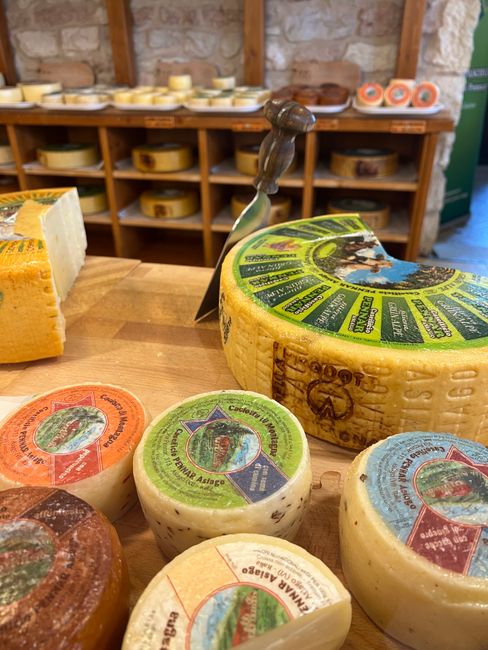
Bregenzerwald Mountain Cheese
Vorarlberger Bergkäse, mountain cheese from the Bregenzerwald, with protected status, is made from raw cow's milk from cows fed on hay and grass, without silage, and aged for months. Dairies along the KäseStrasse offer tastings and tours. A cheese platter costs about €10–15, and cheese from dairies about €20–30 per kilo.

Lake Constance Fish
Fish from Lake Constance, especially Felchen, whitefish, Kretzer, perch fillets, and Bodensee trout, are served fried, grilled or smoked in lakeside restaurants in Bregenz. Felchen fillets with butter and potatoes are a classic dish. A fish dish costs about €18–28. Ask for fresh lake fish of the day. Ask locals for their favourite place to try it.

Riebel
A traditional Vorarlberg dish of cornmeal or semolina cooked in milk, fried in butter until crumbly and served for breakfast with apple sauce, compote or coffee. It was the daily food of farmers in the region. Some traditional inns and cafés serve it. A portion costs about €6–10, a simple, filling breakfast.

Fruit Brandies and Most
The Lake Constance region and Vorarlberg are known for fruit orchards, producing apple and pear cider, Most, and fruit brandies, such as Williams pear schnapps and Subirer, from a local pear. Many farms sell them directly. A glass of Most costs about €3–4, and a schnapps about €3–5. Ask locals for their favourite place to try it.
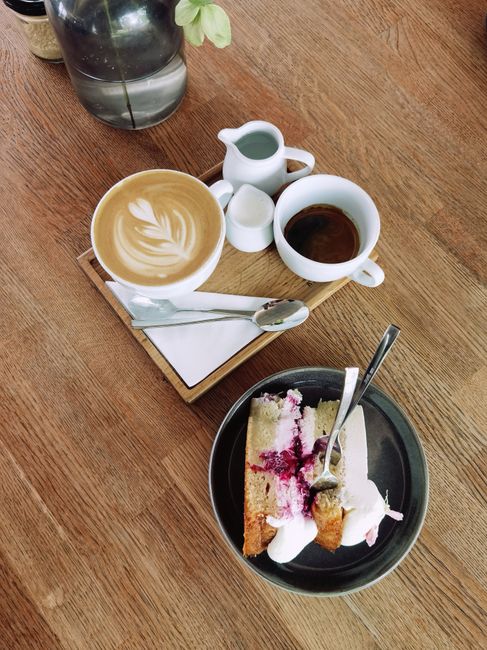
Cafés and Cakes
Bregenz has cafés along the lakeside and in the city centre, serving coffee and Austrian cakes, such as Apfelstrudel and Sachertorte, and Swiss-influenced pastries. Café terraces with lake views are popular in summer. A coffee costs about €3.50–5, and a slice of cake €4–6. Enjoy it after a walk on the promenade.
Practical Travel Information
Transport & Accessibility
International Transport
Bregenz has no airport. The nearest airports are St Gallen-Altenrhein in Switzerland, about 20 minutes away, with flights to Vienna, Friedrichshafen in Germany, about 30 minutes, and Zurich Airport, about 1.5 hours, with many international flights. Bregenz railway station, near the lake, has trains to Innsbruck in about 2.5 hours, Vienna in about 7 hours, Zurich in about 1.5 hours and Munich in about 2.5 hours. Boats on Lake Constance connect Bregenz with Lindau, Friedrichshafen, Konstanz and other towns from spring to autumn.
Local Transport
Bregenz is compact and walkable, with the station, the lakeside, the Kunsthaus, the festival stage and the upper town within walking distance. Local buses connect the city with nearby towns and the Bregenzerwald, and regional trains run to Lindau, Dornbirn and Feldkirch. The Pfänderbahn cable car runs to the Pfänder. Bike rental is popular, with the Lake Constance Cycle Path, Bodensee-Radweg, about 260 km around the lake. Boats operate on the lake from about Easter to October. Taxis are available.
Safety & Health
Personal Safety
Bregenz is a very safe city, with very low crime rates. Normal precautions apply in crowded places, such as the festival area and the Christmas market. When swimming in Lake Constance, stay in designated areas, as the lake is deep and can be cold, and be aware of boat traffic. Storms can develop quickly on the lake, so follow warning lights around the shore. When hiking on the Pfänder or in the Bregenzerwald, check the weather and stay on marked trails. In an emergency, call 112.
Medical Services
Bregenz has the Landeskrankenhaus Bregenz, a regional hospital with an emergency department, and doctors' practices and pharmacies in the city. For specialised care, patients may be transferred to Feldkirch or Innsbruck. EU citizens can use the European Health Insurance Card, while others need travel insurance. For non-urgent medical advice, call 1450. Tap water is excellent and safe to drink. Protect yourself from the sun on the lake. Carry your insurance details and any personal medicines. Keep a small first-aid kit for day trips.
Budget & Costs
Travel Costs
Bregenz is moderately expensive, especially during the festival. A guesthouse room costs about €80–130, a mid-range hotel €120–200 and a luxury hotel from €250 per night, with higher prices in July and August. A lunch menu costs about €12–18, and dinner at a mid-range restaurant €30–50 per person. A coffee costs about €3.50–5. The Pfänderbahn costs about €17–20 return, the Kunsthaus €14–16, the vorarlberg museum €9–11, a boat to Lindau €10–15 and festival tickets €40–300. A mid-range traveller should budget about €120–200 per day.
Budget Tips
Visit outside the festival season for lower hotel prices. Buy the Bodensee Card PLUS for free entry to many attractions around the lake, including boats and cable cars. Walk along the lakeside promenade and the upper town for free. Swim at public bathing areas. Use regional trains to visit Lindau and Switzerland. Hike down from the Pfänder instead of buying a return ticket. Eat lunch menus. Stay in nearby towns, such as Dornbirn or Lindau, for cheaper accommodation. Walking is free and often the best way to explore.
Culture & Traditions
Social Norms
People in Bregenz and Vorarlberg are polite, reserved and hardworking, and they are proud of their regional identity, which differs from the rest of Austria. Greet people with Grüß Gott or Servus. The local Alemannic dialect may be difficult to understand, but standard German and English are widely spoken. Punctuality is valued. Tip about 5–10% by rounding up. Dress smart for the festival and concerts. Respect quiet Sundays, when shops are closed. Recycling is taken seriously. A few words of the local language are always appreciated.
Cultural Activities
Attend an opera on the lake stage at the Bregenz Festival in July and August. Visit the Kunsthaus Bregenz and the vorarlberg museum. Take a boat trip on Lake Constance to Lindau. Ride the Pfänderbahn for views and the bird of prey show. Visit the Bregenzerwald villages and the KäseStrasse dairies. See the BUS:STOP architecture project in Krumbach. Attend the Schubertiade, a festival of Schubert's music, in Schwarzenberg and Hohenems. Explore the Christmas market. Cycle along the Lake Constance Cycle Path.
Unique Experiences in Bregenz
Watch an opera on the Seebühne, the world's largest floating stage, during the Bregenz Festival, with a spectacular set on Lake Constance and the sun setting behind it. Tickets cost about €40–300. Book months in advance, and bring a warm jacket and a cushion for the evening.
Ride the Pfänderbahn cable car to the Pfänder for views over Lake Constance and about 240 Alpine peaks in three countries, visit the free Alpine wildlife park and watch the bird of prey show. A return ticket costs about €17–20. Go at sunset for the most beautiful light over the lake.
Take a boat across Lake Constance from Bregenz to Lindau, in Germany, arriving past the Bavarian lion and lighthouse at the harbour entrance, then explore the island town's medieval streets. Boats cost about €10–15 one way. Return by train in about 10 minutes, and bring ID.
Cycle a section of the Lake Constance Cycle Path, about 260 km around the lake through Austria, Germany and Switzerland, passing orchards, vineyards and lakeside towns, and taking boats across the lake. Bike rental costs about €15–30 per day. Choose a sunny day in spring or autumn.
Explore the Bregenzerwald, with traditional wooden villages, contemporary wood architecture, cheese dairies along the KäseStrasse and the BUS:STOP bus shelters designed by international architects in Krumbach. Buses from Bregenz are cheap. Taste Bergkäse at a dairy, and hike in the hills.
Travel Recommendations for Bregenz
Book Bregenz Festival tickets and accommodation months in advance, as the lake stage performances sell out and hotels fi…
Explore Lake Constance's three countries, visiting Lindau in Germany and St Gallen in Switzerland by train or boat. The …
Visit the Kunsthaus Bregenz, a masterpiece of contemporary architecture by Peter Zumthor, and the vorarlberg museum next…
Take a day trip to the Bregenzerwald for traditional and contemporary wood architecture, cheese dairies, hiking and moun…
Walk or cycle along the lakeside promenade at sunset, from the harbour to the festival stage, and swim in the lake in su…