Graz
Updated October 19, 2026
Also known as: Gradec, City of Design, Culinary Capital of Austria, GRZ
Main Landmarks in Graz

Schlossberg and Clock Tower
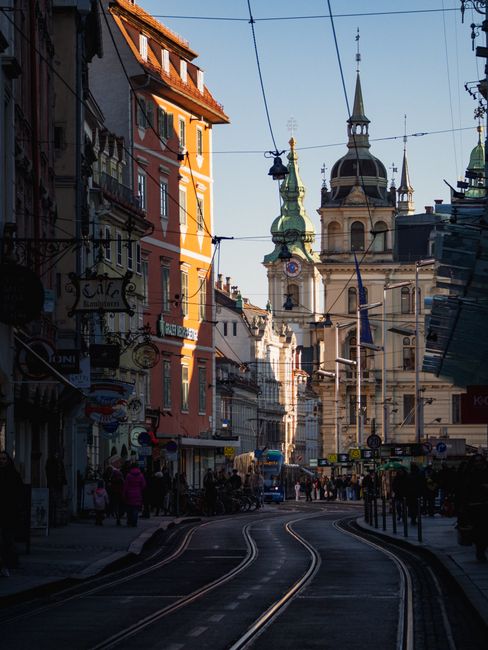
The Schlossberg, a forested hill about 123 m above the old town, was the site of a fortress demolished by Napoleon's troops in 1809, except for the Clock Tower and the Bell Tower, which citizens saved by paying a ransom. Today it is a park with paths, gardens, viewpoints and the Clock Tower, the city's symbol. Visitors can climb the zigzag staircase of about 260 steps, take the Schlossbergbahn funicular or the glass lift inside the hill. The funicular and lift cost about €2–3. Visit at sunset for views over the red roofs.
Old Town and Hauptplatz
Graz's old town, a UNESCO site, is one of the best-preserved historic centres in Central Europe, with buildings from the Gothic to the Art Nouveau period. The Hauptplatz, the main square, has the Town Hall, the Archduke Johann Fountain and colourful houses, such as the Luegg House with Baroque stucco. Narrow lanes, such as the Sporgasse, lead past shops and cafés, and Renaissance courtyards, such as the Landhaus, are hidden behind façades. Entry is free. Explore on foot, and join a guided walking tour for the courtyards.

Landhaus and Styrian Armoury
The Landhaus, built from 1557 by the Italian architect Domenico dell'Allio, is the seat of the Styrian parliament and one of Austria's finest Renaissance buildings, with a beautiful arcaded courtyard used for concerts. Next door, the Landeszeughaus, the Styrian Armoury, built in 1642–1644, is the world's largest historic armoury, with about 32,000 weapons and suits of armour displayed as they were stored in the 17th century. The courtyard is free, and the armoury costs about €11–13. Allow about one hour. It is closed on Mondays.

Kunsthaus Graz
The Kunsthaus Graz, opened in 2003 on the right bank of the Mur, is a contemporary art museum in a striking blue, biomorphic building, nicknamed the Friendly Alien, designed by Peter Cook and Colin Fournier. It hosts changing exhibitions of contemporary art, photography and media art, and its BIX media façade lights up at night. The Needle, a glass viewing platform on top, offers views over the old town. Tickets cost about €11–13. Allow about one to two hours. It is closed on Mondays.

Murinsel
The Murinsel, the Island in the Mur, is a floating platform shaped like a giant shell, designed by the American artist Vito Acconci for the European Capital of Culture in 2003, connected to both banks of the Mur River by footbridges. It contains a café, an open-air amphitheatre and a children's playground, and it is lit at night with blue lights. Entry is free. Visit in the evening, when it is illuminated, and combine it with the Kunsthaus and a walk along the river.
Schloss Eggenberg
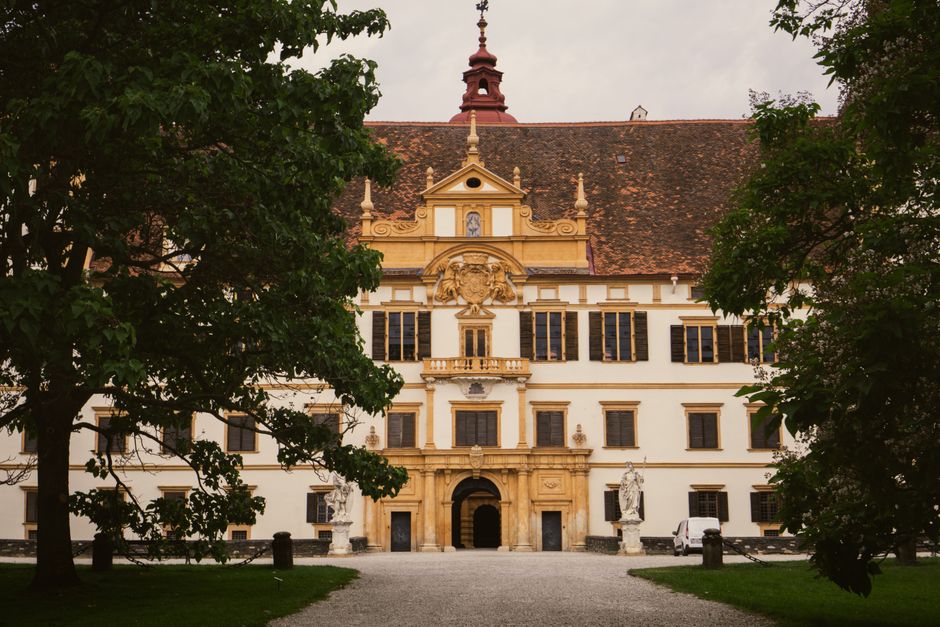
Schloss Eggenberg, about 3 km west of the centre, is a Baroque palace built from 1625 for Prince Hans Ulrich von Eggenberg, designed as a symbol of the universe, with 365 windows, 52 doors on the main floor, 24 state rooms and 4 towers. Its Planetary Hall and state rooms have ceiling paintings and are part of a UNESCO site with the old town. The palace park has peacocks, and the complex includes the Alte Galerie, a coin collection and an archaeology museum. Tickets cost about €17–19. Allow about two to three hours. Tram 1 runs from the centre.

Graz Cathedral and Mausoleum
Graz Cathedral, dedicated to St Giles, built in Gothic style in the 15th century under Emperor Frederick III, has a Baroque interior and the remains of the Landplagenbild, a fresco from 1485 showing the plagues of locusts, Ottoman invasions and the Black Death. Next to it, the Mausoleum of Emperor Ferdinand II, built from 1614, is a masterpiece of Mannerist and Baroque architecture, with a dome and frescoes by Johann Bernhard Fischer von Erlach. Entry to the cathedral is free, and the Mausoleum costs about €6–8.

Styrian Wine Road
The South Styrian Wine Road, about 50 km south of Graz, near the border with Slovenia, winds through rolling hills covered with vineyards, nicknamed the Styrian Tuscany. Wine taverns, Buschenschank, serve local wines, such as Sauvignon Blanc and Welschriesling, with cold platters of local products. Visitors can drive, cycle or hike between wineries, with views of the hills. Tastings cost about €10–20. The best time is September and October, during the harvest. Arrange a driver if you plan to taste.
History
Graz, the capital of Styria, takes its name from the Slavic word gradec, meaning small castle, referring to a fortification built on the Schlossberg hill above the Mur River in the early Middle Ages. The town grew in the 12th century as a trading centre, and in 1379 it became the residence of the Leopoldine line of the Habsburgs, who ruled Inner Austria, including Styria, Carinthia and Carniola. Emperor Frederick III, who lived here in the 15th century, built the cathedral and parts of the castle. In the 16th century, Graz became a bastion against the Ottoman Empire, and the Schlossberg fortress, with the Clock Tower, was strengthened, along with the Landeszeughaus, the Styrian Armoury, built in 1642–1644, which still holds about 32,000 weapons and pieces of armour. Italian architects shaped the city's Renaissance courtyards, such as the Landhaus. The University of Graz was founded in 1585. In 1809 Napoleon's troops demolished the Schlossberg fortress, but residents paid to save the Clock Tower and the Bell Tower. In the 19th century, Archduke Johann promoted industry, education and culture. Graz was a European Capital of Culture in 2003. Its old town became a UNESCO site in 1999. Today about 300,000 people live in the city.
Culture
Graz, Austria's second-largest city, is a lively university city with about 60,000 students, which gives it a young and creative atmosphere, combined with a beautifully preserved historic centre of red roofs, Renaissance courtyards and Baroque palaces. It is known for its bold modern architecture, such as the Kunsthaus, nicknamed the Friendly Alien, a blue biomorphic art museum, and the Murinsel, a floating platform in the Mur River, both built for the European Capital of Culture in 2003. In 2011 Graz became a UNESCO City of Design. The city is also called Austria's culinary capital, and Styria is famous for pumpkin seed oil, Kürbiskernöl, wines, apples, Styrian beef and the farmers' markets of Graz, such as the Kaiser-Josef-Markt and the Lendplatz market. Cultural life includes the Styriarte classical music festival, the steirischer herbst avant-garde art festival in autumn and the Diagonale Austrian film festival. Graz is the hometown of Arnold Schwarzenegger, born nearby in Thal in 1947, whose childhood home is a museum. The city has a relaxed, Mediterranean-like atmosphere, influenced by its proximity to Slovenia and Italy, with cafés, wine bars and outdoor dining in its courtyards and squares.
Climate
Spring
2–21°C
March to May brings mild 12–21°C days, blooming flowers on the Schlossberg and in the city park, and outdoor cafés reope…
Summer
14–28°C
June to August is warm, with 24–28°C days and occasional thunderstorms, as Graz is one of the sunniest cities in Austria…
Autumn
2–21°C
September to November brings 9–21°C days, the grape harvest in the Styrian wine regions, with Sturm, young wine, and Bus…
Winter
-5–5°C
December to February is cold, with 1–5°C days, frost and occasional snow. Christmas markets fill the old town, with an i…
Fun Facts
A Clock Tower saved by citizens
The Clock Tower, Uhrturm, on the Schlossberg, dating from the 13th century and rebuilt in 1560, is the symbol of Graz. W…
The world's largest historic armoury
The Landeszeughaus, the Styrian Armoury, built in 1642–1644, is the world's largest historic armoury, holding about 32,0…
A Friendly Alien in the city
The Kunsthaus Graz, a contemporary art museum opened in 2003, designed by the British architects Peter Cook and Colin Fo…
Schwarzenegger's hometown
Arnold Schwarzenegger, the bodybuilder, actor and former Governor of California, was born in 1947 in Thal, a village abo…
Green gold of Styria
Styrian pumpkin seed oil, Steirisches Kürbiskernöl, a dark green oil with a nutty flavour, made from roasted seeds of a …
A double spiral staircase
The double spiral staircase in the Graz Castle, the Burg, built in 1499 for Emperor Maximilian I, is a masterpiece of la…
Local Cuisine in Graz

Styrian Pumpkin Seed Oil
Kürbiskernöl, a dark green, nutty oil made from roasted Styrian pumpkin seeds, with protected geographical status, is drizzled on salads, potato salad, soups, eggs and even vanilla ice cream. It is the symbol of Styrian cuisine. Farmers' markets and shops in Graz sell it. A bottle costs about €10–20 per half litre, a popular souvenir.
Backhendl
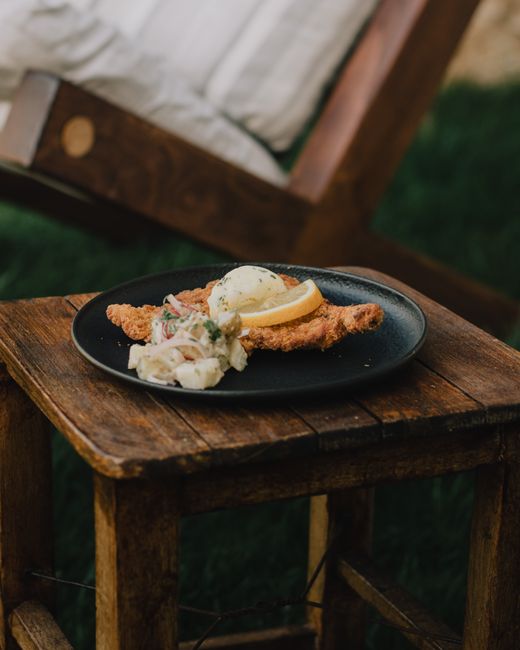
Breaded and fried chicken, crispy outside and juicy inside, a Styrian speciality, served with potato salad dressed with pumpkin seed oil and lamb's lettuce. It is especially popular on Sundays and at Buschenschank wine taverns. A portion costs about €14–20, a classic dish of Styrian inns. Ask locals for their favourite place to try it.

Steirisches Wurzelfleisch
Boiled pork with root vegetables, such as carrots, celery and parsnips, served in broth with freshly grated horseradish and boiled potatoes, a traditional Styrian dish. It is simple and hearty, served in traditional inns, especially in winter. A portion costs about €12–17. It pairs well with a glass of Styrian wine.
Brettljause
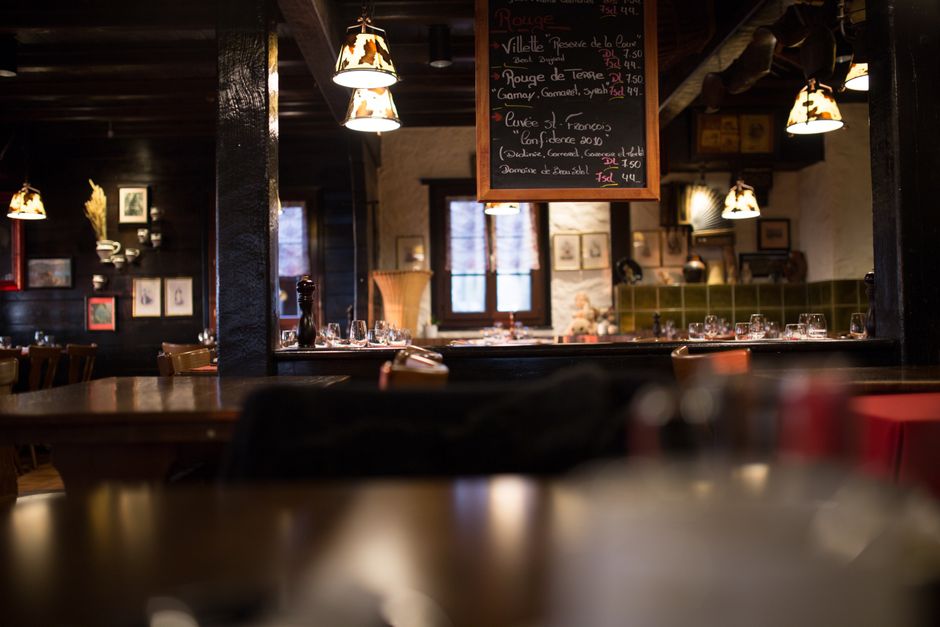
A wooden board with cold cuts, such as Verhackert, a spread of minced bacon, Styrian ham, sausages, cheese, pickles, horseradish, spreads and bread, served in Buschenschank wine taverns with local wine or apple juice. It is a typical Styrian snack. A board costs about €12–18, perfect for sharing. Ask locals for their favourite place to try it.

Styrian Wines
Styria produces excellent white wines, especially Sauvignon Blanc, Welschriesling, Morillon, Chardonnay, and Muskateller from southern Styria, and Schilcher, a pink wine from western Styria. Wine bars in Graz and taverns on the wine roads serve them. A glass costs about €4–7, and Sturm, young wine, is served in autumn. Ask locals for their favourite place to try it.
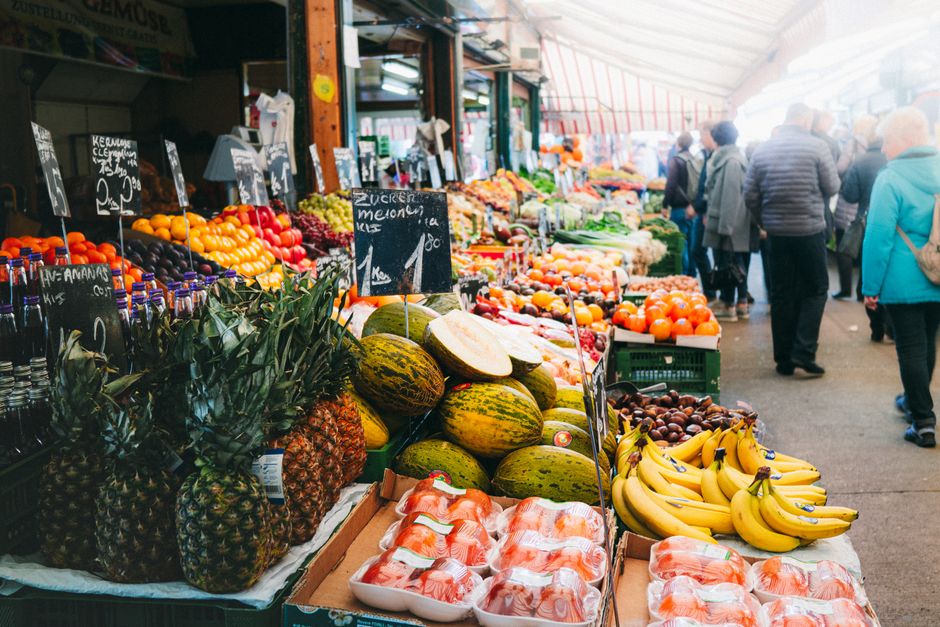
Farmers' Market Treats
The Kaiser-Josef-Markt and the Lendplatz farmers' markets, open Monday to Saturday mornings, sell fresh produce from Styria, such as apples, pumpkins, mushrooms, cheese, ham, bread, honey and pumpkin seeds, with stands serving snacks and coffee. They are a centre of local life. A snack costs about €3–8. Visit on Saturday morning for the liveliest atmosphere.
Practical Travel Information
Transport & Accessibility
International Transport
Graz Airport, Thalerhof (GRZ), about 9 km south of the centre, has flights to some European cities, such as Frankfurt, Munich, Zurich and seasonal holiday destinations, with S-Bahn trains to the main station in about 10 minutes. Vienna International Airport is about 2.5 hours away. Graz Hauptbahnhof has trains to Vienna in about 2.5 hours, Salzburg, Linz and Klagenfurt, and international trains to Ljubljana, Zagreb and Budapest. The Koralm Railway, opened in 2025, connects Graz with Klagenfurt in about 45 minutes. Long-distance buses connect Graz with cities across Central Europe.
Local Transport
Graz's old town is compact and pedestrian-friendly, and walking is the best way to explore it. Trams and buses, run by Graz Linien, cover the city, with trams free within the old town zone between selected stops, such as Hauptplatz and Jakominiplatz. Single tickets cost about €3, and 24-hour tickets about €6–7. The Schlossbergbahn funicular and the glass lift take visitors up the Schlossberg. Graz is a bike-friendly city, with many cycle paths and bike-sharing. Taxis are available. Car parking in the old town is limited.
Safety & Health
Personal Safety
Graz is a very safe city, with low crime rates, and its old town is safe day and night. Normal precautions apply in crowded places, such as the Christmas markets, the main station and nightlife areas, where pickpockets may operate. The area around the Volksgarten and the main station can be unpleasant at night. Be careful of cyclists on paths and trams in the old town. When driving on the wine roads, roads are narrow and winding, so drive carefully and do not drink and drive. In an emergency, call 112.
Medical Services
Graz has excellent medical facilities, including the University Hospital Graz, LKH-Universitätsklinikum, one of Austria's largest hospitals, with a 24-hour emergency department, and private clinics. EU citizens can use the European Health Insurance Card, while others need travel insurance. For non-urgent medical advice, call 1450. Pharmacies, marked with a red A, are common in the centre, and some are open at night on a rota. Tap water is excellent and safe to drink. Protect yourself from the sun in summer. Carry your insurance details and any personal medicines.
Budget & Costs
Travel Costs
Graz is more affordable than Vienna and Salzburg. A hostel bed costs about €25–40, a mid-range hotel €90–150 and a luxury hotel from €200 per night. A market snack costs about €3–8, a lunch menu €10–15 and dinner at a mid-range restaurant €25–40 per person. A glass of wine costs about €4–7. A 24-hour transport ticket costs about €6–7, the Schlossberg funicular about €2–3, the armoury about €11–13, the Kunsthaus about €11–13 and Schloss Eggenberg €17–19. A mid-range traveller should budget about €100–170 per day.
Budget Tips
Buy a Joanneum 24- or 48-hour ticket for entry to the Universalmuseum Joanneum's museums, including the armoury, the Kunsthaus and Schloss Eggenberg. Walk up the Schlossberg instead of taking the funicular. Use free trams in the old town zone. Eat lunch menus, which are cheaper than dinner, and visit farmers' markets. Enjoy free attractions, such as the old town, the Murinsel, the Landhaus courtyard and the double spiral staircase. Visit wine taverns, where food and wine are good value. Walking is free and often the best way to explore.
Culture & Traditions
Social Norms
People in Graz are friendly, relaxed and proud of their city and Styrian food and wine. Greet people with Grüß Gott or Servus. Graz has a young, student atmosphere, so it is informal in many places. In wine taverns, sharing tables is common. Tip about 5–10% by rounding up. Respect quiet Sundays, when most shops are closed. Dress respectfully in churches. Cyclists are common, so do not walk in bike lanes. Styrians may speak with a strong dialect, but most people speak standard German and English.
Cultural Activities
Attend the Styriarte classical music festival in summer. Visit the steirischer herbst contemporary art festival in autumn. Watch films at the Diagonale festival. Explore the Universalmuseum Joanneum's museums. Watch street theatre at La Strada in summer. Visit the Christmas markets and the ice nativity scene in the Landhaus courtyard. Attend a performance at the Graz Opera. Take a wine tour in southern Styria. Visit the Arnold Schwarzenegger Museum in Thal. Explore the Graz Puppet Theatre. Check local listings for free events during your stay.
Unique Experiences in Graz
Climb the Schlossberg by the zigzag stairs, or take the glass lift through the rock, to the Clock Tower, and enjoy views over the red roofs of the old town and the Kunsthaus at sunset, then have a drink at a terrace bar. The lift costs about €2–3. Visit on a clear evening.
Walk through the Styrian Armoury, the world's largest historic armoury, with about 32,000 weapons and suits of armour stored as they were in the 17th century, ready for war against the Ottomans. Tickets cost about €11–13. Join a guided tour for stories about the weapons, and allow about one hour.
Take a wine tour on the South Styrian Wine Road, visiting wineries and Buschenschank taverns, tasting Sauvignon Blanc and enjoying a Brettljause with views of the vineyard-covered hills. Tours cost about €60–120, including transport. Visit in September or October for the harvest and Sturm.
Visit Schloss Eggenberg, a Baroque palace designed as a symbol of the universe, with 365 windows and 24 state rooms, and walk in its park among peacocks. Tickets cost about €17–19. Join a guided tour of the state rooms, and combine it with the Alte Galerie.
Explore Graz's farmers' markets, the Kaiser-Josef-Markt and the Lendplatz market, tasting Styrian specialities, such as pumpkin seeds, apples, cheese and ham, and buying pumpkin seed oil. Entry is free. Visit on a Saturday morning, when the markets are busiest. Book ahead in the high season.
Travel Recommendations for Graz
Buy the Joanneum ticket, which gives entry to the Universalmuseum Joanneum's museums, including the Styrian Armoury, the…
Explore Graz's hidden Renaissance and Baroque courtyards, Höfe, behind the façades of the old town, such as the Landhaus…
Try Styrian food and wine, including dishes with pumpkin seed oil, Backhendl, Brettljause and wines from southern Styria…
Take day trips from Graz to the South Styrian Wine Road, the Riegersburg castle, on a volcanic rock, the Zotter chocolat…
Visit in autumn, from September to October, for the grape harvest, Sturm and the steirischer herbst festival, or in Dece…