Seville
Updated October 16, 2026
Also known as: Sevilla, Hispalis, Isbiliya
Main Landmarks in Seville

Barrio de Santa Cruz
Santa Cruz, the old Jewish quarter next to the Alcázar, is a tangle of whitewashed lanes, flower-filled balconies and small plazas shaded by orange trees. Look for the Callejón del Agua along the Alcázar wall and the Plaza de Doña Elvira with its tiled benches. The Hospital de los Venerables holds paintings by Diego Velázquez and Bartolomé Esteban Murillo. Many restaurants here aim at tourists, so eat in the side streets instead. Visit early in the morning, before tour groups.
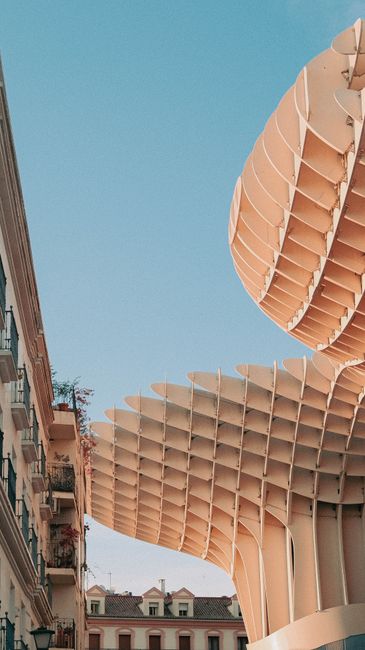
Metropol Parasol (Las Setas)
This vast wooden canopy above Plaza de la Encarnación, designed by Jürgen Mayer and opened in 2011, is the most daring piece of modern architecture in Seville. A lift takes you to a curving walkway on top, about 28 m above the street, with 360° views over the old town to the Giralda. Tickets cost around €15 and include an immersive show. Below lies a food market and the Antiquarium with Roman mosaics. Go at sunset, when the walkway is lit.
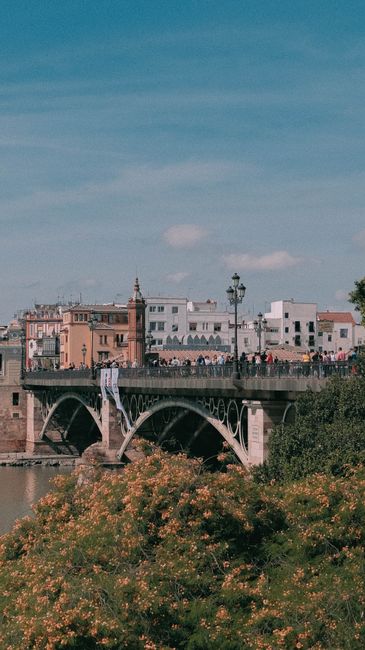
Triana and Mercado de Triana
Across the Isabel II Bridge, built in 1852, lies Triana, the district of sailors, potters and flamenco singers. The Mercado de Triana stands on the ruins of the Castle of San Jorge, once the seat of the Inquisition, whose remains you can visit underground for free. Walk along Calle Betis for river views and to Calle Alfarería to see ceramic workshops. In the evening, flamenco bars around Calle Pureza and Plaza del Altozano come alive. It feels more local than the centre.

Torre del Oro
This 12-sided watchtower on the Guadalquivir was built by the Almohads around 1220 to control access to the port, and a chain once stretched from it across the river. Its name, Tower of Gold, probably comes from the golden reflection of its original lime and straw mortar on the water. Today it holds a small naval museum, with entry for about €3. From the top you see the river, the bullring and Triana. It is free on Mondays. Allow 30 minutes.

Plaza de España
Built for the 1929 Ibero-American Exposition, the Plaza de España is a 50,000 m² semicircle of brick and painted ceramic tiles, with a canal crossed by four bridges representing the old kingdoms of Spain. Its 48 tiled alcoves each honour a Spanish province. You can rent a small rowing boat on the canal for about €6 for 35 minutes. Entry is free. Come early in the morning or at sunset for soft light and flamenco dancers performing under the arcades.

Catedral de Sevilla and La Giralda
Seville Cathedral, completed in 1506 on the site of the Almohad Great Mosque, is the largest Gothic cathedral in the world by volume and a UNESCO World Heritage Site since 1987. Its golden main altarpiece took more than 80 years to carve. Climb the 35 ramps of the Giralda for views over the rooftops and orange trees. General tickets cost about €13 online and include the Church of El Salvador. Book a named ticket a few days ahead in spring, and dress modestly.

Real Alcázar de Sevilla
The Real Alcázar is a royal palace still used by the Spanish royal family, whose Mudéjar Palace of King Peter I dates from 1364. Tiled courtyards, carved cedar ceilings and the reflecting pool of the Patio de las Doncellas lead into 7 hectares of gardens with peacocks and palms. Fans of Game of Thrones will recognise the Water Gardens of Dorne. General admission costs about €15.50. Take the first slot at 9:30, and add the Royal Quarters upper floor tour if available.
History
Seville is a river port that grew rich three times: under Rome, under the Moors and as the gateway to the Americas. The Romans called it Hispalis, and just north of the city they founded Itálica, birthplace of the emperors Trajan and Hadrian. From 712 the city became Isbiliya, and under the Almohads in the 12th century it was the capital of Al-Andalus, which left behind the Giralda minaret and the Torre del Oro on the Guadalquivir. King Ferdinand III of Castile took the city in 1248, and in 1364 King Peter I built the Mudéjar palace that still forms the core of the Real Alcázar. After Columbus reached the Americas, Seville received a royal monopoly on trade with the New World in 1503, and for two centuries treasure fleets unloaded silver here at the Casa de Contratación. The population grew to around 150,000, one of the largest in Europe, before the river silted up and trade moved to Cádiz in 1717. The 1929 Ibero-American Exposition gave Seville the Plaza de España, and the 1992 Universal Exposition brought the first AVE high-speed line and new bridges. Today about 690,000 people live in the city, the capital of Andalusia.
Culture
Sevillanos live outdoors, in a rhythm set by the heat: late breakfasts of toast with olive oil and tomato, tapas at the bar before lunch, a long siesta in summer and evenings that start after 21:00. Two festivals define the year. During Semana Santa, Holy Week, about 70 brotherhoods carry heavy floats called pasos through the streets, accompanied by brass bands, incense and the sudden sung prayers known as saetas. Two weeks later, the Feria de Abril fills a temporary town of more than 1,000 striped tents, or casetas, where families dance sevillanas, drink rebujito and ride in horse-drawn carriages. Flamenco is part of daily life, especially across the river in Triana, the old district of potters and Roma families. Bullfighting remains a tradition at the Real Maestranza, one of the oldest bullrings in Spain. Locals take pride in their city with a phrase seen on every corner: NO8DO, the motto granted by King Alfonso X in the 13th century.
Climate
Spring
11–28°C
March to May is Seville's best season, with 20–28°C days and the scent of orange blossom, called azahar, across the old …
Summer
20–40°C
June to September is extreme: Seville regularly reaches 38–43°C in July and August, and the streets empty between 14:00 …
Autumn
11–27°C
October and November are warm and pleasant, with 20–28°C days in October and fewer visitors than spring. It is a good se…
Winter
5–18°C
December to February is mild and sunny, with 16–19°C afternoons, though nights can fall to 4–6°C and many old houses lac…
Fun Facts
Britain's marmalade grows on Seville's streets
Seville has tens of thousands of bitter orange trees lining its streets and squares. The fruit is too sour to eat raw, s…
The Giralda has ramps instead of stairs
To climb the 104 m Giralda bell tower you walk up 35 gently sloping ramps rather than steps. The ramps were built so tha…
The Setas is the world's largest wooden structure
The Metropol Parasol, nicknamed Las Setas, the Mushrooms, is often described as the largest wooden structure in the worl…
NO8DO is the city's secret motto
The symbol NO8DO appears on manhole covers, buses and buildings across Seville. The 8 stands for a skein of wool, madeja…
Columbus may be buried in the Cathedral
Inside Seville Cathedral, four giant statues representing the kingdoms of Castile, León, Aragon and Navarre carry the to…
The Plaza de España has a bench for every province
The semicircular Plaza de España, built by architect Aníbal González for the 1929 Ibero-American Exposition, is lined wi…
Local Cuisine in Seville

Salmorejo and gazpacho
Seville's summer is impossible without a cold tomato soup. Gazpacho is light and drinkable, made from raw tomato, cucumber, pepper, garlic, olive oil and vinegar, while salmorejo is thicker, thanks to bread, and topped with hard-boiled egg and jamón. Most bars serve a glass or bowl for €3–6 from May to September.

Espinacas con garbanzos
A warm stew of spinach and chickpeas, spiced with cumin, paprika and garlic and thickened with fried bread, is one of Seville's oldest tapas. Its spices recall the city's Moorish past. Bodega Santa Cruz, known locally as Las Columnas, and El Rinconcillo, open since 1670, serve it for around €3–4 a tapa.
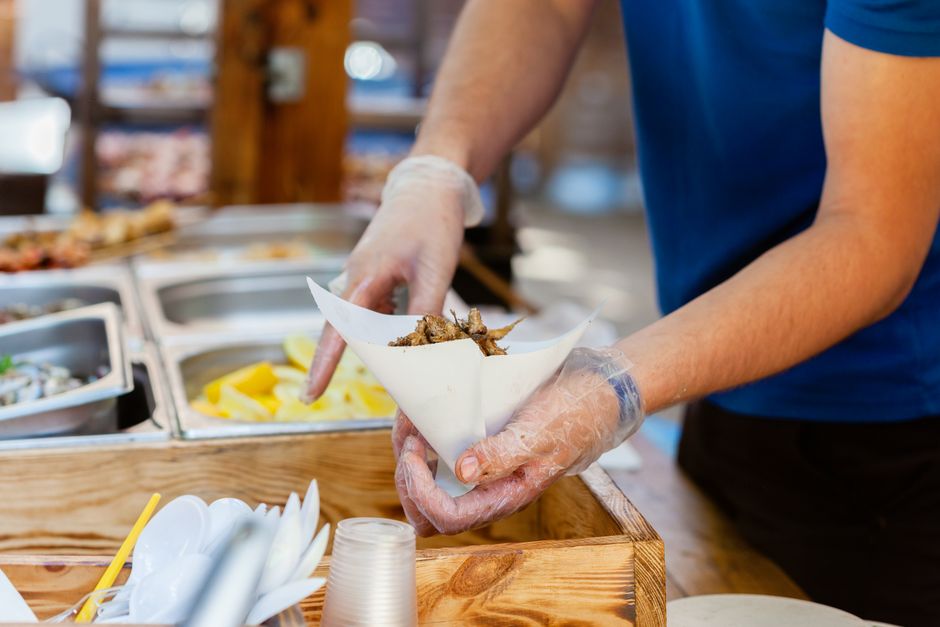
Pescaíto frito
Lightly floured and fried fish, such as anchovies, dogfish marinated in adobo, squid and small soles, served in a paper cone, is the taste of an Andalusian evening. Seville's freidurías have fried fish to order for generations. Try a cone at Freiduría Puerta de la Carne or along Calle Betis in Triana for €8–15.
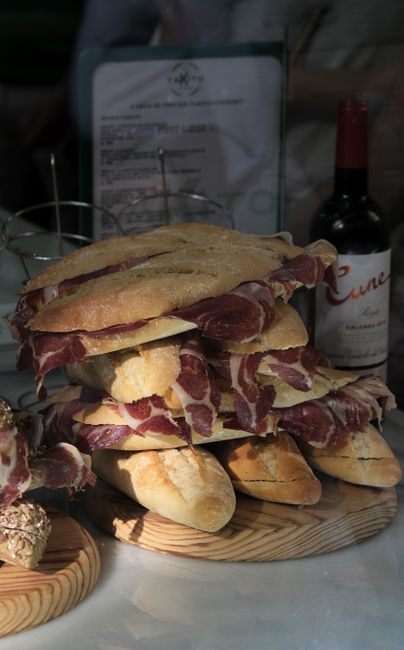
Montadito de pringá
A small toasted roll filled with pringá, the shredded meats, chorizo and morcilla left over from a slow-cooked puchero stew, is Seville's favourite bar snack. It is rich, salty and slightly smoky. Locals order it at the counter of El Rinconcillo or Casa Morales, often with a glass of fino sherry, for about €3.

Torrijas
Slices of bread soaked in milk or wine, fried in olive oil and coated with honey or cinnamon sugar are Seville's Holy Week dessert. They are crisp outside and custard-soft inside. Bakeries sell them only in Lent, from February to April, and Confitería La Campana, open since 1885, is the classic place to buy them.
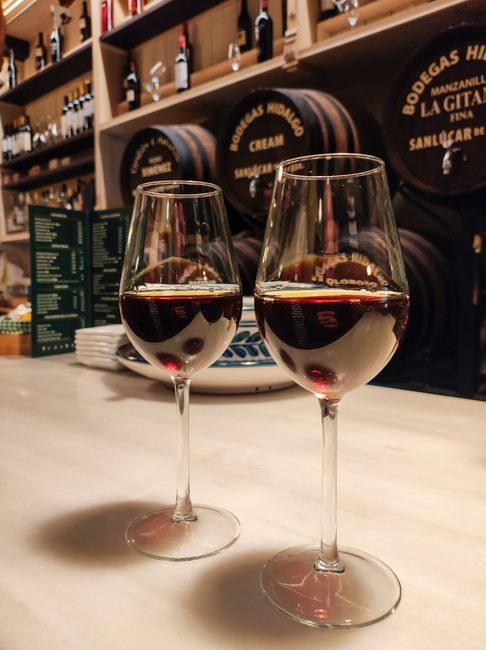
Fino and manzanilla sherry
A chilled glass of pale, bone-dry fino or manzanilla sherry is the drink of the Feria de Abril and of any tapas evening in Seville. Both come from bodegas within 100 km, in Jerez de la Frontera and Sanlúcar de Barrameda. Mixed with lemonade, manzanilla becomes rebujito, served by the jug at the Feria. A glass costs €2–4.

Yemas de San Leandro
Tiny golden sweets made from egg yolk and sugar by the cloistered nuns of the Convent of San Leandro, sold through a revolving wooden hatch so that buyers never see the nuns. The recipe dates back centuries, when convents used yolks left over from wineries that clarified wine with egg whites. A box costs about €10–12.
Practical Travel Information
Transport & Accessibility
International Transport
Seville Airport (SVQ) lies about 10 km northeast of the centre and has direct flights to most major European cities, many of them operated by low-cost airlines such as Ryanair and Vueling. For long-haul travel, most visitors connect through Madrid or arrive via Málaga Airport, 2.5 hours away. Santa Justa station is Seville's main railway hub, with AVE high-speed trains to Madrid in about 2.5 hours and Córdoba in 42 minutes, plus regional trains to Cádiz and Jerez. The Plaza de Armas bus station serves Lisbon, Huelva and the coast, while Prado de San Sebastián covers other Andalusian cities.
Local Transport
Seville's old town is flat and compact, and walking is the best way to explore it: the Cathedral to Triana takes about 15 minutes on foot. The Metro-Centro tram connects Plaza Nueva, the Cathedral, the Prado de San Sebastián and San Bernardo station. Metro Line 1 runs from the outskirts through the centre, and TUSSAM city buses cover the rest. A rechargeable Tarjeta Multiviaje reduces fares to under €1 per trip. Seville has around 180 km of cycle lanes, and the Sevici bike-share system is easy to use. Horse carriages near the Cathedral are expensive and controversial in the summer heat.
Safety & Health
Personal Safety
Seville is one of the safest large cities in Spain, with low violent crime and lively streets until late. Pickpockets do operate around the Cathedral, Plaza de España, the Setas and during Semana Santa and the Feria de Abril, when crowds are dense. A common scam involves women offering sprigs of rosemary for good luck, then demanding money; politely refuse and walk on. Keep bags closed in busy areas. Some outer neighbourhoods such as Las Tres Mil Viviendas are best avoided, but they are far from tourist areas. The biggest real risk is the summer heat.
Medical Services
Hospital Universitario Virgen del Rocío is Andalusia's largest hospital, with a 24-hour emergency department, and Hospital Virgen Macarena serves the north of the city. EU travellers can use the European Health Insurance Card in public hospitals; others should carry travel insurance. Pharmacies are plentiful and display a rota of night-time openings on their doors. Heatstroke is the most common health risk for visitors in summer: drink at least 2–3 litres of water a day, avoid walking between 14:00 and 19:00 and wear a hat. Tap water is safe to drink. Dial 112 for emergencies.
Budget & Costs
Travel Costs
Seville is good value compared with Barcelona and Madrid. A hostel bed costs €20–40, a mid-range hotel €80–150 and a boutique hotel in Santa Cruz €150–250, though prices can triple during Semana Santa and the Feria. Tapas cost €2.50–5 each, a menú del día €12–15 and dinner for two with wine €40–60. A caña costs €1.80–2.50. The Real Alcázar costs about €15.50, the Cathedral about €13 and the Setas walkway around €15. A mid-range traveller can enjoy Seville on €100–140 per day.
Budget Tips
Eat tapas at the bar rather than ordering full raciones at a table, where prices are higher. Many monuments have free hours: the Alcázar is free for residents only, but the Plaza de España, María Luisa Park and the Triana Castle are always free, and the Torre del Oro is free on Mondays. Walk instead of taking taxis, since the centre is small. Visit in late October, November or February, when hotels are cheapest. Buy a Tarjeta Multiviaje for buses and tram. Avoid restaurants with picture menus around the Cathedral.
Culture & Traditions
Social Norms
Sevillanos greet friends with two kisses and are warm and talkative, often chatting with strangers at the bar. Lunch is eaten from 14:00 to 16:00 and dinner after 21:00; in summer, the city sleeps in the afternoon heat and comes alive at night. During Semana Santa, respect the processions: do not cross through them, keep quiet when a paso passes and avoid flash photography. Dress modestly in churches. At the Feria, most casetas are private, so do not walk in uninvited. Tipping is optional, with rounding up being common.
Cultural Activities
Watch a Semana Santa procession, such as La Macarena in the early hours of Good Friday, or attend the Feria de Abril and ride in a horse carriage through the Real de la Feria. See flamenco at the Museo del Baile Flamenco or a peña in Triana. Visit the Museo de Bellas Artes, housed in a former convent, for paintings by Murillo and Zurbarán. Take a ceramics workshop in Triana. In September of even-numbered years, the Bienal de Flamenco brings the best artists in the world to Seville.
Unique Experiences in Seville
Watch the Madrugá, the night between Holy Thursday and Good Friday, when brotherhoods such as La Macarena and El Gran Poder process through the city until dawn, carried by costaleros under floats weighing more than a tonne. It is free, but crowds are huge, so choose a spot in advance.
Spend an evening at the Feria de Abril, two weeks after Easter, when more than 1,000 casetas glow with lanterns and Sevillanos dance sevillanas until morning. Public casetas are open to everyone, and hiring a horse carriage costs around €40–60 for a short ride.
Kayak or take a sunset boat cruise on the Guadalquivir, passing the Torre del Oro, Triana and the bridges of Expo '92. One-hour boat trips cost around €18–20, and kayak tours about €25–35, best in spring and autumn. Sunset departures sell out first.
Take a day trip to Itálica, 9 km north of the city, to walk through the ruins of the Roman city where Trajan and Hadrian were born, including an amphitheatre for 25,000 spectators and fine floor mosaics. Entry is free for EU citizens and very low for others.
Join a cooking class at a market in Triana, where you shop for ingredients with a local chef and learn to cook salmorejo, espinacas con garbanzos and paella. Classes last about four hours, cost €70–100 and include lunch with wine.
Travel Recommendations for Seville
Book the Real Alcázar and the Cathedral online for the earliest morning slots, especially from March to June. Go to the …
Stay in Santa Cruz, El Arenal or near the Alameda de Hércules to walk everywhere. Hotels with rooftop pools are worth pa…
Eat tapas the Sevillano way: stand at the bar, order one or two dishes at a time and move on to the next place. Classic …
If you come in summer, follow the local schedule. See monuments between 9:00 and 13:00, rest in the afternoon and go out…
Plan Semana Santa and the Feria de Abril months in advance. Hotel prices can triple, some streets are closed for process…