Málaga
Updated October 16, 2026
Also known as: Malaga, Malaka, Capital of the Costa del Sol
Main Landmarks in Málaga
Alcazaba de Málaga
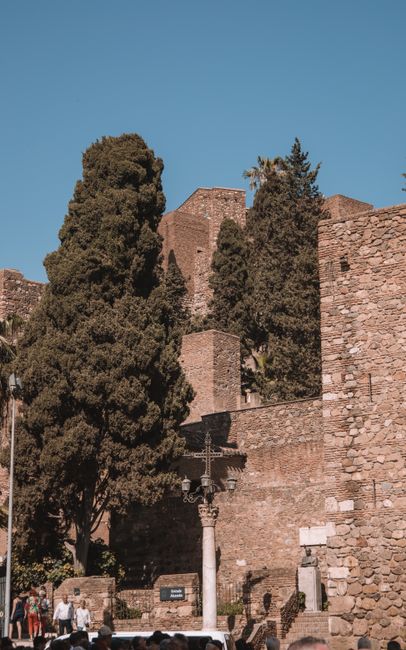
The Alcazaba is an 11th-century Moorish palace-fortress climbing the hill above the port, with patios of fountains, horseshoe arches and terraces of jasmine and bougainvillea. It is one of the best-preserved Moorish fortifications in Spain. At its foot lie the ruins of the Roman Theatre, which you can see for free. A combined ticket with Gibralfaro castle costs under €6, and entry is free on Sunday afternoons from 14:00. Arrive early in summer, as the climb is exposed to the sun.

Castillo de Gibralfaro
Gibralfaro castle was built in the 14th century by Yusuf I of Granada on the summit of the hill, 130 m above the sea, to protect the Alcazaba below. Its walls offer the best panoramic views of Málaga, the bullring, the port and the coast. A small museum explains the life of the soldiers who once lived here. Take bus 35 up from the Paseo del Parque and walk down the zigzag path for the best views. Allow about 45 minutes for the visit.

Catedral de Málaga (La Manquita)
Málaga Cathedral, built between 1528 and 1782 on the site of the main mosque, mixes Gothic, Renaissance and Baroque styles and is famous for its unfinished south tower. Inside, the carved cedar choir stalls include 40 statues by Pedro de Mena. A rooftop tour lets you walk on the cathedral's roof for views over the old town and the sea, for about €10 extra. Entry to the cathedral costs about €10. Dress modestly, as it is an active place of worship.
Museo Picasso Málaga
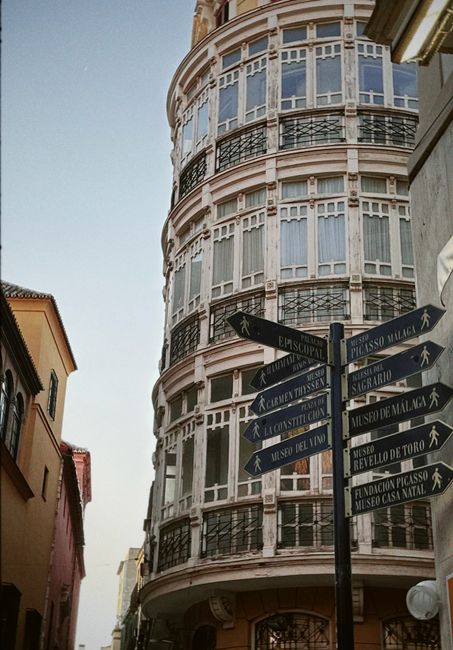
Housed in the 16th-century Buenavista Palace, the Picasso Museum holds more than 200 works donated by the artist's family, spanning his entire career from early sketches to late ceramics. The basement reveals Phoenician walls and Roman remains discovered during renovation. Tickets cost about €12, with free entry on the last two hours of Sunday. Combine your visit with the Casa Natal, the house where Picasso was born, 5 minutes away in Plaza de la Merced, for about €3. Allow two hours.
Centre Pompidou Málaga and Muelle Uno
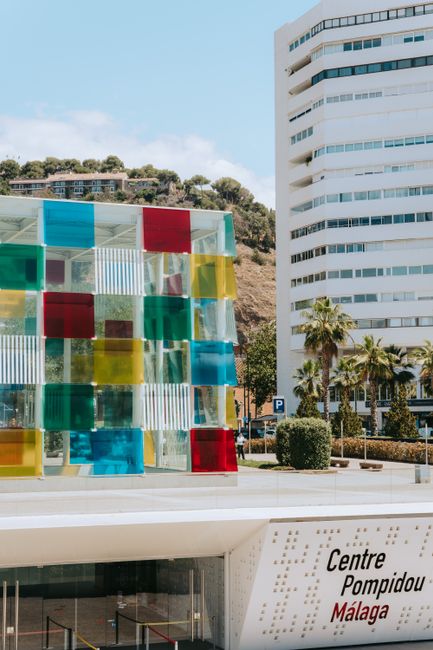
The Centre Pompidou Málaga, opened in 2015, shows modern and contemporary art from the Paris collection, including works by Frida Kahlo, Francis Bacon and Joan Miró. Its entrance is marked by El Cubo, a colourful glass cube by Daniel Buren. Tickets cost around €9, with free entry on Sunday afternoons. Around it, Muelle Uno is a waterfront promenade of shops, restaurants and palm trees leading to La Farola lighthouse and the Malagueta beach. Sunset is the best time for photos of the cube and the harbour.

Mercado Central de Atarazanas
The Atarazanas Market occupies a 19th-century iron building whose main entrance is a 14th-century Nasrid gate from the old shipyards. Inside, a large stained-glass window shows the history of Málaga. Stalls sell fresh fish, olives, cured meats, almonds and tropical fruit from the Axarquía. Several bars inside serve fried fish and seafood tapas from midday. Come before 13:00 on a weekday, as it closes in the afternoon and on Sundays. Ask for a taste of the olives before buying. Stalls accept cards.

Playa de la Malagueta
The Malagueta is the city beach, a 1.2 km stretch of dark sand just 10 minutes on foot from the cathedral. It is lined with chiringuitos, beach bars where cooks grill espetos of sardines over driftwood in old boats filled with sand. The beach has showers, lifeguards in summer and sunbeds for hire at €6–10. For a quieter beach, walk east to La Caleta and El Palo, the old fishermen's district with the best seafood restaurants. Bus 11 continues east along the coast.
History
Málaga is one of the oldest cities in Western Europe, founded by Phoenician traders around 770 BC as Malaka, probably named after their word for salt, used to cure fish. Romans took the port after the Punic Wars and built a theatre in the 1st century BC, which lay buried until 1951. In the 11th century the Moors built the Alcazaba fortress on the hill above the harbour, and the city became a major port of the Nasrid kingdom of Granada. The Catholic Monarchs captured Málaga in 1487 after a long siege. In the 19th century the city boomed with iron foundries, sugar and sweet wine exports, and its harbour shipped raisins across the world. Pablo Picasso was born here in 1881, in Plaza de la Merced. During the Civil War, thousands of refugees were killed fleeing along the coast road to Almería in February 1937. From the 1960s, the Costa del Sol tourism boom transformed the coast. Since the 2000s, Málaga has reinvented itself as a city of museums, technology companies and culture, and today about 590,000 people live here.
Culture
Malagueños are open, cheerful and proud of their city's sunny reputation, with more than 300 days of sunshine a year. Life centres on the street: the paseo along Calle Larios, coffee ordered in local terms, where a mitad means half coffee and half milk, and evenings at the beach chiringuitos. The two biggest events are Semana Santa, when brotherhoods carry tronos, floats that can weigh more than 5 tonnes, and the Feria de Agosto, a week of dancing, music and sweet wine in the streets of the centre in mid-August. Málaga has a strong flamenco tradition and its own style called malagueña. Food culture revolves around the sea: espetos, sardines grilled on skewers over driftwood fires on the beach, are a summer ritual. The city has more than 30 museums, including the Picasso Museum, the Centre Pompidou Málaga and the Carmen Thyssen Museum. Locals call the cathedral La Manquita, the one-armed lady, because its second tower was never finished.
Climate
Spring
11–25°C
March to May brings 18–25°C days and the city's most famous festival, Semana Santa, when enormous floats move through th…
Summer
20–31°C
June to September is hot and dry, with 28–32°C afternoons and sea temperatures of 22–25°C. The terral, a hot wind from i…
Autumn
12–25°C
October and November keep the sea warm at 19–22°C and days pleasant at 20–26°C, ideal for beaches, hiking the Caminito d…
Winter
8–18°C
December to February is the mildest winter in mainland Europe, with 16–19°C afternoons and around 6 hours of sunshine pe…
Fun Facts
The cathedral is missing one tower
Málaga Cathedral, built between 1528 and 1782, was designed with two bell towers, but only the north tower was finished.…
Picasso was born in Plaza de la Merced
Pablo Ruiz Picasso was born on 25 October 1881 in a house on Plaza de la Merced, today the Casa Natal museum. His father…
The Roman Theatre was found under a library
Málaga's Roman Theatre, built in the 1st century BC under Emperor Augustus, was rediscovered only in 1951 during the con…
Holy Week floats weigh up to five tonnes
Málaga's Semana Santa is famous for its gigantic tronos, floats carried on the shoulders of up to 250 bearers. Some weig…
A coloured glass cube marks a Paris museum
On the Muelle Uno waterfront stands El Cubo, a multicoloured glass cube by French artist Daniel Buren that marks the ent…
Málaga's sweet wine was famous in Victorian England
In the 18th and 19th centuries Málaga's sweet dessert wines, made from Pedro Ximénez and Moscatel grapes, were exported …
Local Cuisine in Málaga

Espetos de sardinas
Fresh sardines skewered on a cane and grilled over olive wood or driftwood in a boat filled with sand on the beach. The result is smoky, crisp skin and juicy flesh, eaten with your fingers and a squeeze of lemon. Espetos are best from May to September, when sardines are fattest. A skewer of six costs €4–7.

Fritura malagueña
A platter of lightly floured and fried fish, typically anchovies, red mullet, small squid and marinated dogfish, called adobo. Málaga's famous fried anchovies, boquerones, are served whole and crunchy. Order a plate to share at the chiringuitos of Pedregalejo or the bars of the Atarazanas Market for €10–16, with a cold beer.

Ajoblanco
A cold white soup of crushed almonds, garlic, bread, olive oil and vinegar, served with sweet Moscatel grapes or melon. It is older than gazpacho, dating back to Moorish times, and is perfect on hot days. Málaga celebrates it every September in the village of Almáchar. Restaurants serve a bowl for €5–8.
Porra antequerana
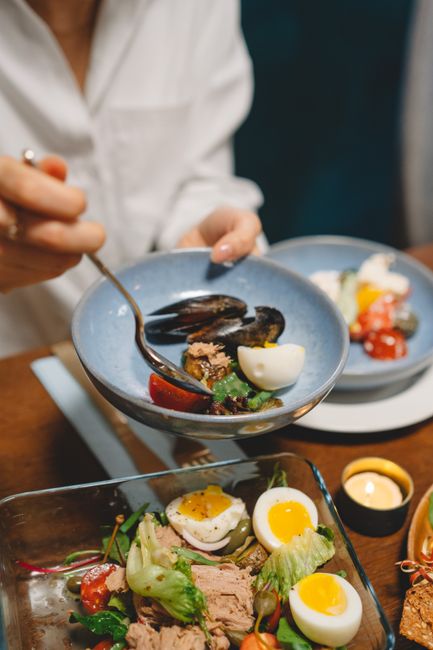
A thick cold tomato soup from Antequera, 50 km north, similar to salmorejo but even denser, topped with tuna, hard-boiled egg and jamón. It is served with breadsticks called regañás. Many bars in Málaga offer it from spring to autumn for €5–7, and it makes a filling lunch on hot days.
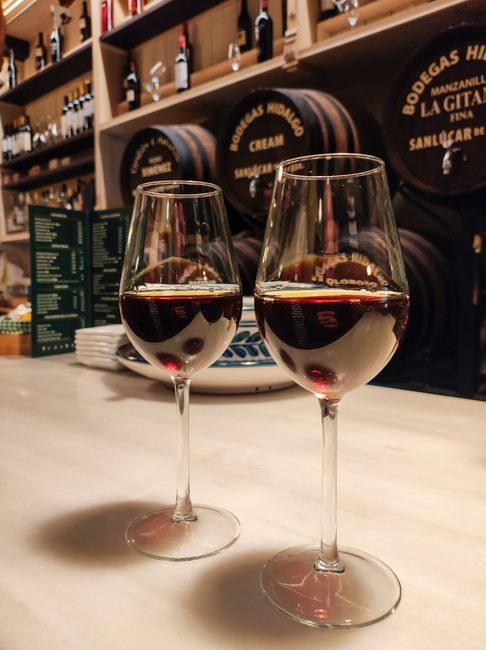
Málaga sweet wine
Dense, raisin-scented dessert wines made from Pedro Ximénez and Moscatel grapes dried in the sun. Traditional bodegas such as El Pimpi and Antigua Casa de Guardia, open since 1840, pour them directly from old barrels, and the price is chalked on the counter. A glass costs €2–4 and pairs well with almonds or cheese.
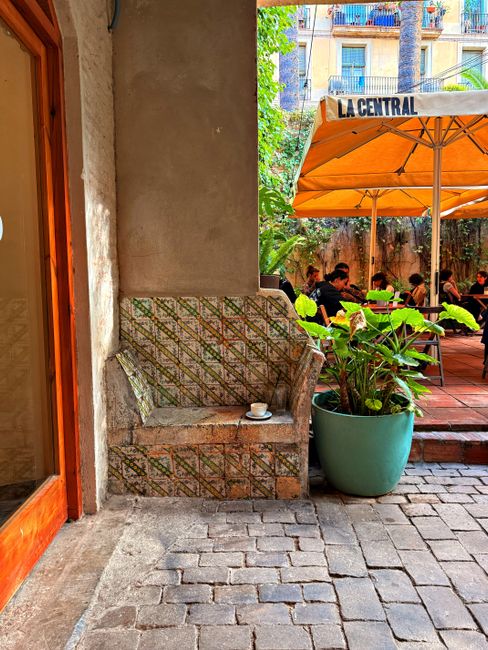
Café en Málaga
Málaga has its own coffee vocabulary, invented at Café Central in Plaza de la Constitución, where a tiled chart explains it. Order a solo for black coffee, a mitad for half coffee and half milk, a nube for mostly milk and a sombra for milk with a shadow of coffee. A coffee costs €1.40–2.
Practical Travel Information
Transport & Accessibility
International Transport
Málaga-Costa del Sol Airport, just 8 km southwest of the centre, is Spain's fourth-busiest airport, with direct flights to more than 140 destinations, especially in the UK, Germany, Scandinavia and the Netherlands, plus some long-haul routes. High-speed AVE trains connect María Zambrano station with Madrid in about 2 hours 40 minutes and with Córdoba in under one hour, while Ouigo and Iryo offer cheaper fares. Cruise ships dock right next to the city centre, and ferries sail to Melilla. ALSA buses link Málaga with Granada, Seville, Ronda and the Costa del Sol resorts.
Local Transport
Málaga's historic centre is compact and largely pedestrian, so walking is the best way to explore. The C1 Cercanías commuter line connects the airport with the centre and runs along the coast to Torremolinos and Fuengirola. Two metro lines serve the west of the city and the centre at Atarazanas. EMT city buses, including bus 35 to Gibralfaro, cost €1.40 per trip, with a cheaper rechargeable card. Electric bikes and scooters are available for rent. To explore the Costa del Sol and inland villages, a rental car is useful.
Safety & Health
Personal Safety
Málaga is one of the safest large cities in Spain, with low violent crime. Pickpockets operate in crowded areas such as Calle Larios, the Atarazanas Market, the cathedral area and the beaches, especially during Semana Santa and the Feria de Agosto. Do not leave bags unattended on the beach. Watch out for scams like rosemary sellers near the cathedral. Some areas around the Soho district can be quiet late at night, but the centre is generally lively and safe. Call 112 in an emergency, with English-speaking operators.
Medical Services
Hospital Regional Universitario de Málaga, known as Carlos Haya, and Hospital Clínico Universitario Virgen de la Victoria provide 24-hour emergency care. Many private clinics on the Costa del Sol have English-speaking staff for international visitors. EU visitors can use the European Health Insurance Card in public hospitals; others should have travel insurance. Pharmacies are easy to find, with night-duty pharmacies listed on every door. Tap water is safe. In summer, sunstroke and dehydration are the most common problems, so use sunscreen and drink water.
Budget & Costs
Travel Costs
Málaga is moderately priced, cheaper than Barcelona but rising fast as the city grows in popularity. A hostel bed costs €25–45, a mid-range hotel €90–160 and a four-star hotel in the centre €160–250 in summer. A menú del día costs €12–16, tapas €2.50–5 each and dinner for two with wine €40–60. A skewer of espetos costs €4–7 and a coffee €1.40–2. The Alcazaba and Gibralfaro combined cost under €6, the Picasso Museum about €12 and the Cathedral about €10. A mid-range traveller should budget €100–140 per day.
Budget Tips
Take advantage of free Sunday afternoon entry at the Alcazaba, Gibralfaro, the Picasso Museum and the Centre Pompidou. Eat espetos and fried fish at beach chiringuitos in Pedregalejo and El Palo, where prices are lower than in the centre. Use the C1 train from the airport instead of a taxi. Stay in the Soho or Lagunillas districts for lower hotel prices close to the centre. Visit in late October or February for low prices and warm weather. Many viewpoints and the Roman Theatre are free.
Culture & Traditions
Social Norms
Malagueños are warm, chatty and relaxed, and they greet friends with two kisses. Meal times follow Andalusian rhythms: lunch from 14:00 to 16:00 and dinner after 21:00. Order coffee using the local terms, such as mitad or sombra, to earn a smile. Respect religious processions during Semana Santa by staying quiet and not crossing their path. Beachwear belongs on the beach, not in the old town. Tipping is not obligatory, but rounding up or leaving 5–10% for good service is appreciated.
Cultural Activities
See the Semana Santa processions, especially the Legion carrying the Christ of Mena on Holy Thursday. Join the Feria de Agosto in mid-August, when the city centre fills with music and dancing. Visit the Picasso Museum, the Centre Pompidou, the Carmen Thyssen Museum and the Automobile and Fashion Museum. Watch flamenco at a peña or tablao in the centre. On the night of San Juan, 23 June, join locals on the beaches for bonfires and a midnight swim. Check the city agenda for free concerts.
Unique Experiences in Málaga
Eat espetos of sardines at sunset in a beach chiringuito in Pedregalejo, watching the cooks turn the skewers over a driftwood fire in an old boat filled with sand. A skewer costs €4–7, best from May to September. Order a cold beer with it.
Climb up to Gibralfaro castle at sunset and walk down through the Alcazaba walls as the lights of the port and the bullring switch on below. The combined ticket costs under €6, and the walk takes about an hour. Wear good shoes for the path.
Take a sweet wine tasting at Antigua Casa de Guardia, a tavern founded in 1840 where wine is poured from barrels and the bill is chalked on the wooden counter. A glass costs €2–4, and staff explain the differences between the Pedro Ximénez and Moscatel wines.
Hike the Caminito del Rey, a 7.7 km walkway bolted to the walls of a gorge up to 100 m above the river, about one hour from Málaga. Book timed tickets on the official website weeks ahead, from around €10–20, and take the train to El Chorro.
Watch the Legion carry the Christ of Mena on Holy Thursday during Semana Santa, as hundreds of soldiers sing their anthem and toss the statue into the air in front of the Santo Domingo church. Arrive hours early for a spot on the route.
Travel Recommendations for Málaga
Plan day trips by train or bus: the Caminito del Rey is about one hour away, Ronda about 1 hour 45 minutes, Nerja and it…
Order coffee like a local. Café Central in Plaza de la Constitución has a tiled chart showing nine kinds of coffee, from…
Be aware of rising housing pressure in the city centre. Málaga paused new holiday-rental licences in much of the city in…
Stay in the historic centre or the Soho district to walk everywhere. If you plan to spend most of your time on the beach…
Use Sunday afternoons to visit museums for free. The Alcazaba, Gibralfaro, the Picasso Museum and the Centre Pompidou al…