Madrid
Updated October 16, 2026
Also known as: Villa y Corte, Capital of Spain
Main Landmarks in Madrid

Parque del Buen Retiro
The Retiro is a 125-hectare park that was created as a royal retreat in the 1630s and opened to the public in 1868. Rent a rowing boat on the Great Pond beneath the monument to Alfonso XII for around €6–8 for 45 minutes. Do not miss the Crystal Palace, a glass and iron greenhouse built in 1887 that now hosts free art exhibitions, and the Rose Garden, at its best in May. Sunday mornings bring puppet shows, street musicians and tarot readers.

Museo Nacional Centro de Arte Reina Sofía
The Reina Sofía, housed in an 18th-century hospital with glass lift towers added in the 1980s, is Spain's national museum of modern art. Its centrepiece is Picasso's Guernica, painted in 1937, which measures 3.5 by 7.8 m and fills an entire wall of Room 205.10. The collection also includes Salvador Dalí and Joan Miró. Tickets cost around €12, and entry is free on Monday and Wednesday to Saturday evenings and on Sunday afternoons. Photography of Guernica is not allowed. Nearest metro: Atocha.

Gran Vía
Gran Vía, built between 1910 and 1929, is Madrid's Broadway, a 1.3 km avenue lined with early skyscrapers, theatres and department stores. The Metrópolis building, with its black dome and winged statue, marks the start at Calle de Alcalá. The avenue hosts most of the city's musicals, with tickets from €30. For the classic view, go up to the rooftop of the Círculo de Bellas Artes or the Palacio de Cibeles, where entry to the viewpoint costs a few euros.
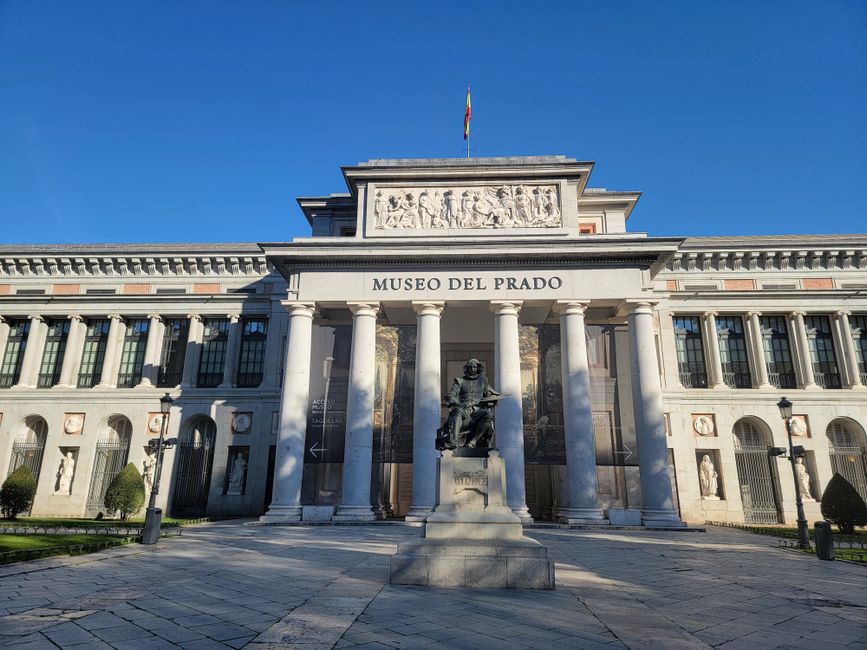
Museo Nacional del Prado
The Prado, opened in 1819, holds the world's finest collection of Spanish painting, including Velázquez's Las Meninas, Goya's Black Paintings and The Third of May 1808, and Bosch's The Garden of Earthly Delights. About 1,700 works are on show. General admission costs €15, and entry is free from 18:00 to 20:00 Monday to Saturday and from 17:00 to 19:00 on Sunday. Plan at least three hours and pick 10 key works rather than trying to see everything. Nearest metro: Banco de España or Atocha.

Palacio Real de Madrid
The Royal Palace, with about 3,400 rooms, is the largest royal palace in Western Europe by floor area. It was built from 1738 after the old Moorish fortress burned down, and today it is used for state ceremonies, while the royal family lives at the Zarzuela Palace. Highlights include the Throne Room with its Tiepolo ceiling and the Royal Armoury. Tickets cost around €14, and the Changing of the Guard takes place on Wednesday and Saturday mornings. Visit the Sabatini Gardens next door for free.

Plaza Mayor
Plaza Mayor, completed in 1619, is a vast arcaded square of red facades and 237 balconies that once hosted bullfights, coronations and Inquisition trials. The Casa de la Panadería, with its painted facade, faces an equestrian statue of King Philip III. In December it hosts Madrid's traditional Christmas market. Coffee on the square is expensive, so try a calamari sandwich, the bocadillo de calamares, in the side streets for €4–6 instead. The nine arched entrances lead into the old Habsburg quarter.
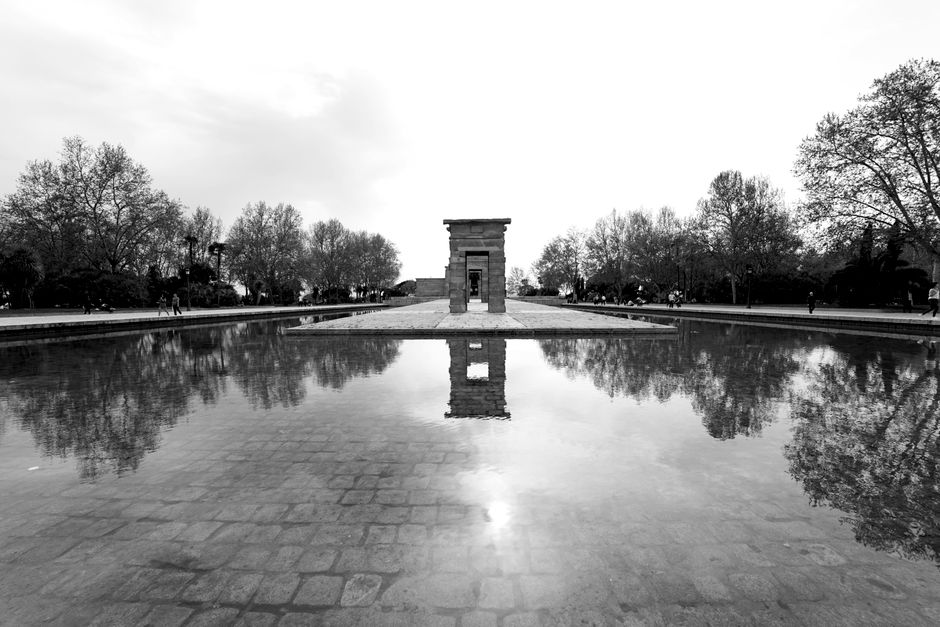
Templo de Debod
This ancient Egyptian temple from the 2nd century BC stands on a hill in Parque del Oeste, a gift from Egypt in 1968 after Spain helped rescue the Nubian monuments from the Aswan Dam. The temple was reassembled here stone by stone and opened in 1972. Inside, small exhibits explain its history, and entry is free with timed tickets. Come at sunset, when the stones glow orange in the reflecting pool and the view reaches the Royal Palace and the Casa de Campo.
History
Madrid began as Mayrit, a small Moorish fortress built in the 9th century by Emir Muhammad I of Córdoba to guard the road to Toledo. Its name comes from the Arabic word for water channels, and a fragment of that first wall survives on Calle de la Cuesta de la Vega. Christian Castile took the town in 1085, but it stayed a modest market town for almost five centuries. Everything changed in 1561, when King Philip II moved the royal court here from Toledo, choosing Madrid largely for its central position in the peninsula. The Habsburgs built Plaza Mayor, finished in 1619, and the Bourbons added the Royal Palace, the Prado and the grand boulevards of the 18th century under Charles III, remembered as the city's best mayor. During the Civil War Madrid resisted a siege from 1936 to 1939 under the slogan No pasarán. After Franco's death in 1975, the Movida Madrileña turned the city into Europe's late-night creative capital. Today Madrid is home to about 3.4 million people, and its Paseo del Prado and Retiro Park became a UNESCO World Heritage Site in 2021.
Culture
Madrid is the city that never goes to bed early: dinner starts at 21:30, bars fill at midnight and the metro runs until 1:30. Madrileños say that almost nobody is from here, because so many residents arrived from other regions or from Latin America, and the city welcomes newcomers quickly. Daily life revolves around the street: the caña of beer at a terrace, the Sunday Rastro flea market in La Latina and the evening paseo through the Retiro. Locals born in the city are called gatos, cats, a nickname dating back to the 11th-century conquest. The big festival is San Isidro in mid-May, when people dress in chulapo outfits with checked caps and dance the chotis. Football divides the city between Real Madrid and Atlético de Madrid, whose fans gather at the Cibeles and Neptuno fountains to celebrate titles. Art is part of everyday life, with three world-class museums within 1 km of each other along the Paseo del Prado.
Climate
Spring
7–25°C
April to early June is Madrid's finest season, with 15–25°C days, blooming chestnut trees in the Retiro and long terrace…
Summer
18–35°C
July and August are dry and hot, often 33–38°C in the afternoon, with nights cooling to around 20°C. Locals escape to th…
Autumn
9–27°C
September and October bring warm, clear days of 18–27°C and the start of the cultural season, with new exhibitions, thea…
Winter
1–13°C
December to February is cold and bright: Madrid sits at 650 m, so nights often fall to 0–3°C, while sunny afternoons rea…
Fun Facts
Every Spanish road begins at Puerta del Sol
A small stone plaque on the pavement in front of the Real Casa de Correos marks Kilómetro Cero, the point from which all…
Madrid has an Egyptian temple in a park
The Templo de Debod is a genuine 2nd-century BC Egyptian temple that stands in Parque del Oeste. Egypt gave it to Spain …
The city's symbol is a bear eating berries
The statue of El Oso y el Madroño in Puerta del Sol shows a bear reaching up into a strawberry tree, the emblem on Madri…
Madrid is one of Europe's highest capitals
Madrid sits at about 650 m above sea level, which makes it one of the highest capital cities in Europe. The altitude exp…
Madrid's biggest park is five times Central Park
The Casa de Campo, a former royal hunting estate west of the centre, covers about 1,700 hectares, roughly five times the…
The metro opened in 1919 with only one line
King Alfonso XIII opened Madrid's first metro line on 17 October 1919, running 3.5 km from Sol to Cuatro Caminos. Today …
Local Cuisine in Madrid

Cocido madrileño
A slow-cooked stew of chickpeas, beef, chorizo, pork belly, blood sausage and cabbage, served in three courses: soup, then chickpeas and vegetables, then meat. It is Madrid's winter ritual, and many taverns serve it only for lunch. Taberna La Bola has cooked it in individual clay pots over wood fires since 1870, for around €25.

Bocadillo de calamares
A crusty baguette stuffed with crisp rings of fried squid, sometimes with a dash of lemon or mayonnaise, is Madrid's favourite street sandwich, oddly enough in a city 300 km from the sea. The bars around Plaza Mayor, such as La Campana, sell it for €4–6. Locals eat it standing at the counter with a cold caña.

Huevos rotos
Fried eggs broken over a pile of thin fried potatoes, often with jamón or chorizo, so the runny yolk coats every chip. The dish became famous at Casa Lucio in La Cava Baja, where it has been served since 1974 to kings and Hollywood stars alike. Order a plate to share for €10–15.

Callos a la madrileña
A rich, spicy stew of beef tripe, chorizo and morcilla in a sauce of paprika and tomato, thick enough to coat the spoon. Callos is a dish for brave eaters and a classic of old taverns on cold days. It tastes even better the next day. Try it at Casa Alberto on Calle de las Huertas, open since 1827.

Churros con chocolate
Crisp loops of fried dough dipped into thick, almost pudding-like hot chocolate are Madrid's answer to the late night. Porras, the thicker version, are especially popular here. Chocolatería San Ginés, in a passage near Puerta del Sol, has served them since 1894 and opens almost around the clock, with a portion costing around €6.

Rosquillas de San Isidro
Small ring-shaped pastries sold only around the San Isidro festival in May, in four varieties: tontas (plain), listas (with lemon icing), francesas (with almonds) and de Santa Clara (with white meringue). Bakeries across Madrid sell them by weight in mid-May. Locals argue fiercely over whether tontas or listas are better.

Vermut de grifo
Sweet red vermouth poured from the tap and served with an orange slice and an olive is the drink of Madrid's Sunday mornings, especially after the Rastro market in La Latina. Taberna Casa Camacho in Malasaña and the bars of Calle de la Cava Baja pour it for €2.50–4. Pair it with patatas bravas or banderillas.
Practical Travel Information
Transport & Accessibility
International Transport
Adolfo Suárez Madrid-Barajas Airport, 12 km northeast of the centre, is Spain's busiest airport and Iberia's hub, with the strongest connections to Latin America of any European airport. Terminal 4, designed by Richard Rogers with a wavy bamboo ceiling, handles Iberia and oneworld flights. Madrid is the centre of Spain's high-speed rail network: Atocha station links Seville in 2.5 hours, Málaga and Valencia in under 2 hours and Barcelona in 2.5 hours, while Chamartín serves the north. Renfe AVE, Ouigo and Iryo compete on the main routes. Long-distance buses leave from Estación Sur and Avenida de América.
Local Transport
Madrid's metro has 13 lines plus a branch, runs from 6:00 to 1:30 and is clean, air-conditioned and easy to use. Tickets load onto a reusable Tarjeta Multi card that costs €2.50; a 10-trip Metrobús ticket costs around €12.20 and covers metro and city buses in Zone A. The Tourist Travel Pass offers unlimited travel from 1 to 7 days. EMT buses, including night owl buses called búhos, cover the city. The centre is compact and walkable: Royal Palace to the Prado is about 25 minutes on foot. BiciMAD electric bike-share is available to visitors through its app.
Safety & Health
Personal Safety
Madrid has low levels of violent crime and feels safe even late at night, when the streets are full of people. The main risk is pickpocketing in Puerta del Sol, Gran Vía, Plaza Mayor, the Rastro flea market and crowded metro lines such as Line 1 and Line 5. Watch for distraction tricks like petitions or people offering sprigs of rosemary. Keep phones away from café tables and bags closed. The Lavapiés and Malasaña neighbourhoods are lively and generally safe, though stay alert in quieter streets late at night. Call 112 for any emergency.
Medical Services
Madrid has excellent hospitals, including Hospital Universitario La Paz, Gregorio Marañón and the Clínico San Carlos, all with 24-hour emergency departments. EU visitors can use the European Health Insurance Card in public hospitals; other visitors should have travel insurance, as private emergency care costs €150–300 or more. Pharmacies with green crosses are everywhere, and several are open 24 hours, including one in Puerta del Sol. Tap water comes from the Sierra de Guadarrama and is among the best in Spain. In summer, the dry heat dehydrates quickly, so drink water regularly.
Budget & Costs
Travel Costs
Madrid is cheaper than Barcelona and most Western European capitals. A hostel bed costs €25–45, a mid-range hotel €100–180 and a four-star hotel in the centre €180–280. A menú del día costs €12–18, tapas €3–7 each and a sit-down dinner for two with wine €45–70. A coffee costs €1.50–2.20 and a caña €2–3.50. The Prado costs €15, the Royal Palace around €14 and the Reina Sofía around €12. A mid-range traveller should budget €120–160 per day, including accommodation. Budget travellers can manage on €70–90.
Budget Tips
Use the free hours at the Prado, Reina Sofía and Thyssen-Bornemisza museums, which can save €40 or more per person. In La Latina and Lavapiés, many bars still serve a small free tapa with each drink. Eat a menú del día at lunchtime instead of dining out at night. Buy a 10-trip Metrobús or Tourist Travel Pass instead of single tickets. Visit the Templo de Debod, the Crystal Palace and the Sabatini Gardens, which are free. Avoid the cafés directly on Plaza Mayor and Puerta del Sol, where prices are double.
Culture & Traditions
Social Norms
Madrileños greet friends with two kisses on the cheek and strangers with a handshake. Eating times are late: lunch is 14:00–16:00 and dinner rarely before 21:00. Bars are noisy and lively, and dropping napkins on the floor in old taverns was once a sign of a good place. Tipping is optional; rounding up or leaving 5–10% is generous. Dress smart-casual in the evening. Locals are direct and talkative, and it is normal to chat with strangers at the bar. Keep voices down in residential buildings late at night.
Cultural Activities
Visit the three museums of the Golden Triangle of Art: the Prado, the Reina Sofía and the Thyssen-Bornemisza. On Sunday morning explore the Rastro flea market in La Latina, held since the 18th century. Watch flamenco at Corral de la Morería, one of the oldest tablaos in the world, opened in 1956. See a zarzuela, Spain's light opera, at the Teatro de la Zarzuela. In mid-May join San Isidro, when locals dress as chulapos. Catch a match at Real Madrid's renovated Santiago Bernabéu stadium.
Unique Experiences in Madrid
Join the Rastro flea market on Sunday morning from 9:00 to 15:00 in La Latina, with around 1,000 stalls selling antiques, vinyl and clothes along Ribera de Curtidores, then do the vermouth crawl along Cava Baja. It is free, but go before 11:00 to avoid crowds.
Watch the sunset from the Templo de Debod or from the rooftop of the Círculo de Bellas Artes, where entry costs around €5 and the terrace looks straight down Gran Vía and Calle de Alcalá. Book the rooftop bar on summer weekends.
Take a tapas tour through La Latina and Huertas, ordering one speciality per bar: gambas al ajillo at La Casa del Abuelo, open since 1906, and croquetas at Casa Labra, where the Spanish Socialist Party was founded in 1879. Expect €30–40 for a full evening.
See flamenco at Corral de la Morería, rated among the world's best tablaos, where shows cost from about €50 and can include a Michelin-starred dinner. Book a week ahead, especially on Friday and Saturday nights. Dress smartly, as many guests do.
Visit Andén 0, the ghost metro station of Chamberí, closed in 1966 and preserved with its original tiles and advertisements. Entry is free, groups are small, and it opens on selected days, so check times on the Metro de Madrid website.
Travel Recommendations for Madrid
Plan your Prado visit around 10 to 15 masterpieces rather than trying to see everything. Start with Velázquez's Las Meni…
Stay in the Barrio de las Letras, La Latina or Malasaña rather than right on Gran Vía. You will be within walking distan…
Eat lunch as your main meal between 14:00 and 15:30 with a menú del día. Order cocido madrileño at lunch, not dinner. Fo…
Take a day trip to Toledo or Segovia by high-speed train, 27–33 minutes each way. Book the train two weeks ahead for far…
In summer, adapt to the heat: visit museums at midday, take a siesta, and go out after 20:00 when terraces fill. In wint…