Valencia
Updated October 16, 2026
Also known as: València, Valentia
Main Landmarks in Valencia

Ciutat de les Arts i les Ciències
The City of Arts and Sciences is a 2 km complex of white futuristic buildings by Santiago Calatrava and Félix Candela, set in the old Turia riverbed. The Oceanogràfic, Europe's largest aquarium, holds around 45,000 animals, while the Hemisfèric offers IMAX-style shows and the Science Museum has hands-on exhibits. Combined tickets save money, with the aquarium alone costing about €38–40. The outdoor areas and reflecting pools are free. Visit at dusk, when the buildings are lit blue and white. Allow a full day.

Valencia Cathedral and El Micalet
Valencia Cathedral, begun in 1262 on the site of a mosque, mixes Romanesque, Gothic and Baroque styles, with three different doors. Its chapel of the Holy Chalice holds the cup that tradition identifies as the Holy Grail, and the main altar has rediscovered Renaissance frescoes of angels. Climb the 207 steps of El Micalet, the octagonal bell tower, for views over the old town. Entry costs about €9 with audio guide. On Thursdays at noon, watch the Water Tribunal at the Apostles' Door.

La Lonja de la Seda
The Silk Exchange, built between 1482 and 1533, is one of the finest examples of civil Gothic architecture in Europe and a UNESCO World Heritage Site since 1996. Its Hall of Columns has eight spiral columns that rise 17 m like palm trees, where merchants once signed silk contracts. Look for the strange carved figures on the outer walls, some humorous and some rude. Entry costs only about €2, and it is free on Sundays. Allow 30–45 minutes for the visit.

Mercat Central
Opposite the Lonja, the Central Market opened in 1928 and is one of Europe's largest fresh food markets, with around 300 stalls under a Modernista dome of stained glass and tiles. Come in the morning to see Valencians buying fish, rice and vegetables, and try a bocadillo or fresh juice at the Central Bar run by chef Ricard Camarena. The market is open from Monday to Saturday until about 15:00. It is a good place to buy saffron and paella rice to take home.
Jardí del Túria
The Turia Gardens are a 9 km green belt built in the old riverbed after the 1957 flood, running from the Bioparc zoo to the City of Arts and Sciences. Locals jog, cycle and play football under 18 historic and modern bridges, including the 16th-century Pont del Real. The Gulliver Park, a giant playground in the shape of Gulliver tied down, is a hit with children and free to enter. Rent a bicycle for about €10–15 per day to ride the whole length.
Torres de Serranos
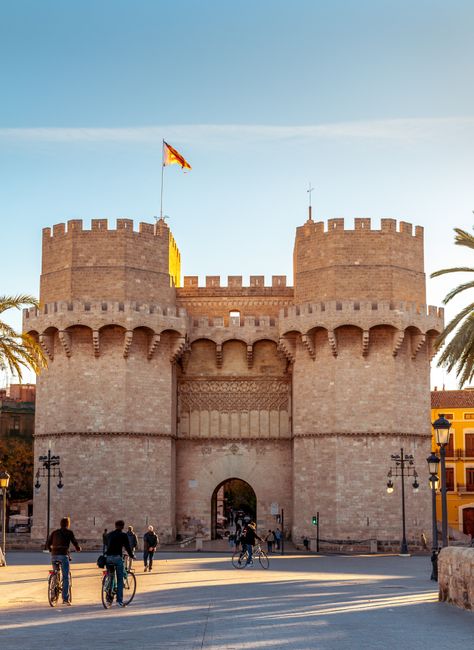
The Serranos Towers, built in 1392, are one of two surviving gates of Valencia's medieval wall and among the largest Gothic city gates in Europe. Their twin towers guarded the road to the north, and they later served as a prison for nobles. Climb to the top for views over the old town and the Turia gardens. Entry costs about €2, free on Sundays. During Las Fallas, the official opening call, the Crida, is read from the towers in late February.

Parc Natural de l'Albufera
The Albufera is a freshwater lagoon of about 2,100 hectares surrounded by rice fields, just 10 km south of the centre, and the birthplace of paella. Take a traditional flat-bottomed boat from the village of El Palmar for about €5–7 to see herons and sunsets over the water. The nearby beaches of El Saler are backed by dunes and pine forests. Have a paella or all i pebre, eel stew, in El Palmar. Bus 25 runs from the city. Bring insect repellent.
History
Valencia was founded by Roman veterans in 138 BC as Valentia, on a river island in the Turia, and it has been an agricultural and trading city ever since. The Moors, who ruled from 714, built the irrigation channels that still water the huerta, the market gardens around the city, and introduced rice to the lagoon of the Albufera. In 1238 King James I of Aragon conquered Valencia and made it the capital of an autonomous kingdom with its own laws and language. The 15th century was a golden age: Valencia became one of the largest cities of the Crown of Aragon, built the Silk Exchange, the Lonja, and printed some of the first books in Spain. During the Spanish Civil War it served as the seat of the Republican government from 1936 to 1937. After a devastating flood in October 1957, the city diverted the Turia south and turned the old riverbed into a 9 km park. The City of Arts and Sciences, opened from 1998, gave Valencia a new image. Today it is Spain's third-largest city, with about 800,000 inhabitants, and it was named European Green Capital for 2024.
Culture
Valencians are proud of their own language, Valencian, a variety of Catalan heard in schools, signs and the Las Fallas speeches, alongside Spanish. Life is lived outdoors on terraces and beaches, and Sunday lunch is reserved for paella, cooked over orange-wood fires in a wide pan. The year revolves around Las Fallas in March, when each neighbourhood builds a giant satirical sculpture and burns it on the night of 19 March, a tradition inscribed by UNESCO in 2016. Fireworks and firecrackers are a passion, and the daily mascletà at 14:00 shakes the windows of Plaza del Ayuntamiento. Every Thursday at noon, the Water Tribunal, a court of farmers that has settled irrigation disputes for about 1,000 years, meets outside the Cathedral's Apostles' Door and rules orally in Valencian. Valencia is also a city of bikes and parks, with around 200 km of cycle lanes. Locals cool down with horchata, a drink made from tiger nuts grown in Alboraya, just north of the city.
Climate
Spring
10–25°C
March to May brings 17–25°C days and the city's biggest party, Las Fallas, from 15 to 19 March. The orange trees blossom…
Summer
20–31°C
June to August is hot and humid, with 28–32°C afternoons, warm nights around 22°C and sea temperatures of 25–27°C. It is…
Autumn
13–27°C
September and October keep the sea warm at 22–25°C and temperatures pleasant at 20–28°C, ideal for beaches and the Albuf…
Winter
6–17°C
December to February is mild and sunny, with 15–18°C afternoons and around 300 days of sunshine a year. It is the cheape…
Fun Facts
Valencia's Cathedral claims to hold the Holy Grail
Valencia Cathedral keeps an agate cup in a side chapel that tradition identifies as the Holy Chalice used by Jesus at th…
Europe's oldest court meets every Thursday
The Tribunal de les Aigües, the Water Tribunal of the Plain of Valencia, has met outside the Cathedral for about 1,000 y…
A whole river was moved to stop floods
After the Turia flooded Valencia in October 1957, killing dozens of people, the city built a new channel to divert the r…
Paella was born as a farmworkers' lunch
Paella began in the 19th century in the rice fields around the Albufera lagoon, where farmworkers cooked rice with whate…
The Central Market sells under a glass dome
Valencia's Mercat Central, opened in 1928, is one of the largest food markets in Europe, covering about 8,000 m² under a…
Valencia has its own tiger nut drink
Horchata de chufa, a sweet, milky drink made from tiger nuts, is Valencia's summer refreshment. The tiger nuts grow in t…
Local Cuisine in Valencia
All i pebre
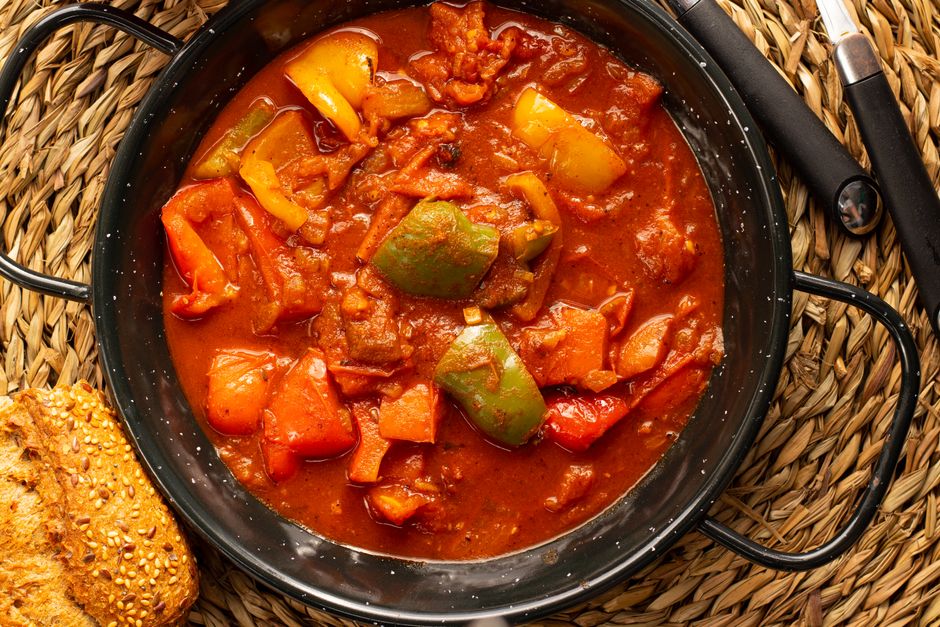
A spicy stew of eel and potatoes in a sauce of garlic, sweet paprika and chilli, typical of the Albufera lagoon. It is a dish of the fishermen who once lived around the water. Restaurants in El Palmar, surrounded by rice fields, serve it as a starter or main for €12–18. It pairs well with local white wine.

Esgarraet
A cold salad of roasted red peppers, salt cod, garlic and olive oil, eaten as a starter or tapa in Valencian bars. The name means torn, because the peppers and cod are shredded by hand. It is fresh, smoky and salty. Most tapas bars in the old town serve a plate for €6–9, often with bread.

Paella valenciana
The original paella from Valencia combines short-grain rice with chicken, rabbit, flat green beans, garrofó butter beans, saffron and sometimes snails, cooked over a wood fire. The prized crust at the bottom is called socarrat. Valencians eat it at lunch, never dinner. Restaurants on the Malvarrosa beach and in El Palmar serve it for €15–22 per person.

Arròs a banda
Rice cooked in a rich fish stock in a paella pan, served with allioli, a garlic sauce. It was originally a fishermen's dish, where the fish was eaten separately, a banda, and the rice soaked up all the flavour. Seafront restaurants in El Cabanyal serve it for €14–20 per person, usually for a minimum of two.
Horchata and fartons
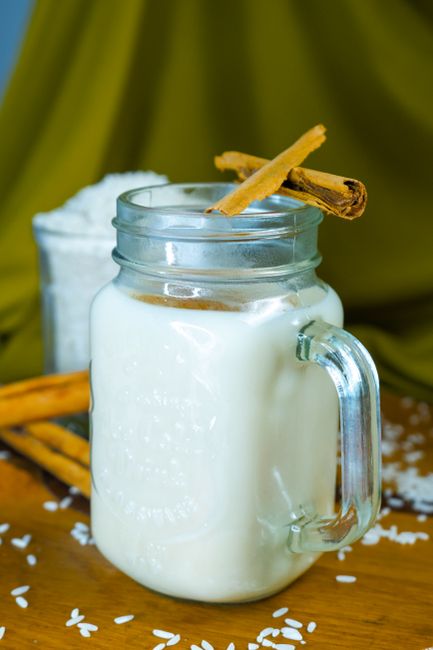
A chilled, creamy drink made from tiger nuts, water and sugar, served with fartons, long soft glazed buns for dipping. Tiger nuts are grown in Alboraya, north of the city. Horchatería Santa Catalina and Horchatería El Siglo in Plaza de Santa Catalina serve it for about €3–4. It is best in summer.
Valencian oranges
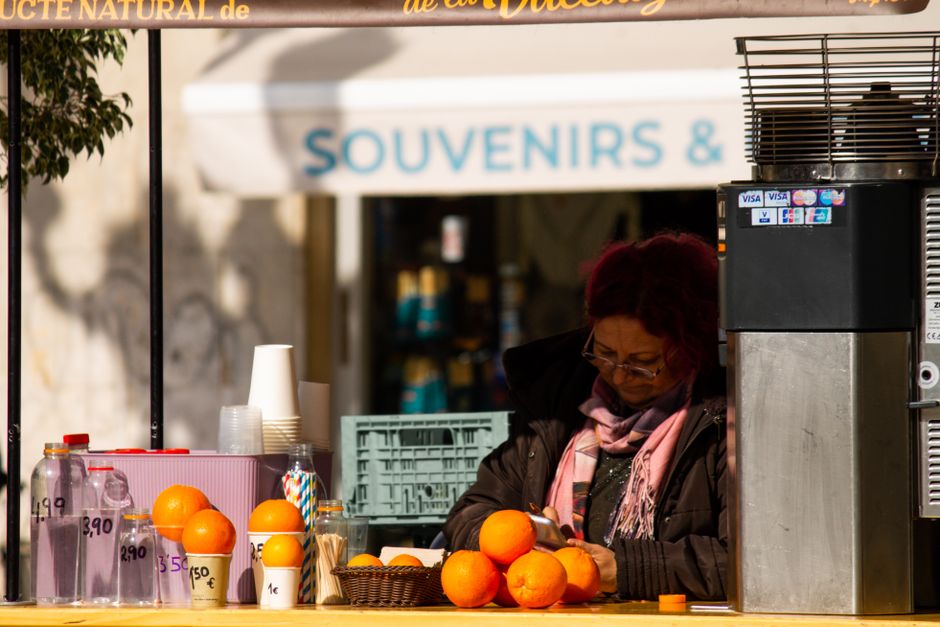
Sweet, juicy oranges from the orchards around the city are among the most famous in Europe, harvested from November to May. Freshly squeezed orange juice is on every café menu, often for €2–4 a glass. In the Central Market, buy a bag of oranges or mandarins directly from local growers for a few euros.
Practical Travel Information
Transport & Accessibility
International Transport
Valencia Airport (VLC), 8 km west of the centre, has direct flights to most European capitals and connections through Madrid and Barcelona for long-haul travel. High-speed AVE and low-cost Ouigo and Iryo trains connect Valencia's Joaquín Sorolla station with Madrid in about 1 hour 50 minutes. The Euromed line runs along the coast to Barcelona in about 3 hours. Ferries from the Port of Valencia sail to Ibiza, Mallorca and Menorca, with overnight crossings available. Long-distance buses leave from the bus station on Avenida Menéndez Pidal.
Local Transport
Metrovalencia operates metro and tram lines, including lines 3 and 5 to the airport and tram line 4 to the Malvarrosa beach. EMT city buses cover the whole city, and a 10-journey SUMA card makes trips cheaper. Valenbisi, the bike-sharing system, is designed for residents, but rental shops charge €10–15 per day, and the city has around 200 km of cycle lanes, including the flat Turia gardens. The old town is compact and walkable. Taxis are reasonably priced. Electric scooters for rent are also common.
Safety & Health
Personal Safety
Valencia is a safe city with low violent crime. Pickpockets operate in crowded places such as the Central Market, the Plaza de la Virgen, the beach and metro lines during Las Fallas. Keep belongings close at the beach, as unattended bags are sometimes stolen. During Las Fallas, firecrackers are everywhere, so watch children and wear earplugs. In autumn, heavy storms called DANA can cause flash flooding; follow official alerts from 112 Comunitat Valenciana and avoid riverbeds and underpasses during red warnings. Call 112 in an emergency.
Medical Services
Hospital Universitari i Politècnic La Fe and Hospital Clínico Universitario are the main public hospitals, both with 24-hour emergency services. EU travellers can use the European Health Insurance Card in public hospitals; other visitors should have travel insurance. Pharmacies are plentiful, and night-duty pharmacies are listed on their doors. Tap water is safe, though many locals prefer bottled water for its taste. In summer, sunburn and dehydration are common at the beach, so use sunscreen and drink plenty of water.
Budget & Costs
Travel Costs
Valencia is cheaper than Barcelona and Madrid. A hostel bed costs €20–40, a mid-range hotel €80–150 and a four-star hotel in the old town €150–220, with prices tripling during Las Fallas. A menú del día costs €12–16, paella for one €15–22 and dinner for two with wine €40–60. A horchata costs €3–4, and a caña €2–3. The Oceanogràfic costs about €38–40, the Cathedral about €9 and the Lonja about €2. A mid-range traveller should budget €100–140 per day. Backpackers can manage on €60–80.
Budget Tips
Eat your main meal at lunchtime with a menú del día, which often includes paella on Thursdays and Sundays. Many municipal monuments, including the Lonja and the Torres de Serranos, are free on Sundays. Buy a combined ticket for the City of Arts and Sciences instead of separate entries. Rent a bike instead of taking taxis, since the city is flat. The Valencia Tourist Card includes free public transport and discounts. Visit between November and February for the cheapest hotels, and avoid Las Fallas if you are on a tight budget.
Culture & Traditions
Social Norms
Valencians are friendly and open, and greet friends with two kisses. Valencian is co-official with Spanish, so signs and menus may be in both languages; a simple bon dia is appreciated. Paella is a serious matter: avoid asking for chorizo in it and eat it at lunch. Meal times are late, with lunch from 14:00 and dinner after 21:00. During Las Fallas, respect the falleras in traditional dress and the barriers around the monuments. Tipping is optional, with rounding up common.
Cultural Activities
Experience Las Fallas from 15 to 19 March, with the daily mascletà at 14:00 and the burning of the sculptures, the Cremà, on 19 March. Watch the Water Tribunal on Thursday at noon outside the Cathedral. Visit the Fallas Museum, where the ninots saved from the fire each year are displayed. Attend a concert at the Palau de les Arts Reina Sofía, one of Europe's leading opera houses. In July, enjoy the Gran Fira de València. On 9 October, Valencian Community Day brings parades.
Unique Experiences in Valencia
Learn to cook paella in a hands-on class that starts with a morning visit to the Central Market to buy ingredients. Classes last about four hours, cost €60–90 and include lunch with local wine. Book a few days ahead online.
Visit the Water Tribunal outside the Cathedral's Apostles' Door on Thursday at noon, when eight farmers in black robes settle irrigation disputes in Valencian in a ritual about 1,000 years old. It is free and lasts only a few minutes, so be punctual.
Watch the mascletà during Las Fallas, from 1 to 19 March, at 14:00 in Plaza del Ayuntamiento, when about 120 kg of gunpowder explodes in a rhythmic thunder you feel in your chest. It is free, but arrive an hour early for a spot and bring earplugs.
Take a sunset boat ride on the Albufera lagoon from El Palmar, gliding past rice fields and herons in a traditional flat-bottomed boat for about €5–7. Combine it with a paella lunch at a village restaurant, and catch bus 25 back to the city.
Cycle the 9 km Turia gardens from the Bioparc to the City of Arts and Sciences, passing medieval bridges, orange trees and the giant Gulliver playground. Bike rental costs €10–15 per day, and the route is completely flat and car-free.
Travel Recommendations for Valencia
Spend at least one morning at the Central Market and the Lonja, which face each other. Arrive by 10:00 to see the market…
In autumn, check weather alerts before travelling. Heavy storms can hit the region in September and October and cause fl…
Book accommodation for Las Fallas at least three to four months ahead, as prices can triple. If you prefer a quieter vis…
Eat paella only at lunch and in a proper restaurant, preferably one that cooks it over a wood fire. Order at least an ho…
Use public transport and bikes. Metro lines 3 and 5 connect the airport with the centre, tram line 4 goes to the beach, …