Croatia
Updated October 19, 2026
Croatia, on the eastern shore of the Adriatic Sea, stretches in a crescent from the Pannonian plains around Zagreb to the long Dalmatian coast, with about 1,800 km of mainland coastline and more than 1,200 islands and islets, about 50 of them inhabited. About 3.9 million people live here, and the co…
Must-See Places in Croatia

Dubrovnik City Walls
About 1.9 km of medieval walls around Dubrovnik's UNESCO-listed Old Town, with views over terracotta roofs and the Adriatic.

Diocletian's Palace
A Roman emperor's palace from about 305 AD that grew into Split's lived-in Old Town, a UNESCO site.

Plitvice Lakes National Park
Sixteen terraced turquoise lakes linked by waterfalls and wooden boardwalks, Croatia's oldest national park and a UNESCO site.

Krka National Park
A river canyon of cascades and travertine waterfalls, with Skradinski Buk, the largest, near the town of Skradin.

Pula Arena
A Roman amphitheatre from the 1st century AD, one of the six largest surviving, still used for concerts and films.
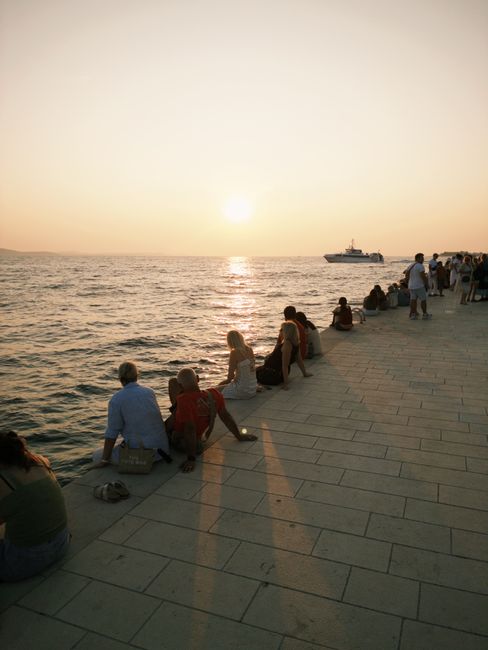
Zadar Sea Organ
Marble steps on the waterfront with 35 pipes played by the waves, next to the light installation Greeting to the Sun.

Upper Town of Zagreb
Gornji Grad, the medieval core of the capital, with St Mark's Church, the Stone Gate and the Museum of Broken Relationships.
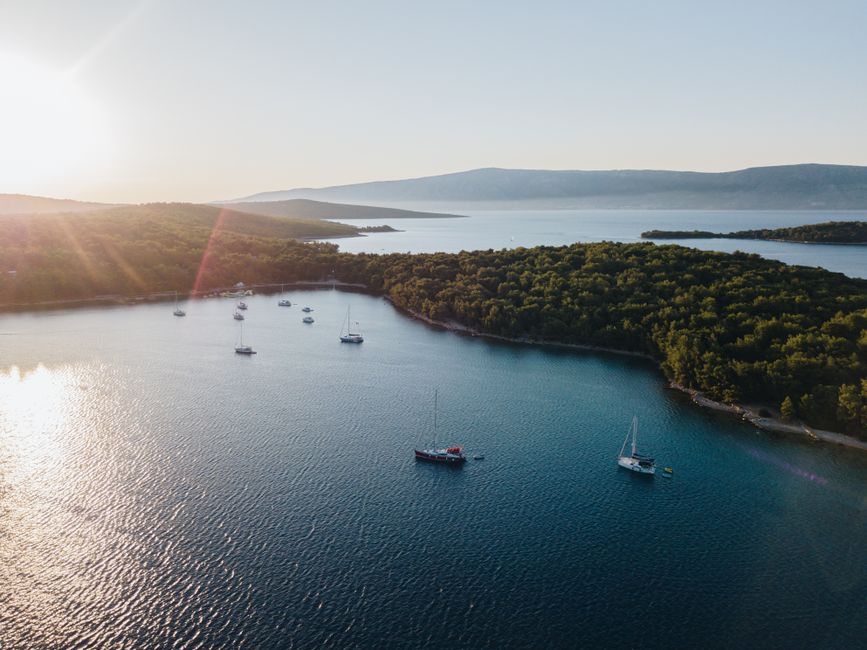
Pakleni Islands
A chain of pine-covered islands off Hvar Town, with clear coves, beach bars and sailing anchorages.
Unique Experiences in Croatia
Walk the Walls of Dubrovnik
Walk around the full circuit of Dubrovnik's medieval city walls, about 1.9 km, with towers, bastions and views over the Old Town and the Adriatic.
Island Hopping by Ferry or Sailing Boat
Hop between the Dalmatian islands, such as Brač, Hvar, Vis, Korčula and Mljet, by ferry, catamaran or a chartered sailing boat, stopping in quiet coves and harbour towns.
Explore Plitvice Lakes
Walk the wooden boardwalks over sixteen turquoise lakes and dozens of waterfalls in Plitvice Lakes National Park, Croatia's oldest national park.
Hunt Truffles in Istria
Join a truffle hunter and his dogs in the forests around Motovun and Buzet in Istria, then taste fresh truffles with pasta, eggs and local Malvazija wine.
Kayak Around Dubrovnik
Paddle a sea kayak along the walls of Dubrovnik to Lokrum Island, swimming in coves and seeing the Old Town from the sea.
Travel Tips for Croatia
Visit in the Shoulder Season
Plan your trip for May, June or September, when the sea is warm enough for swimming, the weather is sunny and the crowds…
Book Ferries and Catamarans Early
Book Jadrolinija and TP Line catamarans online as soon as your dates are fixed, as fast boats between Split, Hvar, Korču…
Rent a Car for Inland and Istria
Rent a car to explore Istria's hilltop towns, Plitvice Lakes, Krka and the Pelješac peninsula, which are difficult to re…
Bring Water Shoes for the Beaches
Most beaches in Croatia are pebble or rocky, with very clear water, and there are sea urchins on some rocks, so bring wa…
Respect Local Rules in Old Towns
Many Croatian towns fine visitors for walking in swimwear or without a shirt in the Old Town, and Split, Hvar and Dubrov…
Eat in Konobas and Ask Fish Prices
Eat in konobas, traditional family taverns serving homemade dishes, local wine and fresh fish, rather than in restaurant…
Must-Try Local Dishes

Peka
A traditional Dalmatian dish of lamb, veal or octopus slowly cooked with potatoes, vegetables and herbs under a bell-shaped iron lid covered with hot embers, for about two to three hours. Restaurants usually require ordering it a few hours or a day in advance. A portion costs about €25–35. It is a dish to share with friends, especially in island konobas.

Black Risotto
Crni rižot, risotto coloured black with cuttlefish or squid ink, cooked with cuttlefish, garlic, olive oil and white wine, is one of the most popular dishes on the Dalmatian coast. A portion costs about €15–22. It turns teeth black for a while, so order it with friends. Try it in a konoba in Split, Hvar or Dubrovnik.
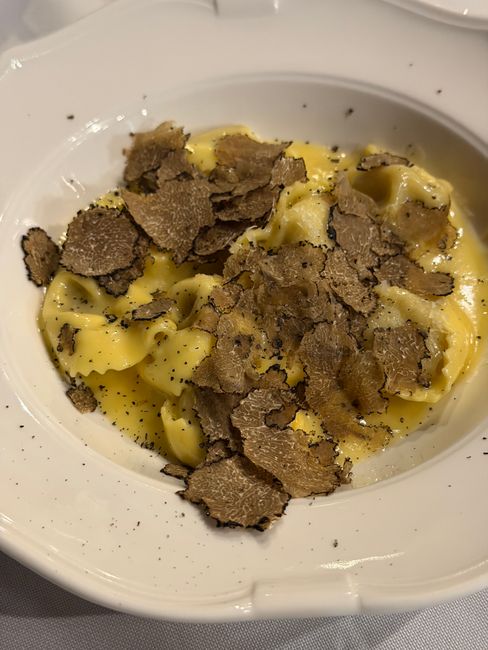
Istrian Truffles
Istria is famous for white and black truffles, found in the Motovun forest with trained dogs, served with fuži or pljukanci pasta, scrambled eggs and steak. White truffle season runs from about September to January. A truffle pasta costs about €20–35. Visit Motovun or Buzet, and join a truffle hunt with a local family.
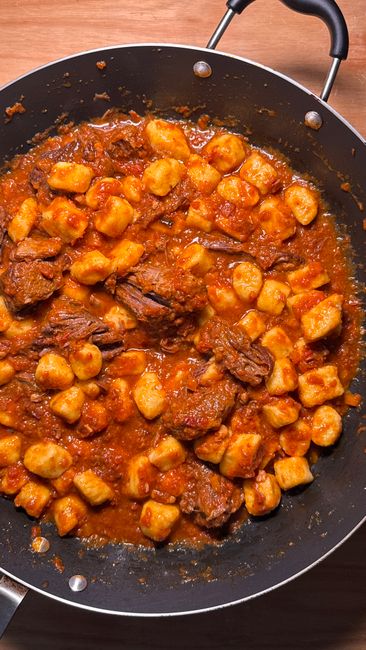
Pašticada
A Dalmatian beef stew, marinated in vinegar and slowly braised for hours with prunes, wine, carrots and spices, served with homemade gnocchi. It is a festive dish prepared for weddings and holidays, especially in Split, and each family has its own recipe. A portion costs about €18–25. Try it at a traditional konoba.
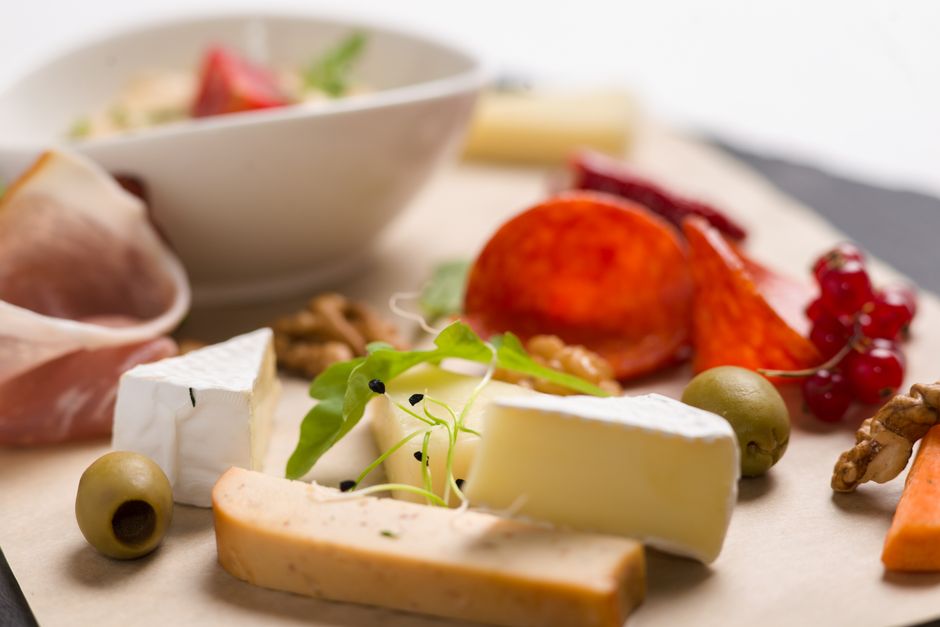
Paški Sir and Pršut
Paški sir, a hard sheep's cheese from the island of Pag, flavoured by the salty herbs the sheep graze, and Dalmatian pršut, air-dried ham cured by the bura wind, are served together as a starter with olives and bread. A platter costs about €15–25. Buy cheese at the Gligora dairy on Pag.

Grilled Fish and Seafood
Fresh Adriatic fish, such as sea bass, sea bream and John Dory, grilled and served with blitva, chard and potatoes with olive oil, as well as Ston oysters and mussels from the Pelješac peninsula. Fish is often priced by the kilogram, about €60–90 per kg. Ask to see the fish first, and ask the price before ordering.

Štrukli
Zagorski štrukli, dough filled with fresh cottage cheese and sour cream, boiled or baked with cream until golden, are a speciality of Zagreb and the Zagorje region, protected as Croatian intangible cultural heritage. A portion costs about €8–14. Try them at La Štruk in Zagreb, a restaurant that serves only štrukli.

Croatian Wine
Croatia produces excellent wines, such as Plavac Mali, a strong red from the Pelješac peninsula and Hvar, Dingač and Postup, Malvazija, a white wine from Istria, Pošip from Korčula and Graševina from Slavonia. A glass costs about €4–8. Visit wineries on Pelješac and in Istria for tastings, about €15–30. Ask for local wine by the carafe.
History
Illyrians, Greeks and Romans
The territory of Croatia has been inhabited since prehistoric times, and the Krapina site, north of Zagreb, has remains of about 80 Neanderthals, about 125,000 years old, one of the largest Neanderthal finds in the world, presented at the Krapina Neanderthal Museum. The Vučedol culture, near Vukovar, flourished about 3000–2200 BC, and its ceramic Vučedol Dove became a symbol of the region. In the 1st millennium BC, Illyrian tribes, such as the Liburnians, the Delmatae and the Histri, lived along the coast, and the Liburnians were famous sailors.
Greek colonies and Roman rule
From the 4th century BC, Greek colonists founded settlements on the islands, such as Issa, on Vis, Pharos, today Stari Grad on Hvar, where the Stari Grad Plain, a UNESCO site, still shows the Greek field divisions, and Korkyra Melaina, on Korčula. The Romans conquered the region after long wars with the Illyrians, and it became the province of Dalmatia, with its capital at Salona, near Split, a city of about 60,000 people. Pula, in Istria, has a Roman amphitheatre, built in the 1st century AD, one of the six largest surviving Roman arenas. Around 295–305 AD, the Emperor Diocletian, born in Dalmatia, built his retirement palace on the coast, which grew into the city of Split.
Climate & Best Time to Visit
Spring
6–22°C
March to May brings mild weather, with days of about 15–22°C on the coast and 12–20°C in Zagreb, blossoming countryside …
Summer
18–31°C
June to August is hot, dry and sunny on the coast, with days of about 28–32°C, sea temperatures of about 23–26°C and lon…
Autumn
10–26°C
September and October bring warm days of about 20–26°C on the coast, a sea still warm at about 21–24°C in September, the…
Winter
-2–12°C
December to February is mild and rainy on the coast, with days of about 10–13°C and strong bura winds, while Zagreb and …
Fascinating Fun Facts
The birthplace of the necktie
The necktie comes from Croatia. In the 17th century, Croatian soldiers serving in France during the Thirty Years' War wo…
Dalmatian dogs come from Dalmatia
The Dalmatian, the spotted dog breed made famous by the film 101 Dalmatians, takes its name from Dalmatia, the coastal r…
A sea organ played by the waves
The Sea Organ in Zadar, designed by the architect Nikola Bašić and opened in 2005, is a set of 35 pipes built under marb…
One of the smallest towns in the world
Hum, in Istria, with about 20 to 30 inhabitants, is often described as the smallest town in the world, with medieval wal…
Game of Thrones in Croatia
Dubrovnik was the main filming location for King's Landing in the TV series Game of Thrones, from the second season in 2…
Inventions from Croatia
Several inventions are linked to Croatia. Slavoljub Penkala, in Zagreb, patented a mechanical pencil in 1906, and his co…
Traveler Reviews (0 reviews)
Sign in to leave a review and share your experience.
Sign InNo reviews yet. Be the first to share your experience!