Canada
Updated October 19, 2026
Canada, in North America, is the second largest country in the world by area, about 9.98 million square kilometres, stretching from the Atlantic to the Pacific and north to the Arctic Ocean, bordering the United States along the world's longest international border, about 8,890 km. About 41 million …
Must-See Places in Canada

CN Tower
Toronto's 553-metre tower, with a glass floor, a revolving restaurant and the EdgeWalk around the roof of its main pod.

Stanley Park
A 400-hectare rainforest park on a peninsula in Vancouver, ringed by the Seawall, with totem poles and beaches.

Old Montreal
Cobbled streets, the Notre-Dame Basilica and the Old Port in the oldest, French-speaking quarter of Montreal.

Château Frontenac and Old Quebec
The only walled city north of Mexico, a UNESCO site, crowned by the turreted Château Frontenac hotel.

Lake Louise and Moraine Lake
Turquoise glacial lakes surrounded by peaks in Banff National Park, Canada's first national park.

Parliament Hill
The Gothic Revival parliament buildings of Ottawa above the Ottawa River, with the Peace Tower and the Changing of the Guard.

Horseshoe Falls
The Canadian side of Niagara Falls, where about 168,000 cubic metres of water plunge every minute.

Peggy's Cove
A tiny fishing village with a famous lighthouse on granite rocks, about 45 minutes from Halifax.
Unique Experiences in Canada
Drive the Icefields Parkway
Drive the Icefields Parkway, about 232 km between Lake Louise and Jasper, one of the most scenic roads in the world, past glaciers, turquoise lakes, waterfalls and peaks of the Rocky Mountains.
See the Northern Lights
Watch the aurora borealis dance across the sky in the Yukon, the Northwest Territories or northern provinces, among the best places in the world for the northern lights.
Whale Watching on Both Coasts
Watch orcas, humpbacks and grey whales off Vancouver Island, or humpbacks, minkes, belugas and blue whales in the St Lawrence River at Tadoussac and in the Bay of Fundy.
Canoe in Algonquin Park
Paddle through the lakes and rivers of Algonquin Provincial Park, in Ontario, one of the most famous canoeing areas in the world, camping on islands and listening to loons and wolves.
Visit a Sugar Shack
Celebrate the maple syrup season at a cabane à sucre, a sugar shack, in Quebec, with a hearty meal of pea soup, ham, eggs, pancakes and maple taffy on snow, often with folk music.
Travel Tips for Canada
Choose your season by activity
Canada is huge, and the best time to visit depends on your plans. Summer, from June to September, is best for national p…
Plan for long distances
Distances in Canada are enormous: Toronto to Vancouver is about 4,400 km, about five hours by plane. Fly between regions…
Get an eTA or visa
Most visitors who do not need a visa, such as citizens of the EU, the UK, Australia and Japan, need an Electronic Travel…
Buy a Parks Canada Discovery Pass
If you plan to visit several national parks, such as Banff, Jasper, Yoho and Pacific Rim, buy the Parks Canada Discovery…
Respect wildlife and nature
Canada's wilderness is home to bears, moose, elk, wolves and cougars. Keep a safe distance from wildlife, at least 100 m…
Tip and expect taxes
In Canada, tipping is expected: about 15–20% in restaurants and bars, CAD 1–2 per drink, about 10–15% for taxis and CAD …
Must-Try Local Dishes

Poutine
Poutine, from Quebec, created in the 1950s, is a dish of French fries topped with fresh cheese curds, which squeak when bitten, and hot brown gravy, which melts the curds slightly. It is sold everywhere, from fast food chains to restaurants, with variations, such as pulled pork or lobster. A portion costs about CAD 8–18. La Banquise in Montreal is famous, open 24 hours.

Maple Syrup
Maple syrup, made by boiling the sap of sugar maple trees in spring, is a symbol of Canada, poured on pancakes, waffles and bacon, and used in sweets, such as maple taffy, tire sur la neige, made by pouring hot syrup on snow and rolling it on a stick. Sugar shacks, cabanes à sucre, in Quebec serve traditional meals in March and April. A bottle costs about CAD 10–25.

Montreal Bagels
Montreal-style bagels are smaller, thinner, sweeter and denser than New York bagels, boiled in water with honey and baked in wood-fired ovens, usually topped with sesame or poppy seeds. Fairmount Bagel and St-Viateur Bagel, both open 24 hours, have been rivals since the 1950s. A bagel costs about CAD 1.50–2. Eat them warm, straight from the oven.

Nanaimo Bars
Nanaimo bars, named after the city of Nanaimo, in British Columbia, are no-bake dessert bars with three layers: a crumb base of graham crackers, coconut and nuts, a custard-flavoured butter icing in the middle and a layer of chocolate on top. They are sold in cafés and bakeries across Canada. A bar costs about CAD 3–5. They are very sweet and rich.
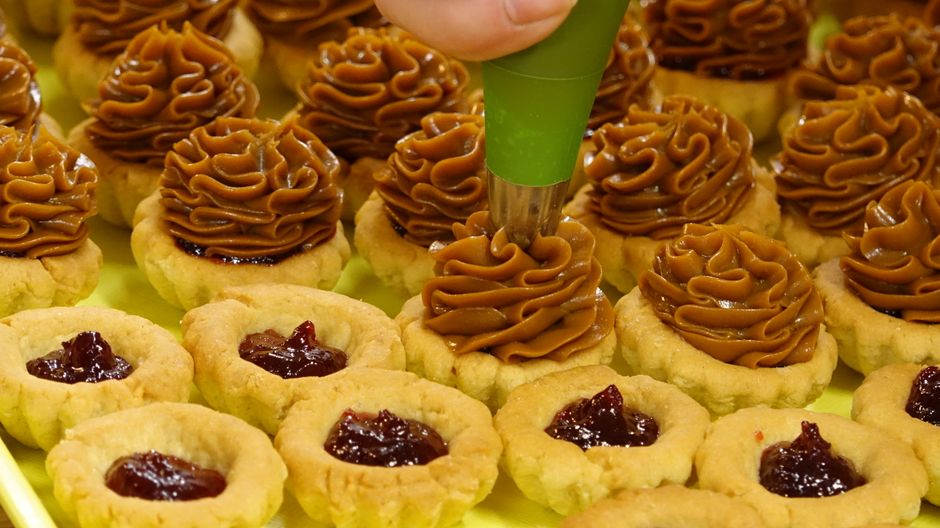
Butter Tarts
Butter tarts are small pastries with a flaky crust filled with a sweet, runny filling of butter, sugar, syrup and eggs, sometimes with raisins or pecans, a classic Canadian dessert, especially in Ontario, where there are butter tart trails and festivals. A tart costs about CAD 2–4. The debate over raisins or no raisins is a national pastime.

Pacific Salmon
Wild Pacific salmon, such as sockeye, chinook and coho, from British Columbia, is grilled, smoked, cured as candied salmon or cooked on cedar planks, a traditional Indigenous technique. Restaurants in Vancouver and Victoria serve it fresh. A salmon dish costs about CAD 25–45. Smoked salmon makes a good souvenir. It is best in late summer.

Atlantic Lobster
Lobster from the Atlantic coast, especially Nova Scotia, Prince Edward Island and New Brunswick, is boiled or steamed and served whole with butter, in lobster rolls or at lobster suppers, community meals in church halls. The season varies by area. A lobster dinner costs about CAD 30–60. Prince Edward Island also has famous mussels and oysters.

BeaverTails
BeaverTails are flat, fried dough pastries shaped like a beaver's tail, topped with cinnamon sugar, chocolate hazelnut spread, maple butter or other toppings, first sold in Ontario in 1978. They are especially popular on the Rideau Canal Skateway in Ottawa and in ski resorts. A BeaverTail costs about CAD 7–10. Eat one hot on a cold day.
History
Indigenous Peoples and Early Explorers
People have lived in the land that is now Canada for at least 14,000 years, arriving from Asia, and many distinct Indigenous nations developed, such as the Haida and Coast Salish on the Pacific coast, the Cree and Blackfoot on the plains, the Haudenosaunee and Huron-Wendat around the Great Lakes, the Mi'kmaq in the east and the Inuit in the Arctic. They built complex societies, with trade networks, governance systems and diverse cultures. The name Canada comes from the Huron-Iroquois word kanata, meaning village.
Vikings and Europeans
Around 1000 AD, Norse explorers led by Leif Erikson reached Newfoundland, and the site of L'Anse aux Meadows, a UNESCO site, is the only confirmed Viking settlement in North America. In 1497 John Cabot, sailing for England, reached the east coast, and in 1534 the French explorer Jacques Cartier claimed the Gulf of St Lawrence for France. In 1608 Samuel de Champlain founded Quebec City, the first permanent French settlement, and New France grew along the St Lawrence River, based on the fur trade with Indigenous peoples, especially for beaver pelts.
Climate & Best Time to Visit
Spring
-5–20°C
March to May brings changeable weather, with days rising from about 0–5°C in March to about 15–20°C in May in Toronto an…
Summer
10–28°C
June to August is warm, with days of about 23–28°C in Toronto and Montreal, sometimes above 30°C with humidity, about 20…
Autumn
-2–20°C
September to November brings cool, crisp days of about 10–20°C in September, falling to about 0–5°C in November, and spe…
Winter
-20–5°C
December to February is cold, with days of about −5 to −10°C in Toronto, Montreal and Ottawa, much colder in the prairie…
Fascinating Fun Facts
More lakes than the rest of the world
Canada has more lakes than all other countries combined, with an estimated 879,800 lakes in total, according to some stu…
The longest coastline in the world
Canada has the longest coastline of any country in the world, about 243,000 km, including the coasts of its many islands…
The maple syrup capital
Canada produces about 70–75% of the world's maple syrup, most of it in Quebec, which has a Global Strategic Maple Syrup …
Inventions from Canada
Canadians have invented many things used around the world, such as insulin, discovered in 1921 by Frederick Banting and …
Polar bears in a town
Churchill, in northern Manitoba, on Hudson Bay, is called the Polar Bear Capital of the World, as about 800–1,000 polar …
The world's largest skating rink
The Rideau Canal Skateway, in Ottawa, about 7.8 km long, is the world's largest naturally frozen skating rink, according…
Traveler Reviews (0 reviews)
Sign in to leave a review and share your experience.
Sign InNo reviews yet. Be the first to share your experience!