Saudi Arabia
Updated October 19, 2026
Saudi Arabia, the largest country of the Arabian Peninsula, covers about 2.15 million square kilometres between the Red Sea and the Persian Gulf, much of it desert, including the Rub' al Khali, the Empty Quarter, the largest continuous sand desert in the world. It is the birthplace of Islam and the …
Popular Cities in Saudi Arabia

Must-See Places in Saudi Arabia

Hegra (Al-Hijr)
Saudi Arabia's first UNESCO site, a Nabataean city with more than 100 monumental tombs carved into sandstone outcrops near AlUla.
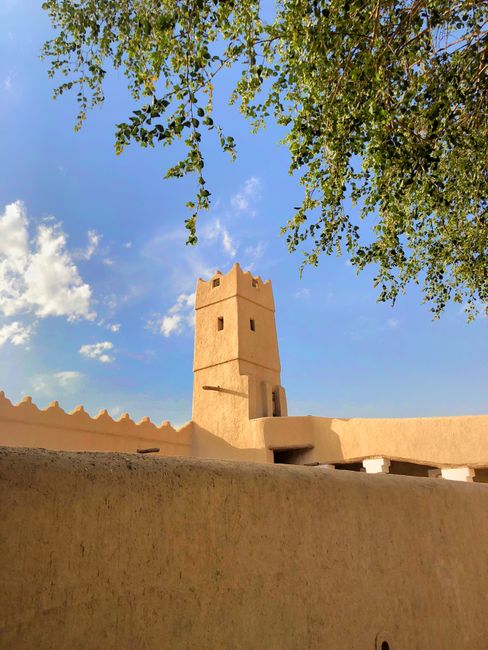
At-Turaif in Diriyah
The restored mud-brick district of the first Saudi capital, a UNESCO site on the edge of Riyadh, with museums and restaurants.

Al-Balad, Historic Jeddah
A UNESCO-listed old town of coral-stone houses with carved wooden balconies, called rawasheen, souks and old mosques.

Masjid al-Haram
The Grand Mosque around the Kaaba, the holiest site in Islam and the destination of the Hajj; only Muslims may enter Makkah.

Al-Masjid an-Nabawi
The Prophet's Mosque in Madinah, with its green dome and giant umbrellas, the second holiest site in Islam.

Al-Ahsa Oasis
One of the largest oases in the world, with about 2.5 million date palms, springs, caves and the Qaisariya souk, a UNESCO site.

Rijal Almaa
A mountain village of stone towers decorated with white quartz in the Asir region, near Abha, with a heritage museum.
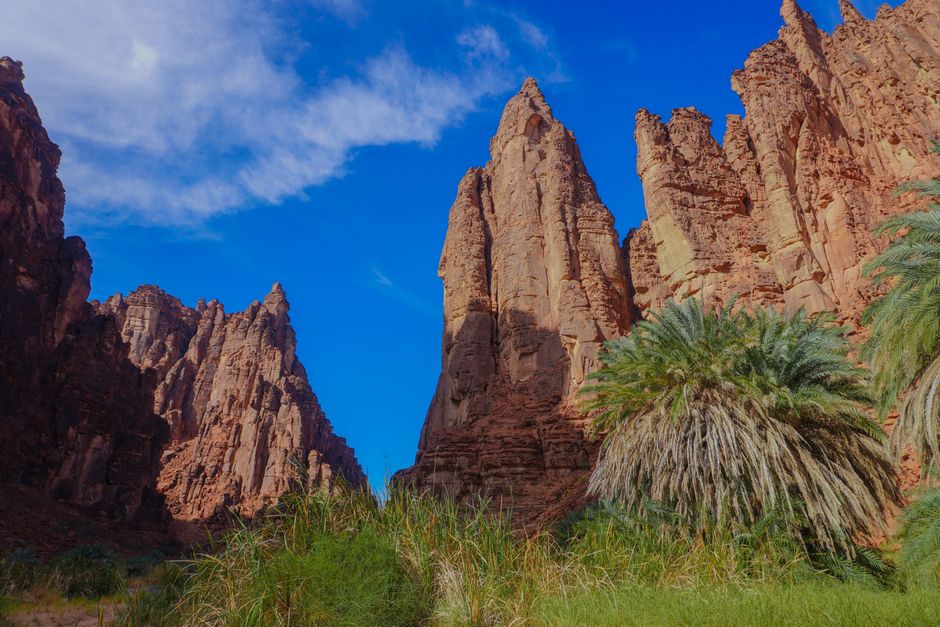
Wadi Disah
A canyon of towering sandstone cliffs, palm trees and streams in the Tabuk region, one of the most dramatic landscapes in the kingdom.
Must-Visit Attractions in Saudi Arabia

Madinah, about 450 km north of Makkah, is the second holiest city in I
The Quba Mosque, the first mosque built in Islam, and the Mount Uhud battlefield are important sites. Madinah is famous for its Ajwa dates. Non-Muslims may visit the city, but not the central Haram area around the Prophet's Mosque. Museums, such as the Dar Al Madinah Museum, tell the city's history, and the Hejaz Railway station is a heritage site. Insider tip: visit the date farms and markets around the Quba Mosque to taste and buy Ajwa dates, and travel by the Haramain train from Jeddah.
Unique Experiences in Saudi Arabia
Explore Hegra at Sunset
Walk among the Nabataean tombs of Hegra, carved about 2,000 years ago, and watch the sandstone glow red at sunset in the AlUla valley.
Edge of the World
Stand on the edge of the Tuwaiq escarpment, about 90 km from Riyadh, where cliffs drop about 300 m to a vast plain, with views to the horizon.
Dive the Red Sea Reefs
Dive or snorkel among some of the healthiest coral reefs in the Red Sea, off Jeddah, Yanbu and the Farasan Islands, with sharks, turtles and dolphins.
Wander Diriyah's Mud-Brick City
Explore At-Turaif, the restored first Saudi capital, then dine on the Bujairi Terrace with views of the mud-brick palaces lit at night.
Hike the Asir Highlands
Hike in the green, terraced mountains of Asir, around Abha, among juniper forests, villages of stone towers and cliffs above the Tihama plain.
Travel Tips for Saudi Arabia
Apply for a tourist e-visa online
Citizens of many countries, including the EU, the UK, the USA, Canada, Australia and Japan, can apply for a tourist e-vi…
Respect the dress code and local customs
Dress modestly in public: both men and women should cover shoulders and knees, and avoid tight or revealing clothing. Wo…
Plan around prayer times and Ramadan
Shops and some restaurants may close briefly during the five daily prayer times, though rules have relaxed in recent yea…
Fly between regions
Saudi Arabia is huge, so distances between cities are long: Riyadh to Jeddah is about 950 km. Domestic flights with Saud…
Visit between October and March
The best time to visit most of the country is from October to March, when days are warm and nights cool, ideal for AlUla…
Use apps and carry cards
Saudi Arabia is highly digital: most payments are made by card or phone, and apps such as Uber and Careem are widely use…
Must-Try Local Dishes
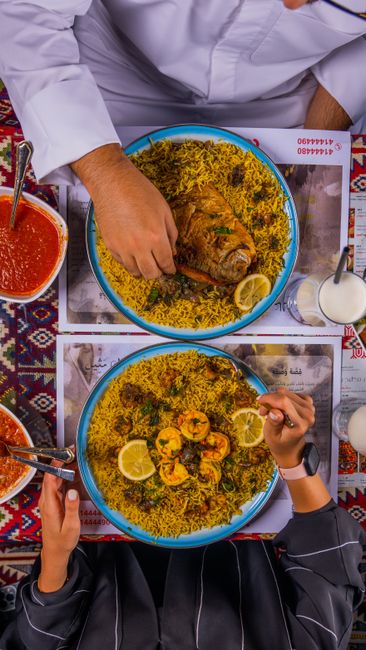
Kabsa
Kabsa, the national dish of Saudi Arabia, is spiced rice cooked with chicken, lamb or camel, flavoured with cardamom, cloves, cinnamon, black lime, saffron and a spice mix called baharat, topped with fried almonds and raisins. It is served on large platters and shared by family and guests. A portion costs about SAR 30–60 in a restaurant.
Mandi
Mandi, originally from Yemen and very popular in Saudi Arabia, is meat or chicken slowly cooked in an underground pit oven, called a taboon, over rice, which absorbs the smoky juices. The meat is tender and falls off the bone. Mandi restaurants often have floor seating in private rooms. A portion costs about SAR 30–60.

Saudi Coffee and Dates
Saudi coffee, qahwa, lightly roasted and flavoured with cardamom, sometimes with saffron or cloves, is poured from a dallah into small cups and served with dates as a sign of hospitality. It is offered in homes, offices, hotels and heritage sites. Shake your cup gently when you have had enough. Dates cost about SAR 20–150 per kilo.

Jareesh
Jareesh is a traditional dish of crushed wheat slowly cooked with meat or chicken, milk or yoghurt, onions and spices into a creamy porridge, topped with fried onions and ghee. It is a classic dish of the Najd region, served at family meals and during Ramadan. Traditional restaurants serve it for about SAR 20–40.

Mutabbaq
Mutabbaq is a thin, folded pancake of dough stuffed with minced meat, eggs, onions and leeks, or with sweet fillings, such as banana and cheese, and fried on a griddle. It is a popular street food, especially in Jeddah and during Ramadan. A portion costs about SAR 10–25. Watch the vendors stretch the dough by hand.

Saleeg
Saleeg is a creamy dish of short-grain rice cooked in chicken broth and milk, flavoured with cardamom and butter, and served with roasted chicken. It comes from Taif and the Hejaz region, and it is a comfort food, especially in winter. Traditional restaurants serve it for about SAR 30–50, and it is mild and filling.

Shawarma
Shawarma, thin slices of marinated chicken or beef cooked on a vertical spit and wrapped in bread with garlic sauce, pickles and fries, is one of the most popular street foods in Saudi Arabia, sold in small shops in every city, often late into the night. A wrap costs about SAR 5–15, one of the cheapest meals.

Kunafa
Kunafa, a Levantine dessert very popular in Saudi Arabia, is made of thin shredded pastry or semolina, filled with soft cheese or cream, baked until golden and soaked in sugar syrup, topped with pistachios. It is especially popular during Ramadan and Eid. Dessert shops serve it hot for about SAR 15–30 per portion.
History
Ancient Kingdoms and Trade Routes
The Arabian Peninsula has been inhabited for hundreds of thousands of years, and rock art at Jubbah and Shuwaymis, in the Hail region, a UNESCO site, shows humans and animals carved thousands of years ago. Mustatils, large rectangular stone structures about 7,000 years old, have been found across the north-west. Around the 1st millennium BC, oasis towns grew along the incense route, which carried frankincense and myrrh from southern Arabia to the Mediterranean.
Dedan, Lihyan and the Nabataeans
In the AlUla valley, the kingdoms of Dadan and Lihyan flourished from about the 8th century BC, leaving inscriptions and tombs carved into the cliffs. In the 1st century BC and 1st century AD, the Nabataeans, whose capital was Petra in today's Jordan, built Hegra, their southern city, with more than 100 monumental tombs, which became Saudi Arabia's first UNESCO World Heritage Site in 2008. The Romans annexed the Nabataean kingdom in 106 AD. In the east, the oasis of Al-Ahsa, one of the largest in the world, has been farmed for thousands of years, and Tarout Island has remains from the Dilmun civilisation.
Climate & Best Time to Visit
Spring
16–38°C
March to May is warm, with days of about 25–35°C in Riyadh, rising quickly in May, and pleasant weather in the Asir moun…
Summer
28–47°C
June to September is extremely hot, with days of about 43–47°C in Riyadh and humid heat of about 38–40°C in Jeddah and o…
Autumn
15–35°C
October and November bring cooler temperatures, from about 35°C to 28°C in Riyadh, and the start of the main tourist sea…
Winter
5–28°C
December to February is the best time to visit, with sunny days of about 20–25°C in Riyadh and AlUla, cold desert nights…
Fascinating Fun Facts
No rivers at all
Saudi Arabia is the largest country in the world without a permanent river. Its water comes from underground aquifers, s…
The largest sand desert
The Rub' al Khali, the Empty Quarter, covering about 650,000 square kilometres across Saudi Arabia, Oman, the UAE and Ye…
The world's largest oil company
Saudi Aramco, the state oil company, produces about 10% of the world's crude oil and is one of the most valuable compani…
Millions of pilgrims each year
Each year, about two million Muslims from around the world perform the Hajj, the pilgrimage to Makkah, during the Islami…
A country that loves dates
Saudi Arabia is one of the world's largest producers of dates, with more than 30 million palm trees and hundreds of vari…
Women drive since 2018
Until June 2018, Saudi Arabia was the only country in the world where women were not allowed to drive. The ban was lifte…
Traveler Reviews (0 reviews)
Sign in to leave a review and share your experience.
Sign InNo reviews yet. Be the first to share your experience!