Portugal
Updated October 19, 2026
Portugal, on the western edge of the Iberian Peninsula, faces the Atlantic Ocean along about 940 km of mainland coast and includes the archipelagos of Madeira and the Azores. It is one of the oldest nation-states in Europe, with borders largely unchanged since the 13th century, and in the 15th and 1…
Popular Cities in Portugal

Must-See Places in Portugal

Belém Tower and Jerónimos Monastery
Lisbon's UNESCO-listed Manueline monuments of the Age of Discoveries, on the Tagus where Vasco da Gama set sail in 1497.

Ribeira and the Douro
Porto's riverside quarter of colourful houses below the Dom Luís I bridge, facing the port wine cellars of Gaia.

Pena Palace
A colourful Romantic palace on a hilltop above Sintra, built in the 19th century, with views to the Atlantic and Lisbon.
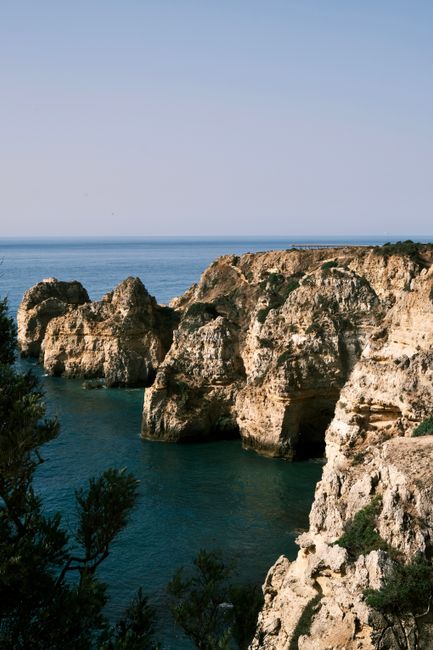
Ponta da Piedade
Golden sandstone cliffs, arches and sea caves near Lagos, best explored by kayak or boat on the Algarve coast.
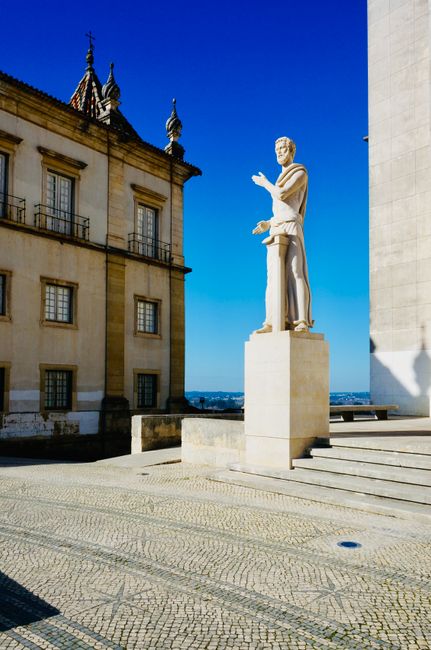
University of Coimbra
One of Europe's oldest universities, with the Baroque Joanina Library, a UNESCO site on a hill above the Mondego.

Roman Temple of Évora
A Corinthian temple from the 1st century AD in the centre of Évora's UNESCO-listed walled old town in the Alentejo.

Levada Walks of Madeira
Footpaths along centuries-old irrigation channels through laurel forests and mountains above Funchal.

Sete Cidades
Twin lakes, one green and one blue, inside a volcanic crater on São Miguel island in the Azores.
Must-Visit Attractions in Portugal

Porto, Portugal's second city, on the steep banks of the Douro River n
Visitors explore the Ribeira district of colourful houses, cross the Dom Luís I bridge, designed by a student of Gustave Eiffel, and visit the port cellars of Vila Nova de Gaia. Highlights include São Bento station, with about 20,000 azulejo tiles, the Livraria Lello bookshop, the Clérigos Tower, the Sé Cathedral, the Bolsa Palace and Serralves contemporary art museum. Porto is known for its francesinha sandwich and lively nightlife. Insider tip: walk across the upper deck of the Dom Luís I bridge at sunset for the best view of Ribeira, and book Livraria Lello tickets online in advance.
Unique Experiences in Portugal
Ride Tram 28 Through Lisbon
Ride the yellow Tram 28 through Lisbon's oldest neighbourhoods, Graça, Alfama, Baixa and Estrela, climbing steep hills and narrow streets.
Port Wine Tasting in Gaia
Visit the historic port wine cellars of Vila Nova de Gaia, across the Douro from Porto, for tours of the barrel rooms and tastings of ruby and tawny ports.
Hear Fado in Alfama
Listen to fado, Portugal's melancholic song of longing, listed by UNESCO, in an intimate tavern in Alfama or Mouraria, Lisbon's oldest districts.
Kayak the Algarve Sea Caves
Paddle along the golden cliffs of the Algarve, into sea caves and grottoes, such as the famous Benagil Cave, with its opening in the roof.
Walk the Levadas of Madeira
Hike along the levadas, irrigation channels built from the 15th century, through UNESCO-listed laurel forests, waterfalls and mountains on Madeira.
Travel Tips for Portugal
Visit in spring or autumn
The best times to visit Portugal are from April to June and from September to October, when the weather is warm, the cro…
Use trains and buses between cities
Comboios de Portugal runs Alfa Pendular and Intercidades trains between Lisbon, Coimbra, Porto, Faro and Braga, with tic…
Wear comfortable shoes for hills and cobbles
Lisbon and Porto are built on steep hills, with streets paved in calçada portuguesa, small limestone cobbles that can be…
Eat like a local
Portuguese restaurants serve good-value lunch menus, prato do dia, from about €9–14 with a drink and coffee. Bread, oliv…
Explore beyond Lisbon and the Algarve
Most visitors stay in Lisbon, Porto and the Algarve, but Portugal has many quieter places: the Alentejo, with its whitew…
Respect the ocean
The Atlantic coast has strong waves, currents and cold water, about 16–19°C even in summer on the west coast. Swim only …
Must-Try Local Dishes

Pastel de Nata
The pastel de nata is a small tart of crispy, flaky pastry filled with egg custard, baked until caramelised on top and dusted with cinnamon. The original recipe, pastel de Belém, was created by monks at the Jerónimos Monastery and has been sold at the Pastéis de Belém bakery in Lisbon since 1837. A tart costs about €1.20–1.50, best eaten warm.

Bacalhau
Bacalhau, dried salted cod, is the national ingredient of Portugal, and it is said there are 365 recipes, one for each day of the year, such as bacalhau à brás, with shredded potatoes and eggs, and bacalhau com natas, with cream. Most cod comes from Norway. It is soaked before cooking. A dish costs about €12–20 in a restaurant, and it is eaten on Christmas Eve.
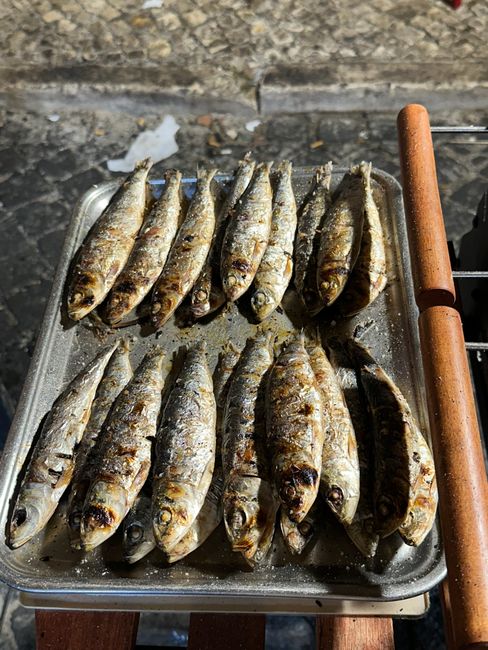
Sardinhas Assadas
Grilled sardines, cooked over charcoal and served on bread or with boiled potatoes, peppers and salad, are the symbol of summer in Portugal, especially during the festivals of Santo António in Lisbon in June, when the streets fill with smoke from grills. They are best from June to September. A plate costs about €8–14 in a restaurant.

Francesinha
The francesinha, a speciality of Porto, is a sandwich of bread layered with steak, ham, sausage and cured meats, covered in melted cheese and a hot tomato and beer sauce, often topped with a fried egg and served with fries. It was created in the 1950s, inspired by the French croque-monsieur. A francesinha costs about €10–15, enough for a big appetite.
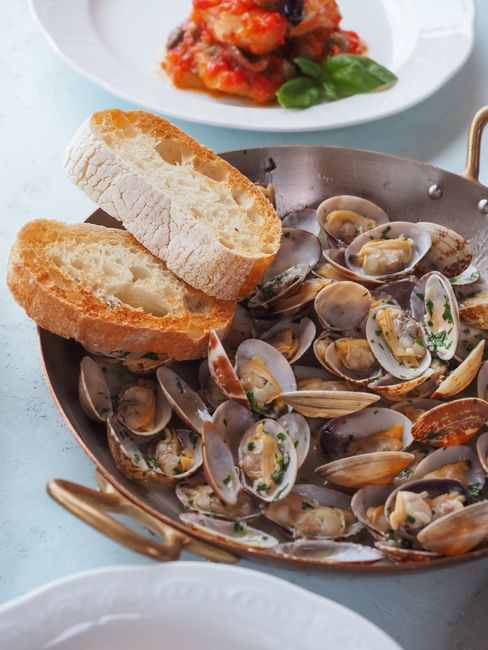
Cataplana
Cataplana, a dish from the Algarve, is a seafood or meat stew cooked in a hinged, clam-shaped copper pan, also called a cataplana, which steams the ingredients, such as clams, prawns, fish, pork, chorizo, tomatoes, peppers and onions. It is usually served for two people at the table. A cataplana costs about €30–50 for two, best with a glass of white wine.

Port Wine
Port, a fortified wine from the Douro Valley, aged in the cellars of Vila Nova de Gaia, comes in styles such as ruby, tawny, white and vintage. It is served as a dessert wine, and white port with tonic is a popular aperitif. Cellar tours with tastings cost about €15–30. A glass costs about €3–8 in bars, and bottles from €10.

Caldo Verde
Caldo verde is a traditional soup from the Minho region, made with potatoes, thinly sliced kale or collard greens, olive oil and garlic, served with a slice of chouriço, smoked sausage, and cornbread. It is served at festivals, weddings and as a late-night snack during the São João festivities. A bowl costs about €2–4, simple and comforting.

Bifana
The bifana is a sandwich of thin slices of pork marinated in garlic, white wine and paprika, cooked in the marinade and served in a crusty bread roll, with mustard or hot sauce. It is a popular snack across the country, especially in Lisbon and Porto. A bifana costs about €3–5, often eaten with a beer, an imperial in Lisbon or a fino in Porto.
History
Lusitanians, Romans and Moors
The territory of Portugal has been inhabited since prehistoric times, and the Côa Valley, in the north-east, has one of the largest collections of open-air Palaeolithic rock art in the world, about 20,000 to 30,000 years old, a UNESCO site. In the 1st millennium BC, Celtic and Iberian peoples, such as the Lusitanians, lived here, and they resisted the Romans fiercely under their leader Viriathus, who was killed in 139 BC.
Roman Lusitania and the Moorish era
The Romans founded the province of Lusitania, with towns such as Olisipo, today's Lisbon, Bracara Augusta, today's Braga, and Ebora, today's Évora, where a Roman temple survives. After the fall of Rome, the Suebi and Visigoths ruled. In 711 Muslim armies from North Africa conquered most of the peninsula, and the south, called al-Gharb, the west, gave its name to the Algarve. Moorish rule lasted about five centuries in the south, leaving castles, irrigation systems, words, such as azulejo, and dishes made with almonds and oranges. Silves was the capital of the Algarve, and Lisbon a prosperous city.
Climate & Best Time to Visit
Spring
9–23°C
March to May brings mild weather, with days of about 17–23°C in Lisbon and the Algarve, wildflowers in the Alentejo and …
Summer
17–33°C
June to September is hot and dry, with days of about 27–32°C in Lisbon and the Algarve and above 35°C in the Alentejo an…
Autumn
10–24°C
October and November bring mild days of about 18–24°C, the grape harvest in the Douro Valley in September and October, w…
Winter
5–17°C
December to February is mild in the south, with days of about 14–17°C in Lisbon and the Algarve, while the north is cool…
Fascinating Fun Facts
The oldest alliance in the world
The Anglo-Portuguese Alliance, based on the Treaty of Windsor signed in 1386 between King João I of Portugal and King Ri…
The world's largest cork producer
Portugal produces about half of the world's cork, harvested by hand from cork oak trees, mainly in the Alentejo, every n…
Tiles on the walls of cities
Azulejos, painted ceramic tiles, introduced from Moorish Spain in the 15th century, cover the walls of churches, palaces…
Europe's westernmost point
Cabo da Roca, about 40 km west of Lisbon, near Sintra, is the westernmost point of mainland Europe, with cliffs about 14…
Waves as tall as buildings
Nazaré, on the Atlantic coast, has some of the biggest waves in the world, created by an underwater canyon about 5 km de…
Port wine from the oldest demarcated region
The Douro Valley, in the north, became one of the first demarcated wine regions in the world in 1756, when the Marquis o…
Traveler Reviews (0 reviews)
Sign in to leave a review and share your experience.
Sign InNo reviews yet. Be the first to share your experience!