Poland
Updated October 19, 2026
Poland, in Central Europe, stretches from the sandy Baltic coast in the north to the Tatra and Carpathian mountains in the south, bordering Germany, the Czech Republic, Slovakia, Ukraine, Belarus, Lithuania and Russia's Kaliningrad region. About 37 million people live here. It is a country of dramat…
Must-See Places in Poland

Warsaw Old Town
A UNESCO-listed Old Town rebuilt brick by brick after the Second World War, with the Royal Castle and Market Square.

Main Market Square and Wawel
One of Europe's largest medieval squares, with the Cloth Hall and St Mary's Basilica, below the royal Wawel Castle.

Long Market and Neptune's Fountain
Gdańsk's main street of colourful merchant houses, a symbol of the Hanseatic port city on the Baltic.

Wrocław Market Square
A colourful square around the Gothic Old Town Hall, in a city of islands, bridges and hundreds of bronze dwarfs.

Morskie Oko
The largest lake in the Tatra Mountains, surrounded by granite peaks, reached by a walk from near Zakopane.

Toruń Old Town
A UNESCO-listed Gothic town on the Vistula, birthplace of Copernicus and famous for gingerbread.
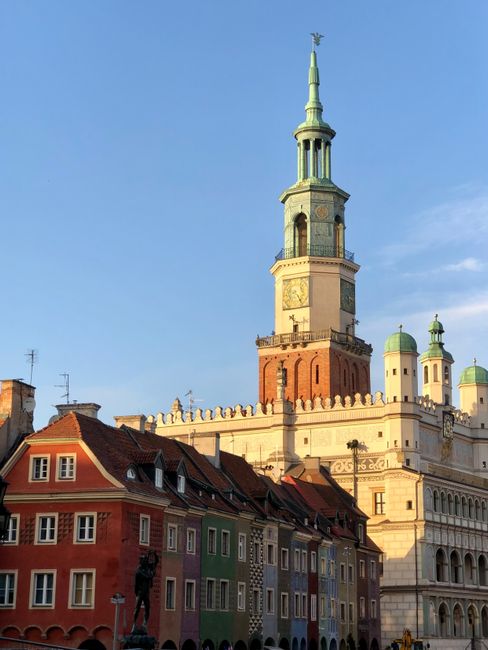
Poznań Goats
Two mechanical goats that butt heads at noon above the Renaissance Town Hall on Poznań's Old Market Square.

Unique Experiences in Poland
Descend into the Wieliczka Salt Mine
Walk through underground chambers, lakes and chapels carved out of salt in the Wieliczka Salt Mine, near Kraków, a UNESCO site, including the Chapel of St Kinga, 101 m below the surface.
Visit the Auschwitz-Birkenau Memorial
Visit the Auschwitz-Birkenau State Museum, the former German Nazi concentration and extermination camp, where about 1.1 million people were murdered, to learn about the Holocaust and honour the victims.
Hike in the Tatra Mountains
Hike in the Tatra National Park, near Zakopane, to the lake of Morskie Oko, the peak of Kasprowy Wierch or the summit of Rysy, the highest mountain in Poland, about 2,499 m.
Christmas Markets
Wander through the Christmas markets of Kraków, Wrocław and Gdańsk, with wooden stalls selling mulled wine, grilled oscypek, gingerbread, crafts and decorations, under festive lights.
Sail the Masurian Lakes
Sail, kayak or cruise across the Masurian Lake District, a region of about 2,000 lakes connected by rivers and canals, with forests, islands and small towns.
Travel Tips for Poland
Visit in late spring or early autumn
The best times to visit Poland are from May to June and September to October, when the weather is pleasant, the crowds a…
Travel by train between cities
PKP Intercity runs fast trains, such as the Pendolino, Express Intercity Premium, between Warsaw, Kraków, Gdańsk, Wrocła…
Eat at milk bars
Milk bars, bary mleczne, are cheap, subsidised canteens from the communist era, serving traditional Polish food, such as…
Respect places of memory
Poland has many places connected with the Second World War and the Holocaust, such as the Auschwitz-Birkenau Memorial, t…
Pay in złoty and use cards
Poland uses the złoty, PLN, not the euro. Cards and contactless payments, including mobile phones, are accepted almost e…
Learn a few Polish words
Polish is a difficult language, but locals appreciate a few words, such as dzień dobry, good day, dziękuję, thank you, p…
Must-Try Local Dishes

Pierogi
Pierogi are dumplings of thin dough filled with potatoes and cheese, pierogi ruskie, meat, sauerkraut and mushrooms, or sweet fillings, such as blueberries, cherries and sweet cheese, boiled and sometimes fried, served with butter, fried onions or sour cream. They are the most famous Polish dish. A portion costs about PLN 25–40 in a restaurant, and less in a milk bar.
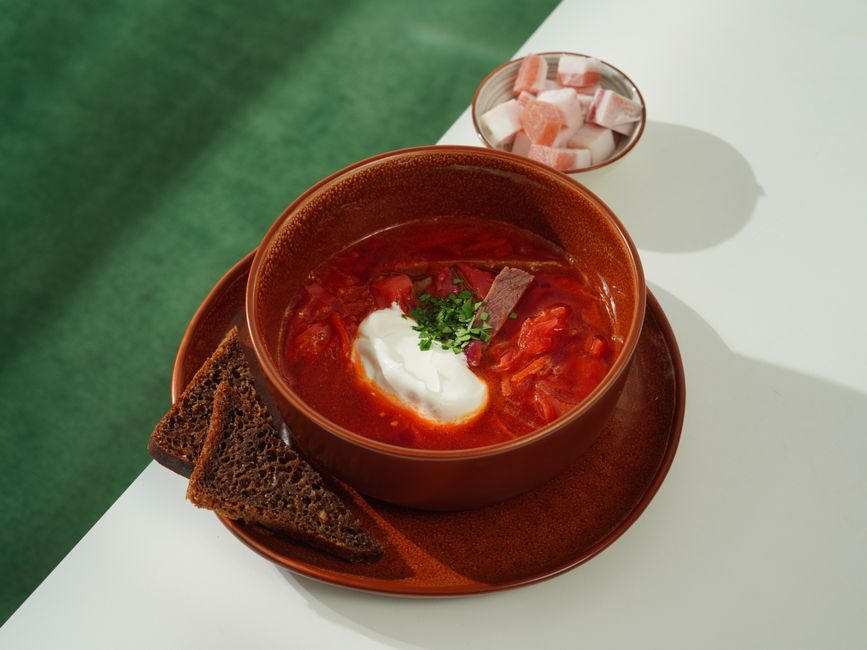
Żurek
Żurek is a sour rye soup, made with fermented rye flour, with white sausage, bacon, potatoes and a hard-boiled egg, often served in a bread bowl. It is a traditional Easter dish, and it is eaten all year in restaurants. Its tangy, smoky flavour is distinctive. A bowl costs about PLN 18–30, a filling meal on a cold day.
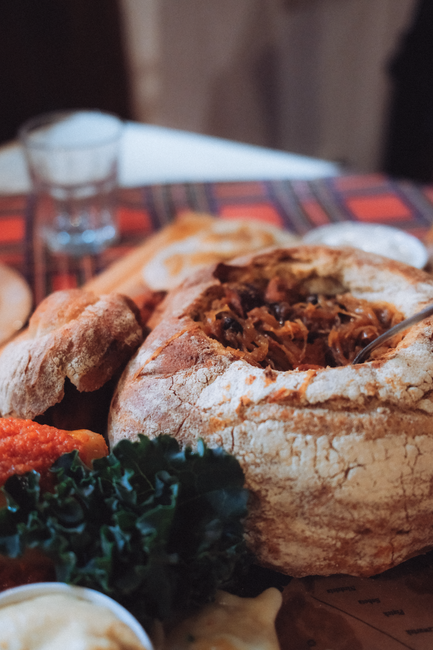
Bigos
Bigos, hunter's stew, is a rich stew of sauerkraut and fresh cabbage, slowly cooked with various meats, such as pork, beef, sausage and game, with mushrooms, prunes and spices, often for several days, as it improves with reheating. It is a national dish, eaten especially in winter and at Christmas. A portion costs about PLN 25–40 in restaurants.

Kotlet Schabowy
Kotlet schabowy is a breaded pork cutlet, similar to a schnitzel, fried in lard or oil, served with boiled potatoes, dill and cabbage salad, mizeria, cucumbers in sour cream, a classic Sunday dinner in Polish homes. It is served in most traditional restaurants and milk bars. A portion costs about PLN 30–45.

Oscypek
Oscypek is a smoked cheese from the Tatra Mountains, made from sheep's milk by highlanders, górale, pressed into decorative wooden moulds, with a spindle shape, and smoked. It has protected EU status. It is sold at markets in Zakopane, often grilled and served with cranberry jam. A piece costs about PLN 8–20. Buy it from licensed sellers.

Pączki
Pączki are deep-fried doughnuts filled with rose jam, plum jam or custard, glazed with icing or sugar and sometimes candied orange peel. They are eaten all year, but especially on Fat Thursday, Tłusty Czwartek, the last Thursday before Lent, when Poles eat about 100 million pączki in one day. A pączek costs about PLN 3–7.
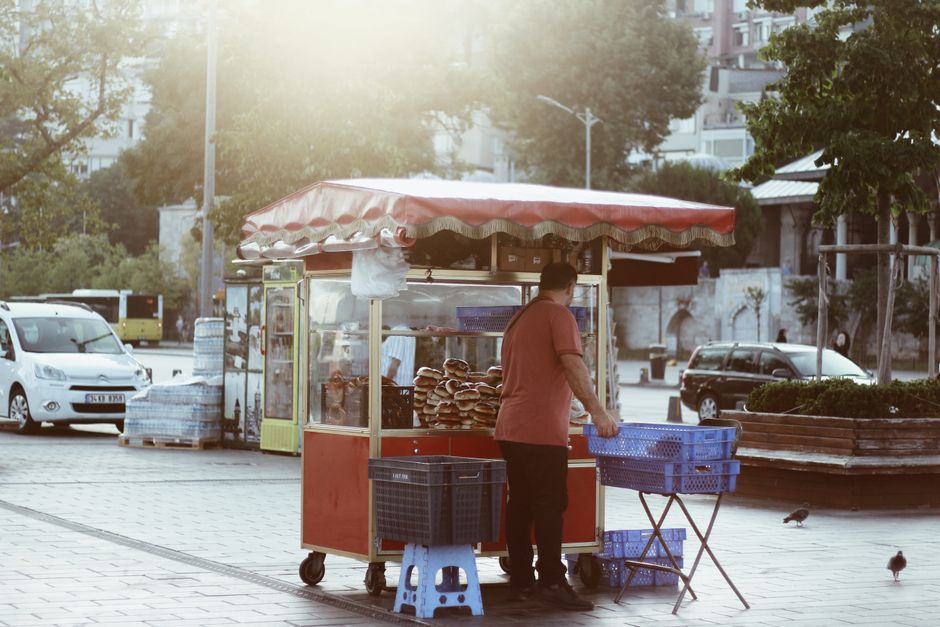
Obwarzanek Krakowski
The obwarzanek krakowski is a ring-shaped bread from Kraków, boiled and then baked, sprinkled with poppy seeds, sesame or salt, similar to a bagel, with protected EU status. It has been sold in Kraków since at least the 14th century, from blue street carts. A ring costs about PLN 2–4. Eat it warm in the morning.

Vodka
Poland has a long tradition of vodka, wódka, made from grain or potatoes, with brands such as Żubrówka, flavoured with bison grass from the Białowieża Forest, Wyborowa and Belvedere. Flavoured vodkas, nalewki, homemade liqueurs with fruit, and the Polish Vodka Museum in Warsaw show this tradition. A shot costs about PLN 8–15 in bars. Drink responsibly.
History
The Piasts and the Birth of Poland
The lands of today's Poland were inhabited by Slavic tribes, such as the Polans, who gave the country its name, meaning people of the fields. The Biskupin settlement, a fortified wooden village from about 750 BC, shows earlier life. In 966 Duke Mieszko I of the Piast dynasty was baptised, adopting Christianity, an event considered the founding of the Polish state. His son, Bolesław I the Brave, was crowned the first king of Poland in 1025.
Fragmentation and reunification
From 1138, Poland was divided among the sons of Bolesław III into regional duchies, weakening it. In 1241 the Mongols invaded and destroyed Kraków. The Teutonic Knights, invited in 1226 to fight the pagan Prussians, built a powerful state in the north, with Malbork Castle. In the early 14th century, Władysław I the Elbow-high reunited the kingdom, and his son, Casimir III the Great, ruling from 1333 to 1370, built castles and towns, founded the Kraków Academy in 1364 and welcomed Jewish communities, who would become one of the largest in the world. It was said he found Poland made of wood and left it made of stone.
Climate & Best Time to Visit
Spring
0–20°C
March to May brings changeable weather, with days rising from about 7°C in March to about 20°C in May, cool nights and b…
Summer
12–27°C
June to August is warm, with days of about 22–27°C, sometimes above 30°C, and occasional thunderstorms. It is the best t…
Autumn
2–18°C
September to November brings golden autumn, złota polska jesień, with mild days of about 12–18°C in September and colour…
Winter
-6–3°C
December to February is cold, with days of about −2 to 3°C, nights below freezing and snow, especially in the east and t…
Fascinating Fun Facts
A salt mine with chapels
The Wieliczka Salt Mine, near Kraków, mined from the 13th century to 1996, has about 287 km of tunnels on nine levels, r…
The largest castle in the world by area
Malbork Castle, built by the Teutonic Knights from the late 13th century, is the largest castle in the world by land are…
Europe's first modern constitution
On 3 May 1791, the Polish-Lithuanian Commonwealth adopted the Constitution of 3 May, the first modern codified constitut…
The country of Chopin and Curie
Poland has given the world many famous figures, such as the composer Frédéric Chopin, born in Żelazowa Wola in 1810, the…
Europe's last primeval forest
The Białowieża Forest, on the border with Belarus, is one of the last and largest remaining parts of the primeval forest…
A country of thousands of lakes
Poland has about 7,000 lakes larger than 1 hectare, especially in the Masurian Lake District, in the north-east, known a…
Traveler Reviews (0 reviews)
Sign in to leave a review and share your experience.
Sign InNo reviews yet. Be the first to share your experience!