Washington
Updated October 19, 2026
Also known as: Washington, D.C., Washington DC, D.C., The District
Main Landmarks in Washington
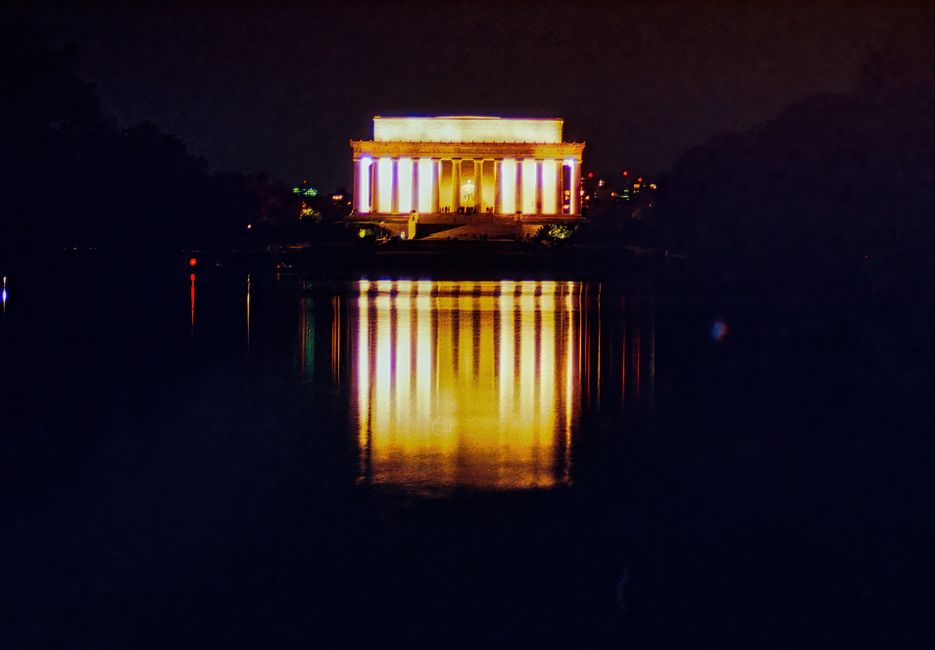
Lincoln Memorial
The Lincoln Memorial is a Greek temple-style monument at the western end of the National Mall, dedicated in 1922 to Abraham Lincoln. Inside, a 5.8 m statue of the seated president by Daniel Chester French looks out over the Reflecting Pool toward the Washington Monument. The walls carry the full texts of the Gettysburg Address and his Second Inaugural Address. A marker on the steps shows where Martin Luther King Jr. stood to give his "I Have a Dream" speech in 1963. The memorial is free and open 24 hours. Visit at sunrise for empty steps and soft light, or after dark when it glows.

United States Capitol
The United States Capitol is the seat of Congress, crowned by a cast-iron dome completed in 1866 and topped by the Statue of Freedom. Free guided tours start at the underground Capitol Visitor Center and include the Rotunda, where paintings show scenes from American history, and National Statuary Hall, with statues donated by each state. Book tours online in advance. To watch the House or Senate in session, request free gallery passes from a senator's or representative's office, or from your embassy if you are a foreign visitor. Security is strict, so bring no food or liquids. The west front offers the classic view down the Mall.

Washington Monument
The Washington Monument is a 169 m white marble obelisk built between 1848 and 1884 in honour of the first president, George Washington. A lift takes visitors in about 70 seconds to the observation level at 152 m, with views across the Mall, the White House, the Potomac and Arlington. Timed tickets are free but carry a $1 reservation fee online on Recreation.gov, released 30 days ahead and the day before. A limited number of same-day tickets are available at the lodge on 15th Street from 08:45. Look for the change in marble colour about a third of the way up, caused by a 25-year pause in construction.
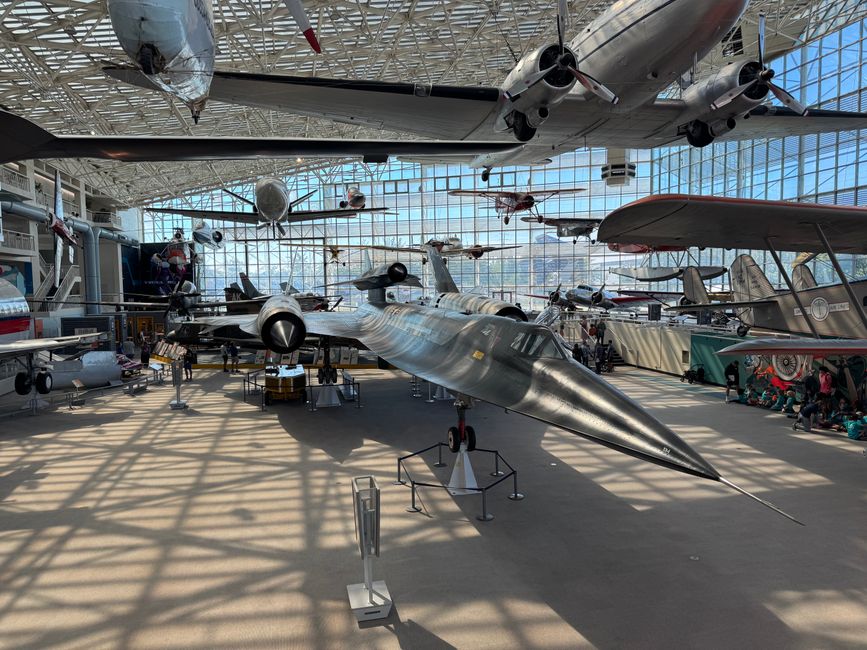
National Air and Space Museum
The Smithsonian's National Air and Space Museum on the National Mall holds the largest collection of historic aircraft and spacecraft in the world. Highlights include the 1903 Wright Flyer, Charles Lindbergh's Spirit of St. Louis, the Apollo 11 command module Columbia and a lunar rock that visitors can touch. The museum has reopened its galleries in stages after a major renovation. Entry is free, but timed passes are required online. Its larger sister site, the Steven F. Udvar-Hazy Center near Dulles Airport, displays the Space Shuttle Discovery and an SR-71 Blackbird, with parking for $15.

National Museum of African American History and Culture
The National Museum of African American History and Culture, opened in 2016, is the Smithsonian's newest museum and one of its most visited. Its bronze-coloured, three-tiered building by David Adjaye was inspired by Yoruba crowns. The history galleries begin underground with the transatlantic slave trade and rise toward the present, past a segregated railway car, Emmett Till's casket and Chuck Berry's red Cadillac. The upper floors celebrate music, sport and culture. Entry is free, but timed passes are needed and often run out on weekends. Plan at least four hours, and eat at the Sweet Home Café, which serves regional African American dishes.

Library of Congress
The Library of Congress, founded in 1800, is the world's largest library, with more than 178 million items. Its Thomas Jefferson Building, opened in 1897, is the most richly decorated building in Washington, with marble halls, mosaics and murals. From a viewing gallery, visitors can look down into the octagonal Main Reading Room under a 49 m dome. Exhibits include a Gutenberg Bible and Jefferson's reconstructed personal library. Entry is free, with timed passes recommended. An underground tunnel links it to the Capitol Visitor Center, so you can combine both visits. Anyone aged 16 or over can get a free reader card with photo ID.
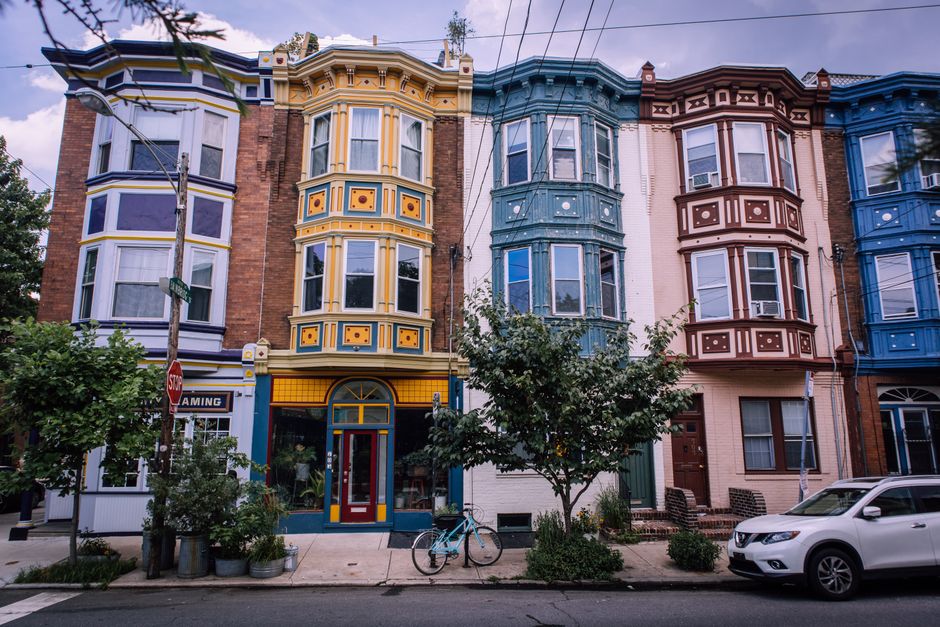
Georgetown
Georgetown is Washington's oldest neighbourhood, founded in 1751 as a tobacco port, decades before the capital itself. Its cobbled streets are lined with Federal-style brick houses, boutiques and restaurants, while the Chesapeake and Ohio Canal towpath offers peaceful walks past 19th-century locks. Georgetown University, founded in 1789, is the oldest Catholic university in the country. The steep Exorcist Steps were made famous by the 1973 horror film. The waterfront park on the Potomac is lively at sunset, with views of the Kennedy Center and Key Bridge. There is no Metro station, so walk from Foggy Bottom or take a bus. Visit Dumbarton Oaks gardens in spring.
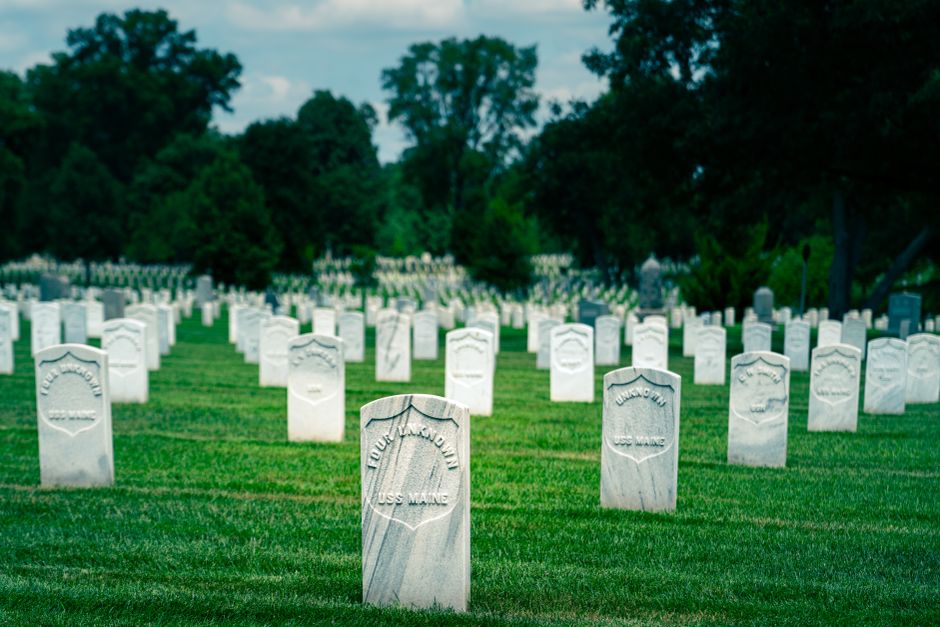
Arlington National Cemetery
Arlington National Cemetery, across the Potomac in Virginia, is the resting place of more than 400,000 service members and their families on 259 hectares of rolling hills. It was established in 1864 on the former estate of Confederate general Robert E. Lee. Visitors come to see the grave of President John F. Kennedy and its eternal flame, and the Tomb of the Unknown Soldier, where soldiers of the Old Guard perform the changing of the guard every 30 minutes to one hour. Entry is free, and it is one stop from central Washington on the Metro Blue Line. Dress respectfully and keep quiet, as funerals take place daily.
History
Washington was created on purpose as a capital. The Residence Act of 1790 let President George Washington choose a site on the Potomac River, and French-born engineer Pierre Charles L'Enfant drew a plan in 1791 of broad diagonal avenues, circles and a grand public mall. Congress moved here from Philadelphia in 1800, when the city was still muddy fields with a half-built Capitol. During the War of 1812, British troops burned the Capitol and the White House on 24 August 1814, and the presidential mansion was rebuilt and painted white. In the Civil War the city was ringed by 68 forts, and on 14 April 1865 Abraham Lincoln was shot at Ford's Theatre, a few blocks from the White House. The 1910 Height of Buildings Act limited construction heights, which is why Washington has no skyscrapers. The 20th century brought monuments, the Smithsonian museums and the 1963 March on Washington, when Martin Luther King Jr. spoke at the Lincoln Memorial. The Metro opened in 1976. Today about 700,000 people live in the District, which still has no voting representation in Congress.
Culture
Washington is defined by government, but its daily life is more varied than the monuments suggest. About 20 Smithsonian museums and galleries on and around the National Mall are free, along with the National Gallery of Art and the National Zoo, making it one of the best cities in the world for free culture. The city has a strong Black heritage: it was once nicknamed Chocolate City, U Street was a centre of jazz where Duke Ellington grew up, and go-go music, a local funk style, is the official music of the District. Embassies bring international food and festivals, and the region has one of the largest Ethiopian communities outside Africa. Neighbourhoods have distinct characters, from the cobbled streets of Georgetown to the row houses of Capitol Hill and the bars of Adams Morgan. Locals follow politics closely, but conversation at brunch, a local ritual, is just as likely to be about the Commanders, the Capitals or the Nationals.
Climate
Spring
5–25°C
March to May is the most popular season, with 15–25°C days and about 3,700 cherry trees blooming around the Tidal Basin …
Summer
21–32°C
June to August is hot and very humid, with 30–33°C afternoons and frequent thunderstorms. The Mall has little shade, so …
Autumn
7–26°C
September to November brings pleasant 15–26°C days, lower humidity and autumn colours in Rock Creek Park from late Octob…
Winter
-3–9°C
December to February is cold, with 2–9°C days and occasional snow that can close the federal government and slow the Met…
Fun Facts
The capital that cannot vote
About 700,000 people live in Washington, more than in Wyoming or Vermont, yet the District has no voting member in the H…
No skyscrapers by law
The Height of Buildings Act of 1910 limits buildings to roughly the width of the street plus 6 m, with a maximum of abou…
A Briton who never visited founded the Smithsonian
The Smithsonian Institution exists because of James Smithson, a British chemist who left his fortune to the United State…
Japan gave the city its cherry trees
In 1912 the mayor of Tokyo, Yukio Ozaki, gave Washington 3,020 cherry trees as a gift of friendship. First Lady Helen Ta…
The Washington Monument has two colours
Look closely at the Washington Monument and you will see a change in the colour of the marble about 46 m up. Constructio…
The world's largest library
The Library of Congress is the largest library in the world, with more than 178 million items, including books, maps, ph…
Local Cuisine in Washington

Maryland crab cake
A golden, pan-fried cake of sweet lump blue crab meat from the Chesapeake Bay, held together with as little filler as possible and seasoned with Old Bay spice. It comes with tartar sauce and lemon. Crab is best from May to October. Expect $25–40 for a jumbo lump crab cake in a good seafood restaurant or at the Wharf.

Wings with mumbo sauce
Fried chicken wings tossed in mumbo sauce, a sweet, tangy and slightly spicy red sauce that is a local obsession. It is sold in Chinese carry-outs across the city, often with French fries, and many residents consider it a symbol of native Washington culture. A box of wings with fries costs about $10–15.

Jumbo slice
An oversized slice of cheese pizza, often longer than a dinner plate, sold late at night in Adams Morgan. It became a local ritual for bar-goers in the 1990s and is so wide that it needs two paper plates. A slice costs about $6–8. Eat it on the street at 02:00, as tradition demands.
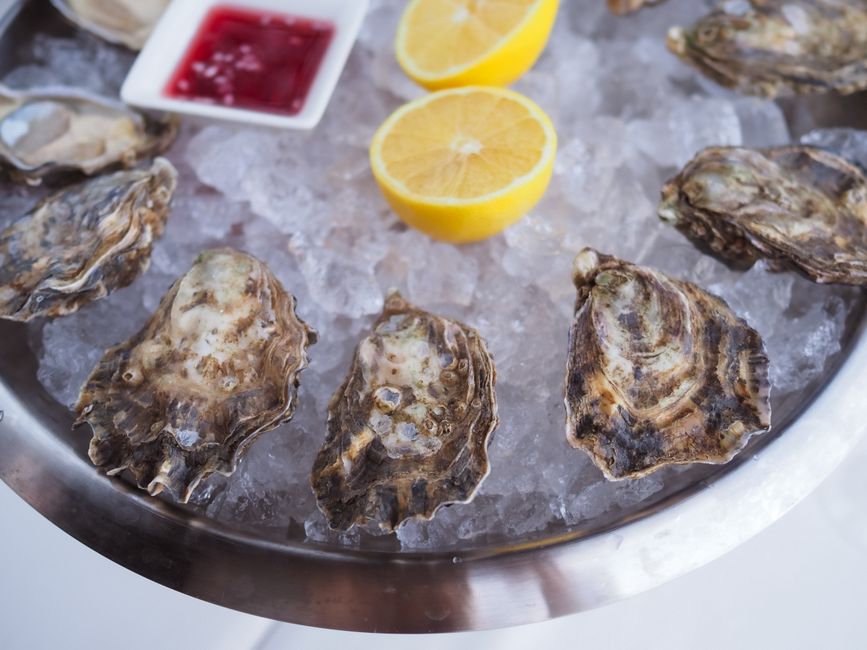
Chesapeake oysters
Briny, crisp oysters from the Chesapeake Bay and the Virginia coast, served raw on ice with lemon and mignonette or fried in po'boy sandwiches. Oyster farming has helped clean the bay in recent decades. Happy hours at the Wharf and in restaurants downtown often sell them for $1.50–2.50 each, compared with $3–4 at full price.
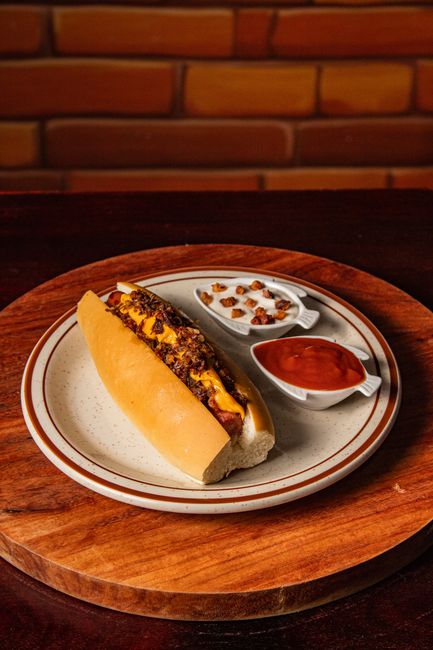
Half-smoke
A coarse, smoky half-pork, half-beef sausage grilled until it splits, served in a steamed bun with mustard, onions and spicy chili sauce. It is Washington's signature street food. Ben's Chili Bowl on U Street has served it since 1958 and stayed open during the 1968 riots. A chili half-smoke costs about $8–10.
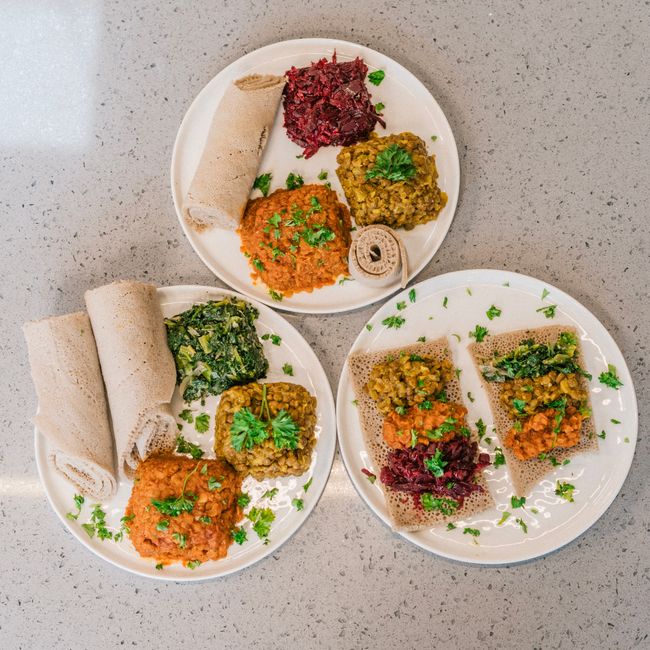
Ethiopian injera platter
Spongy, slightly sour injera flatbread made from teff flour, topped with spicy lentil, chickpea and beef stews, eaten with the hands. The Washington area has one of the largest Ethiopian communities outside Africa, and restaurants cluster in Shaw and along U Street and 9th Street. A shared vegetarian platter for two costs about $30–45.
Practical Travel Information
Transport & Accessibility
International Transport
Washington is served by three airports. Ronald Reagan Washington National Airport (DCA), just across the Potomac, is 15 minutes from the Mall by Metro and mostly handles domestic flights. Washington Dulles International Airport (IAD), 42 km west, is the main international gateway and is linked to the city by the Metro Silver Line. Baltimore/Washington International Airport (BWI) is about 50 km north, with MARC and Amtrak trains to Union Station. Amtrak trains from Union Station reach New York in about 3 hours on the Acela, and long-distance buses also depart from the station.
Local Transport
The Metro has six colour-coded lines and is the easiest way around, with fares of about $2.25–6.75 depending on distance and time of day, paid with a SmarTrip card, phone or contactless bank card. Metrobus covers areas without stations, such as Georgetown. Capital Bikeshare has more than 700 stations, and electric scooters are widely available. Taxis and ride-hailing apps are easy to find. Driving downtown is slow and parking is expensive and scarce. The National Mall and most central sights are best covered on foot or by bike.
Safety & Health
Personal Safety
The National Mall, the monuments, Georgetown, Capitol Hill and downtown are well policed and generally safe for tourists, including after dark. Like any large city, Washington has neighbourhoods with higher crime, mainly east of the Anacostia River, which most visitors have no reason to visit. Watch for pickpockets on crowded Metro trains and at events, and do not leave bags unattended near security zones. Car break-ins happen, so leave nothing visible in parked cars. Demonstrations are frequent near the White House and the Capitol and are usually peaceful. In an emergency, call 911.
Medical Services
Washington has major hospitals with 24-hour emergency departments, including MedStar Georgetown University Hospital, George Washington University Hospital and MedStar Washington Hospital Center. Medical care is expensive for visitors without insurance, so travel insurance with medical cover is essential. Urgent care clinics treat minor problems for about $150–250 without insurance. Pharmacies such as CVS and Walgreens are easy to find downtown. Tap water is safe to drink. In summer, heat and humidity on the shadeless Mall can cause exhaustion, so carry water, wear a hat and rest in museums during the afternoon.
Budget & Costs
Travel Costs
Washington is expensive for accommodation but saves money on sightseeing, since most major attractions are free. A hostel bed costs $45–80, a mid-range hotel $200–350 and a luxury hotel $400 or more, plus hotel taxes of about 15%. A half-smoke costs $8–10, a casual lunch $15–25, dinner at a mid-range restaurant $40–70 per person and a cocktail $15–20. A Metro ride costs $2.25–6.75. Private attractions such as the International Spy Museum cost about $30–40. A mid-range traveller should budget $250–350 per day, including accommodation.
Budget Tips
Build your days around the free Smithsonian museums, the National Gallery of Art, the Library of Congress, the Capitol and the monuments. Visit in winter or summer weekends, when Congress is in recess and business hotels drop their prices. Stay in Arlington or Crystal City in Virginia, near the Metro, for cheaper rooms. Use happy hours, common across the city on weekdays, for half-price oysters and drinks. Eat lunch at the cafés in Union Station or food halls such as Union Market. Walk or use Capital Bikeshare instead of taxis.
Culture & Traditions
Social Norms
Washington is a professional city, and many residents work in government, law, diplomacy or non-profit organisations. People are polite and fairly formal, and a common question on meeting someone is what do you do. Politics is part of daily conversation, but avoid strong partisan arguments with strangers. On Metro escalators, stand on the right and walk on the left: this rule is strictly observed. Tipping of 18–22% is expected in restaurants. Dress codes are smart casual in most restaurants. At memorials and Arlington National Cemetery, keep quiet and behave respectfully.
Cultural Activities
Attend a free performance at the Kennedy Center's Millennium Stage, held most evenings at 18:00. Watch the 4 July fireworks on the Mall or the Smithsonian Folklife Festival in summer. See a Nationals baseball game near the Navy Yard. Explore U Street's jazz and go-go heritage, and listen to live music at the Howard Theatre or the 9:30 Club. Visit embassies during the Passport DC open houses in May. Join a free ranger-led walk at the monuments, and explore Eastern Market on Capitol Hill on weekend mornings.
Unique Experiences in Washington
Watch Congress at work from the public galleries of the House or Senate, with free passes from a representative's office or your embassy. When Congress is in session, you can see debates and votes in person, then take the underground tunnel to the Library of Congress.
Paddle a kayak or stand-up paddleboard on the Potomac from the Key Bridge Boathouse in Georgetown, passing under bridges with views of the Kennedy Center and the Washington Monument. Rentals cost about $20–30 per hour from spring to autumn. Life jackets are included.
Take a 30-minute train or Metro ride to Old Town Alexandria in Virginia, a port town older than the capital, with cobbled streets, 18th-century houses and waterfront restaurants. Continue by bike along the 29 km Mount Vernon Trail to George Washington's estate, which costs about $30–35.
Walk or cycle the monuments by moonlight after 21:00, when the Lincoln, Jefferson and Martin Luther King Jr. memorials are lit and nearly empty. Guided night tours by bus or bike cost $40–70, or you can follow the 6 km loop on your own for free.
Join a free Smithsonian Folklife Festival on the Mall in late June and early July, when communities from around the world bring music, crafts and food to tents between the museums. Each year features different countries and regions, and events run daily from late morning.
Travel Recommendations for Washington
Request tours of the White House and gallery passes for Congress well in advance. Foreign visitors should contact their …
Do not try to see all the museums in one day. Each major Smithsonian museum needs two to four hours, and walking between…
Explore neighbourhoods beyond the Mall in the evening. U Street and Shaw have live music and Ethiopian restaurants, Adam…
Reserve free timed passes online for the most popular museums, especially the National Museum of African American Histor…
Check the congressional calendar before booking. When Congress is in session, hotels fill with lobbyists and business tr…