San Francisco
Updated October 19, 2026
Also known as: SF, The City by the Bay, Frisco
Main Landmarks in San Francisco
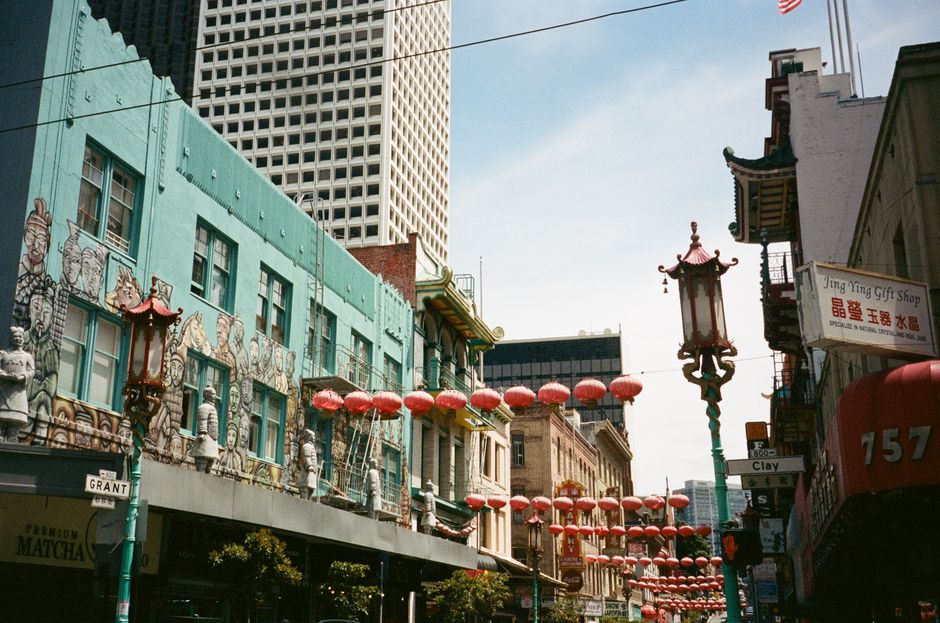
Chinatown
San Francisco's Chinatown, founded in the 1840s, is the oldest Chinatown in North America and one of the largest Chinese communities outside Asia. The Dragon Gate on Grant Avenue, a gift from Taiwan in 1970, marks the entrance. Grant Avenue is lined with souvenir shops, while parallel Stockton Street is where locals buy fresh fish, roast duck and herbs. Explore the narrow alleys, such as Ross Alley, home to the Golden Gate Fortune Cookie Factory, and the Tin How Temple, dating from 1852. The Lunar New Year parade in January or February is spectacular. Eat dim sum at a traditional teahouse in the morning.

Alamo Square and the Painted Ladies
Alamo Square is a hilltop park famous for the Painted Ladies, a row of Victorian houses on Steiner Street built in the 1890s and painted in bright colours, with the downtown skyline behind them. The view appeared in the opening credits of the television series Full House and countless postcards. San Francisco has more than 48,000 Victorian and Edwardian houses, many of which survived the 1906 earthquake and fire. The park has lawns, picnic areas and a playground. The houses are private homes, so do not climb their steps. Visit in late afternoon, when the sun lights up the façades.
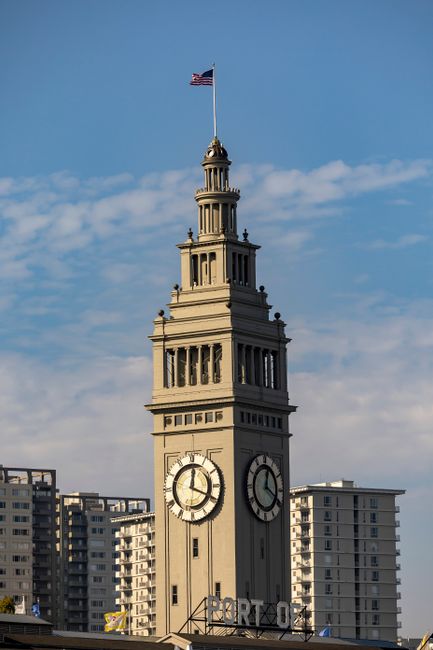
Ferry Building
The Ferry Building, opened in 1898 at the foot of Market Street, was once the busiest ferry terminal in the world, with its 75 m clock tower inspired by the Giralda in Seville. Restored in 2003, its arched hall now holds a food market with local cheese, oysters, bread, coffee and chocolate. On Tuesday, Thursday and Saturday mornings, the Ferry Plaza Farmers Market fills the plaza, and Saturday is the largest. Ferries still leave from here to Sausalito, Larkspur and Oakland, offering cheap bay views. Walk south along the Embarcadero to see the Bay Bridge lights after dark.

Golden Gate Park
Golden Gate Park stretches 5 km from the Haight to Ocean Beach and covers 412 hectares, larger than New York's Central Park. It was created from sand dunes in the 1870s. Inside are the de Young Museum, with a free observation tower, the California Academy of Sciences, which combines an aquarium, planetarium and rainforest under a living roof, the Japanese Tea Garden, opened in 1894, and the Conservatory of Flowers. A bison paddock and Dutch windmills near the ocean add surprises. Main roads such as JFK Promenade are car-free, ideal for cycling. Entry to the park is free, while museums charge about $15–45.
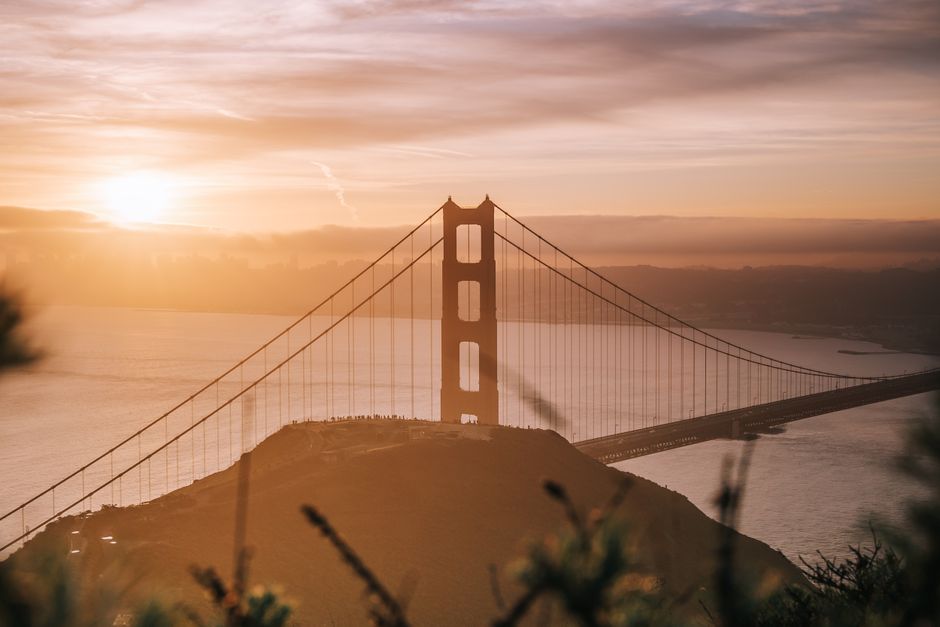
Golden Gate Bridge
The Golden Gate Bridge is the 2.7 km suspension bridge across the Golden Gate strait, opened in 1937 and painted International Orange. Its towers rise 227 m above the water, and it was the longest suspension bridge in the world until 1964. Pedestrians can walk the east sidewalk for free, and cyclists use the west side, with the full crossing taking about 30 minutes each way. The Welcome Center on the south side explains its construction. For classic photos, go to Battery Spencer or Hawk Hill on the Marin side, or Fort Point beneath the southern end. Mornings in summer are often foggy, so check webcams before you go.

Alcatraz Island
Alcatraz Island, 2 km offshore in San Francisco Bay, was a military fort, then a federal prison from 1934 to 1963, and is now part of the Golden Gate National Recreation Area. Ferries leave only from Pier 33 with Alcatraz City Cruises, the sole official operator, with day tickets from about $45–50. The award-winning audio tour of the cellhouse, narrated by former guards and inmates, is included. Tickets often sell out two to four weeks ahead in summer, so book early. The night tour adds areas closed by day. Bring a jacket, as the island is windy and cold, and allow at least three hours.
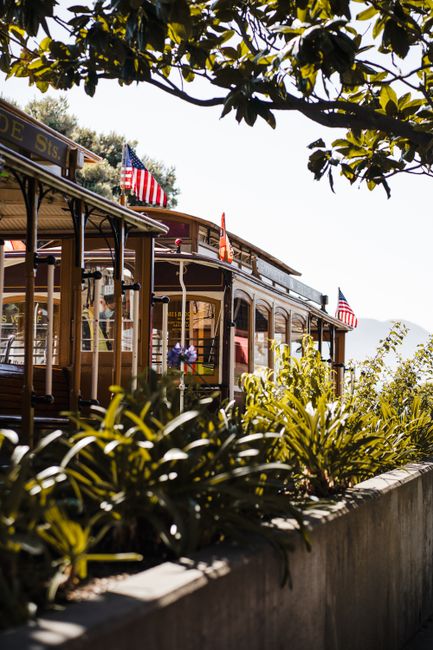
Cable Cars
San Francisco's cable cars climb some of the steepest streets in the city on three lines: Powell–Hyde, Powell–Mason and California Street. The Powell–Hyde line offers the best views, cresting Russian Hill with Alcatraz and the bay ahead before dropping to Fisherman's Wharf. A single ride costs $9 since July 2025, while a Muni Visitor Passport for unlimited rides costs about $15 for one day. The turntable at Powell and Market streets has long queues; board at stops further along the line instead. Stand on the running boards and hold on tightly for the full experience. Visit the free Cable Car Museum on Washington Street.
Fisherman's Wharf and Pier 39
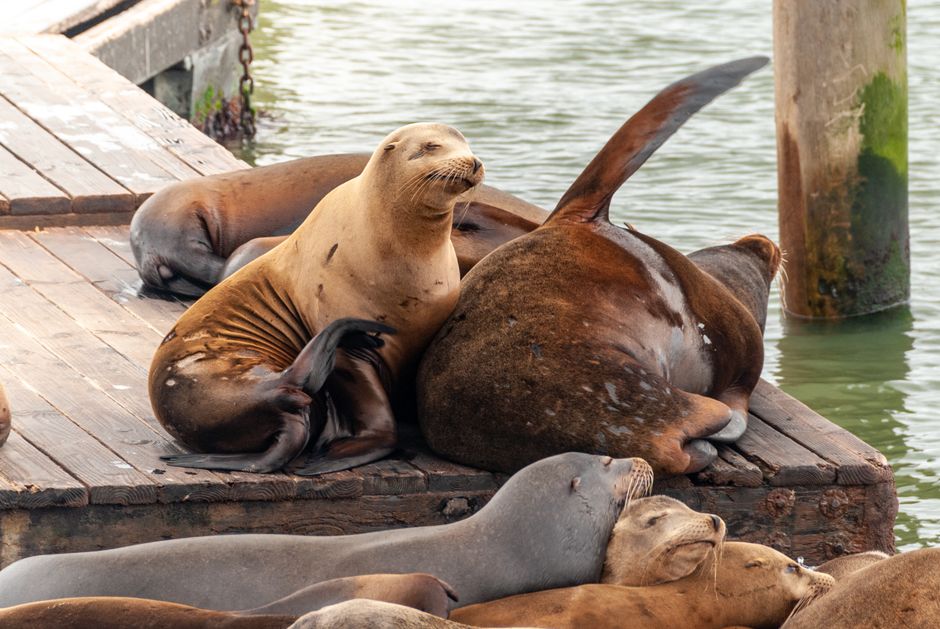
Fisherman's Wharf is the waterfront district on the northern shore, famous for seafood stalls selling Dungeness crab and clam chowder in sourdough bread bowls. At Pier 39, hundreds of California sea lions have hauled out on the floating docks since 1990, especially from autumn to spring, and watching them is free. The area also has the Musée Mécanique, a free-entry collection of antique arcade games, and the San Francisco Maritime National Historical Park, with historic ships at Hyde Street Pier. It is touristy and crowded, so eat seafood elsewhere if you want better value. Ghirardelli Square, a former chocolate factory, is a short walk west.
History
The Ohlone people lived around San Francisco Bay for thousands of years before Spanish soldiers and missionaries founded the Presidio and Mission San Francisco de Asís, known as Mission Dolores, in 1776. Under Mexico the small port was called Yerba Buena, and it took the name San Francisco in 1847, a year after American forces seized it. The discovery of gold in the Sierra Nevada in 1848 changed everything: the population jumped from about 1,000 to 25,000 in two years, and hundreds of ships were abandoned in the harbour as crews ran to the gold fields. Chinese immigrants built the country's oldest Chinatown, and Andrew Hallidie launched the first cable car in 1873. On 18 April 1906 a magnitude 7.9 earthquake and the fires that followed destroyed about 80% of the city and killed around 3,000 people. The city rebuilt quickly, and the Golden Gate and Bay bridges opened in the 1930s. In 1967 the Summer of Love drew about 100,000 young people to Haight-Ashbury, and in 1977 Harvey Milk became one of the first openly gay elected officials in the country. Today the city has about 830,000 residents and anchors Silicon Valley's tech economy.
Culture
San Francisco is compact, about 121 km² on the tip of a peninsula, but packs dozens of distinct neighbourhoods onto its 40-plus hills. The Mission District mixes Latino murals and taquerias with new restaurants, Chinatown remains one of the largest Chinese communities outside Asia, and the Castro has been a global symbol of LGBTQ+ rights since the 1970s. The city has a long history of counterculture, from the Beat poets of North Beach in the 1950s to the hippies of Haight-Ashbury, and of progressive politics. Food culture is central: sourdough bread, Dungeness crab, the Mission burrito and the farm-to-table movement all have deep roots here. Tech companies have shaped the economy and driven up rents, a source of tension with long-time residents. Locals love the outdoors, running in Golden Gate Park, cycling over the bridge and swimming in the cold bay. Fog, nicknamed Karl by residents, rolls in on summer afternoons and is part of the city's identity.
Climate
Spring
9–19°C
March to May brings 15–20°C days, green hills and wildflowers in Golden Gate Park. Mornings are often clear, with wind i…
Summer
12–21°C
June to August is surprisingly cool, with 17–21°C days, thick morning and evening fog and strong winds on the bridge. Vi…
Autumn
12–24°C
September and October are the warmest and clearest months, locally called Indian summer, with 20–26°C days and little fo…
Winter
7–15°C
December to February is mild and rainy, with 12–15°C days and most of the year's rain falling in storms. It rarely freez…
Fun Facts
Cable cars are a moving National Historic Landmark
San Francisco's cable cars, first run in 1873, are the last manually operated cable car system in the world. In 1964 the…
Ships lie buried under the Financial District
During the Gold Rush of 1849, crews abandoned hundreds of ships in Yerba Buena Cove to head for the gold fields. Some we…
The fortune cookie was invented here, not in China
Fortune cookies are almost unknown in China. Historians trace them to Japanese immigrants in California, and many credit…
The city has its own herd of bison
Golden Gate Park has kept a herd of American bison since 1891, when the animals were nearly extinct in the wild. The Bis…
Alcatraz held its prisoners in fear of cold water
Alcatraz Federal Penitentiary operated from 1934 to 1963 and held famous inmates such as Al Capone. Its location 2 km fr…
The Golden Gate Bridge is painted every day
A team of about 28 painters and 16 ironworkers maintains the Golden Gate Bridge year-round, touching up the Internationa…
Local Cuisine in San Francisco

Clam chowder in a sourdough bowl
Creamy New England-style clam chowder served in a hollowed-out loaf of tangy sourdough bread, a classic of Fisherman's Wharf. San Francisco sourdough owes its sour flavour to wild yeast and bacteria, one of which is named Lactobacillus sanfranciscensis. The Boudin Bakery has baked sourdough here since 1849. A bread bowl costs about $12–16.
Mission burrito
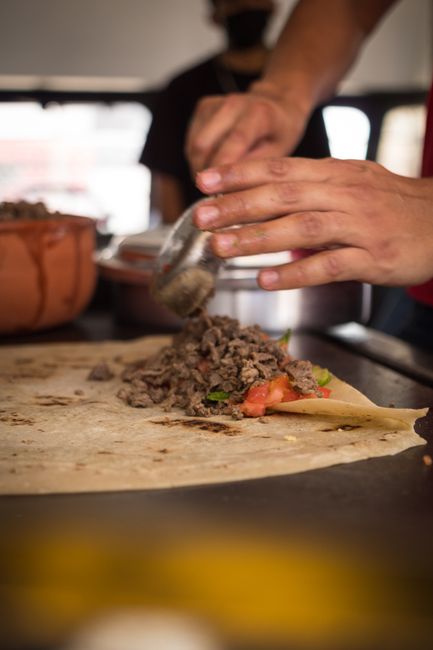
A huge flour tortilla, steamed to softness and packed with rice, beans, grilled meat, salsa, cheese and guacamole, wrapped in foil. The style was born in the taquerias of the Mission District in the 1960s and 1970s. La Taqueria and El Farolito are famous spots, and a burrito large enough for two meals costs about $12–18.
Dungeness crab
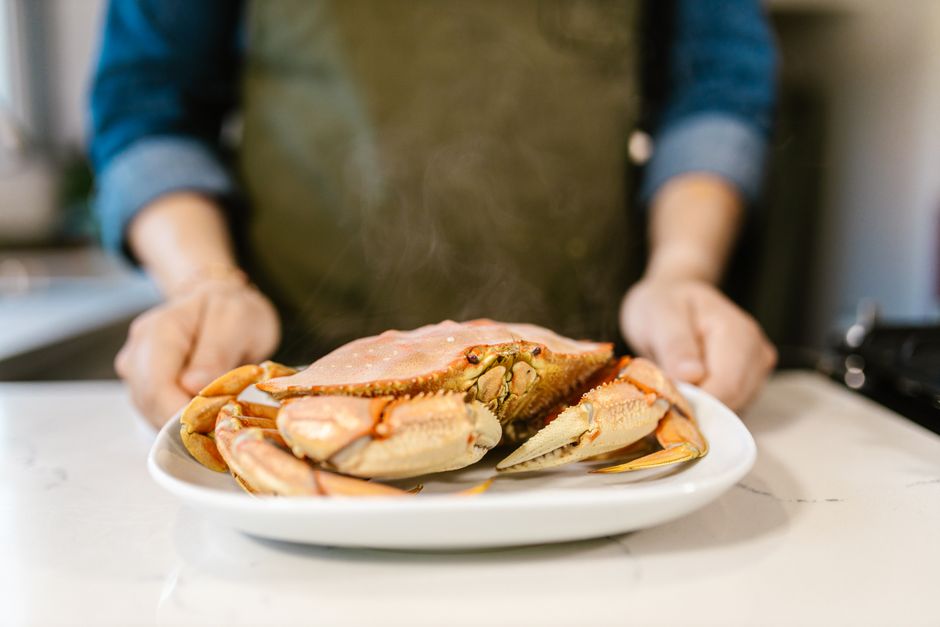
Sweet, tender crab from Pacific waters, usually steamed and served whole with melted butter or roasted with garlic. The commercial season normally opens in November or December and is a local holiday tradition. Fisherman's Wharf stands sell cracked crab, while restaurants such as Thanh Long are known for garlic roast crab. A whole crab costs about $50–80 in restaurants.
Cioppino
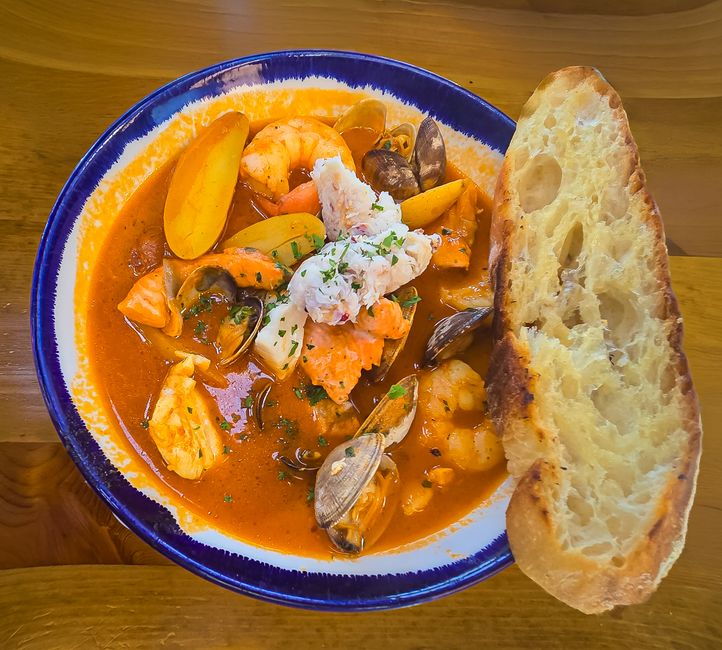
A rich tomato and white wine stew filled with crab, clams, mussels, shrimp and fish, served with garlic bread. It was created by Italian and Portuguese fishermen in North Beach in the late 19th century, who added whatever they caught that day. Restaurants in North Beach and at the Wharf serve it for about $35–55.

Dim sum
Small plates of steamed shrimp dumplings, pork buns, rice noodle rolls and egg tarts, eaten in the morning with tea. San Francisco's dim sum culture is among the best outside Asia, from old teahouses in Chinatown to large restaurants in the Richmond District. A full meal costs about $20–35 per person, and weekends are busiest.

Irish coffee
Hot coffee, Irish whiskey and brown sugar topped with a thick layer of lightly whipped cream, served in a stemmed glass. The Buena Vista Café near the cable car turntable at Hyde Street introduced it to the United States in 1952 and still serves around 2,000 a day. One costs about $12–15.
Practical Travel Information
Transport & Accessibility
International Transport
San Francisco International Airport (SFO), 21 km south of downtown, is the main international gateway, with direct flights from Europe, Asia, Australia and Latin America. Oakland International Airport (OAK) and San José Mineta International Airport (SJC) offer cheaper domestic flights. BART connects both SFO and Oakland airports with downtown. Amtrak trains stop at Emeryville, across the bay, with bus connections to San Francisco, and the Coast Starlight runs north to Seattle and south to Los Angeles. Caltrain links the city with Silicon Valley and San José.
Local Transport
Muni operates buses, light rail, historic F-line streetcars and cable cars, with most rides costing $3 and cable cars $9. A Muni Visitor Passport offers unlimited rides, including cable cars, from about $15 for one day. BART is useful for the airport, the Mission and the East Bay. Pay with a Clipper card or a phone wallet. Ferries cross the bay to Sausalito and Oakland. Bay Wheels bike-share and e-bikes help with the hills, and Waymo driverless taxis operate citywide. Driving is stressful, parking is expensive and car break-ins are common, so avoid renting a car for the city itself.
Safety & Health
Personal Safety
San Francisco's main tourist areas, such as Fisherman's Wharf, Union Square, Chinatown and Golden Gate Park, are generally safe during the day. The city's biggest problem for visitors is property crime, especially car break-ins at viewpoints and parking garages, so never leave luggage or valuables in a car, even in the boot. The Tenderloin and parts of SoMa near Civic Center have open drug use and homelessness; avoid walking there at night. Watch for phone snatching on busy streets and on BART. Pickpocketing occurs on crowded cable cars. In an emergency, call 911.
Medical Services
San Francisco has excellent hospitals, including UCSF Medical Center, Zuckerberg San Francisco General Hospital, which is the city's main trauma centre, and California Pacific Medical Center, all with 24-hour emergency departments. Healthcare is very expensive without insurance, so travel insurance with medical cover is essential. Urgent care clinics charge about $150–250 for minor issues. Pharmacies such as CVS and Walgreens are easy to find. Tap water from the Hetch Hetchy reservoir in Yosemite is among the best in the country. Strong sun with cool winds can cause sunburn, so wear sunscreen even on foggy days.
Budget & Costs
Travel Costs
San Francisco is one of the most expensive cities in the United States. A hostel bed costs $50–90, a mid-range hotel $200–350 and a luxury hotel $450 or more, plus a hotel tax of about 14–16%. A Mission burrito costs $12–18, a casual lunch $20–30, dinner at a mid-range restaurant $50–90 per person and a cocktail $16–22. Muni rides cost $3, cable cars $9 and Alcatraz about $45–50. A mid-range traveller should budget $300–450 per day, including accommodation. Museums cost $15–45.
Budget Tips
Buy a Muni Visitor Passport if you plan several cable car rides, since one day costs about the same as two single rides. Walk the Golden Gate Bridge, explore Golden Gate Park, Chinatown and the Mission murals, and visit the Cable Car Museum for free. Climb the free de Young observation tower for city views. Eat in the Mission and Chinatown instead of Fisherman's Wharf. Stay in Oakland or near a BART station outside downtown for lower rates. Visit in winter, when hotel prices fall, and avoid dates of major tech conferences.
Culture & Traditions
Social Norms
San Franciscans are informal, open-minded and proud of the city's history of tolerance and activism. Casual dress is normal almost everywhere, even in good restaurants. Locals care about the environment: recycling and composting are compulsory, and plastic bags are banned. Respect queues and stand to the right on escalators. Tipping of 18–22% is expected in restaurants. Avoid calling the city Frisco or San Fran, which many locals dislike; SF or the City are preferred. Conversations about tech and housing costs are common, but can be sensitive topics.
Cultural Activities
Visit the San Francisco Museum of Modern Art, the de Young and the Legion of Honor. Explore the murals of Balmy and Clarion alleys in the Mission. Attend the free Hardly Strictly Bluegrass festival in Golden Gate Park in October, the Pride parade in June and the Lunar New Year parade. Watch a Giants baseball game at Oracle Park, where home runs splash into McCovey Cove. Take in jazz at SFJAZZ Center, browse City Lights Bookstore, founded by the Beat poet Lawrence Ferlinghetti in 1953, and see the Castro Theatre in the historic LGBTQ+ neighbourhood.
Unique Experiences in San Francisco
Take the Alcatraz night tour, which includes the cellhouse audio tour, special talks and the boat ride at sunset, with the city lights glowing across the water. Tickets cost about $55–65 and sell out quickly, so book several weeks ahead.
Walk among coast redwoods up to 77 m tall at Muir Woods National Monument, 25 km north of the city. Parking or shuttle reservations are required and cost about $9–12, plus a $15 entry fee. Visit early in the morning for silence and mist among the trees.
Join a sunset walk at Lands End, a coastal trail in the north-west of the city with views of the Golden Gate Bridge, shipwreck remains at low tide and the ruins of the Sutro Baths, a giant public bathhouse opened in 1896. The trail is free and takes about 1–2 hours.
Rent a bike at Fisherman's Wharf and cycle across the Golden Gate Bridge to Sausalito, about 13 km, then return by ferry across the bay with views of Alcatraz and the skyline. Bike rental costs about $35–60 per day, and the ferry about $15.
Ride the Powell–Hyde cable car to the top of Russian Hill, walk down the eight switchbacks of Lombard Street, and finish with an Irish coffee at the Buena Vista Café, where it was first served in the United States in 1952. The route takes two to three hours.
Travel Recommendations for San Francisco
Never leave anything visible in a parked car, including in the boot at viewpoints and car parks. Break-ins happen in min…
Book Alcatraz, popular restaurants and Muir Woods parking in advance, especially in summer and autumn. Alcatraz tickets …
Explore neighbourhoods beyond the waterfront. The Mission has murals, taquerias and Dolores Park; North Beach has Italia…
Pack layers no matter the season. Temperatures can change by 10°C between neighbourhoods and within an hour, as fog roll…
Plan day trips by public transport or tour. Ferries reach Sausalito and Tiburon, BART reaches Berkeley and Oakland, and …