Miami
Updated October 19, 2026
Also known as: Magic City, The 305, Gateway to the Americas
Main Landmarks in Miami

Vizcaya Museum and Gardens
Vizcaya Museum and Gardens is the villa built between 1914 and 1922 for industrialist James Deering on the shore of Biscayne Bay. Designed in an Italian Renaissance style, it holds about 70 rooms filled with European art and furniture from the 15th to 19th centuries. Its 4 hectares of formal gardens include fountains, statues, a hidden grotto and a stone barge in the bay. About 1,000 workers, many from the Bahamas, built the estate. Tickets cost about $25–30, and timed reservations are recommended. Allow two to three hours, and visit in the morning to avoid the heat.
Pérez Art Museum Miami
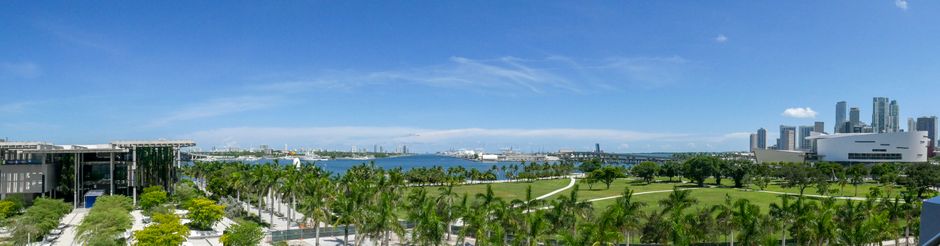
The Pérez Art Museum Miami (PAMM), opened in 2013 in Museum Park on Biscayne Bay, is the city's leading museum of modern and contemporary art. Its building by Herzog & de Meuron has hanging gardens of tropical plants and a shaded terrace overlooking the water. The collection focuses on art of the Americas, Africa and the Caribbean. Admission costs about $18–25, with free entry on certain days. Next door, the Phillip and Patricia Frost Museum of Science has a planetarium and an aquarium. The museum café's terrace is perfect at sunset. The free Metromover stops at Museum Park.
South Beach and Ocean Drive
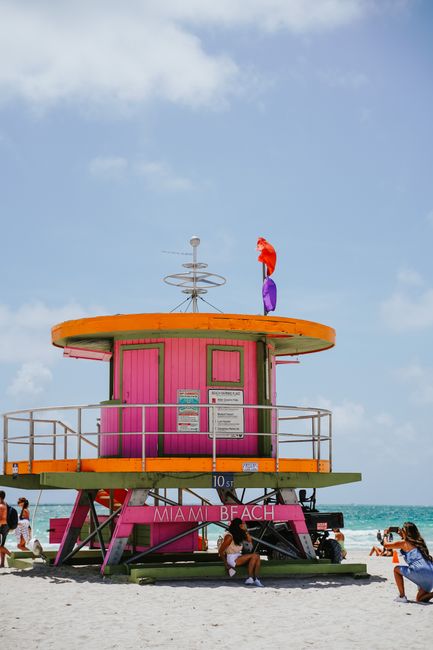
South Beach, the southern part of Miami Beach, is famous for its wide white sand beach, turquoise water and colourful lifeguard towers. Ocean Drive runs along Lummus Park, lined with pastel Art Deco hotels, cafés and neon lights from the 1930s and 1940s. The Miami Beach Architectural District includes about 800 historic buildings, and the Art Deco Welcome Center offers walking tours for about $35. Beaches are free and open to all. Ocean Drive restaurants are overpriced and add high service charges, so check bills carefully. Visit early in the morning for quiet sand and soft light.

Wynwood Walls
Wynwood Walls, opened in 2009 by developer Tony Goldman, is an outdoor street art museum in the former warehouse district of Wynwood, just north of downtown. Large murals by artists from more than 20 countries cover the walls, changing regularly. The surrounding streets have hundreds more murals, galleries, breweries, coffee shops and boutiques, all free to explore. Entry to the Wynwood Walls itself costs about $12–15. The area is lively in the evening and on weekends, especially during the Second Saturday art walk. Visit in the morning for photos without crowds, and wear sunscreen, as there is little shade.
Little Havana and Calle Ocho
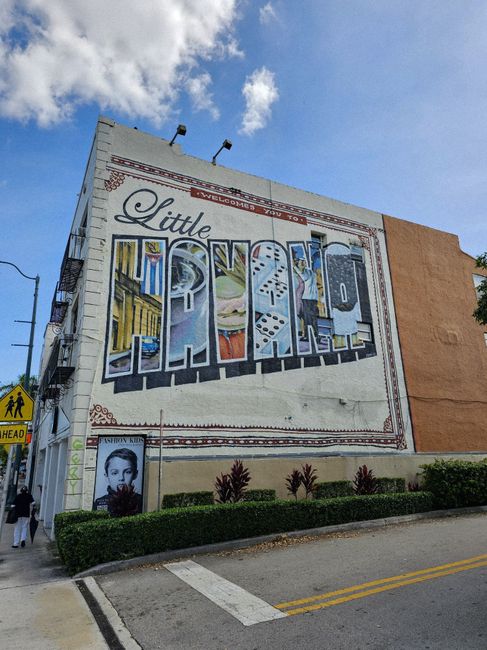
Little Havana, west of downtown, is the centre of Miami's Cuban community since the 1960s. Calle Ocho, SW 8th Street, is lined with cafés serving Cuban coffee through walk-up windows, cigar shops where workers hand-roll cigars and restaurants such as Versailles, open since 1971. At Máximo Gómez Park, known as Domino Park, older men play dominoes daily. The Cuban Memorial Boulevard honours heroes of Cuban history. The Calle Ocho Festival in March is one of the largest Latin street parties in the country. Join a walking food tour for about $60–80, and visit on Friday evenings for live music.

Everglades National Park
Everglades National Park, about 1 hour west of Miami, protects 6,100 km² of sawgrass marshes, mangroves and cypress swamps, the largest subtropical wilderness in the United States and a UNESCO World Heritage Site since 1979. At Shark Valley, a 24 km paved loop leads to an observation tower, and visitors can walk, cycle or take a tram tour past alligators, herons and turtles. Airboat tours outside the park cost about $30–60. Park entry costs about $35 per vehicle, plus a $100 surcharge per person for non-US residents. Visit from December to April, when water levels are low, wildlife concentrates and mosquitoes are fewer.

Bill Baggs Cape Florida State Park
Bill Baggs Cape Florida State Park, at the southern tip of Key Biscayne, about 30 minutes from downtown, has one of the best beaches in the Miami area, with calm water, palm trees and fewer crowds than South Beach. Its Cape Florida Lighthouse, built in 1825, is the oldest standing structure in Miami-Dade County, and free guided tours climb its 109 steps for views over the ocean and the Stiltsville houses built on stilts in the bay. Visitors can also kayak, fish and cycle. Entry costs about $8 per vehicle. Bring snacks and water, and arrive early on weekends.

Venetian Pool
The Venetian Pool in Coral Gables, opened in 1924, is a historic public swimming pool created from a former coral rock quarry. Its Mediterranean-style design includes waterfalls, caves, stone bridges and Venetian towers. Fed by spring water from an underground aquifer, the pool is drained and refilled daily in summer. Admission costs about $15–25 for non-residents, and timed reservations are often required. Children must be at least 3 years old. The surrounding city of Coral Gables, planned by George Merrick in the 1920s, has tree-lined streets and the Biltmore Hotel, opened in 1926. Visit on a weekday morning.
History
For about 2,000 years the Tequesta people lived at the mouth of the Miami River, and their name for the area, Mayaimi, gave the city its name. Spanish explorers arrived in the 16th century, and Florida passed to the United States in 1821, but the area remained a remote frontier of mangroves and swamps. Miami is the only major American city founded by a woman: Julia Tuttle, a widow from Cleveland, persuaded railway magnate Henry Flagler to extend his Florida East Coast Railway south, and the city was incorporated on 28 July 1896 with 502 voters. A land boom in the 1920s created Miami Beach, Coral Gables and the Art Deco hotels of South Beach, but the devastating hurricane of 1926 and the Great Depression ended it. After Fidel Castro took power in 1959, hundreds of thousands of Cubans arrived, transforming Little Havana and the city's culture, followed by the Mariel boatlift of 1980. Later waves came from Haiti, Venezuela, Colombia, Nicaragua and beyond. Today about 480,000 people live in the city and over 6 million in the metropolitan area, which has become a centre of finance, art and international trade.
Culture
Miami is the most Latin American city in the United States: about 70% of residents of Miami-Dade County are Hispanic, and Spanish is heard as often as English in shops, offices and cafés. Cuban culture shapes daily life, from cafecito windows serving tiny cups of sweet espresso to domino games at Máximo Gómez Park in Little Havana. Haitian, Venezuelan, Colombian and Caribbean communities add their own music, food and festivals. The city has become a global art destination since Art Basel Miami Beach began in 2002, and the Wynwood district is covered in murals by artists from around the world. Nightlife is famous, from the clubs of South Beach to the rooftop bars of Brickell. Music styles from salsa and reggaeton to Miami bass and electronic dance music thrive. Sport also matters: Lionel Messi has played for Inter Miami since 2023, and the Formula One Miami Grand Prix has run every May since 2022. Residents enjoy an outdoor lifestyle all year, with beaches, boats and sunshine.
Climate
Spring
19–30°C
March to May is warm and mostly dry, with 27–30°C days and the ocean at 24–27°C, one of the best times for beaches and o…
Summer
25–33°C
June to September is hot and humid, with 31–33°C afternoons, heat indexes above 40°C and short, heavy thunderstorms most…
Autumn
21–30°C
October and November gradually become drier and cooler, with 27–30°C days and lower humidity by November. Hurricanes rem…
Winter
16–26°C
December to February is the peak season, with dry, sunny days of 24–26°C, cool nights near 16°C and the most pleasant we…
Fun Facts
The only major US city founded by a woman
Miami owes its existence to Julia Tuttle, a businesswoman who bought land on the Miami River in 1891. She persuaded Henr…
The only place where crocodiles and alligators live together
South Florida, especially the Everglades and the coastal mangroves near Miami, is the only place in the world where Amer…
Most residents were born abroad
More than half of the City of Miami's residents were born outside the United States, one of the highest shares of any la…
The cruise capital of the world
PortMiami handles more cruise passengers than any other port on Earth, with more than 8 million passengers a year. On bu…
Miami Beach was once a mangrove swamp
Miami Beach was a narrow strip of mangroves and sand before developer Carl Fisher began transforming it in 1913. Workers…
A public pool built in a coral rock quarry
The Venetian Pool in Coral Gables was created in 1924 from a coral rock quarry that supplied stone for the city's first …
Local Cuisine in Miami

Stone crab claws
Sweet, firm claws of the Florida stone crab, served chilled and cracked with a tangy mustard sauce. Only the claws are harvested, and the crabs are returned to the sea to regrow them. The season runs from 15 October to 1 May. Joe's Stone Crab in Miami Beach, open since 1913, is the most famous place to try them. A plate costs about $40–100 depending on size.

Cafecito
A tiny cup of strong, sweet Cuban espresso, whipped with sugar into a thick foam called espumita. A colada is a larger cup meant to be shared in small plastic cups among friends or colleagues. Locals drink it at walk-up windows called ventanitas, often at 15:05 in honour of the area code. A cafecito costs about $1.50–3.
Croquetas
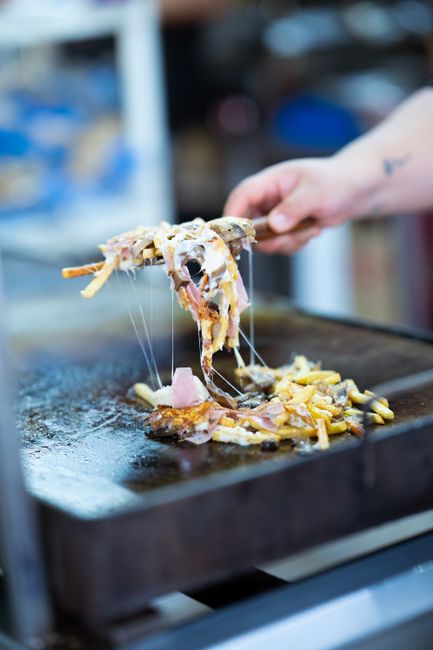
Crispy, golden fried rolls filled with creamy ham, chicken or fish, eaten as a snack or for breakfast with coffee. Croquetas de jamón are the Miami classic, sold at Cuban bakeries and cafés across the city. Locals often order them by the dozen for parties. Each one costs about $1–2, and Ventanitas sell them warm all day.

Frita cubana
A Cuban-style burger of seasoned beef and chorizo on a soft bun, topped with crunchy shoestring potatoes, onions and a sweet ketchup sauce. Fritas became popular in Little Havana in the 1960s, and El Rey de las Fritas on Calle Ocho is a famous spot. A frita costs about $6–10, making it one of the cheapest classic meals in Miami.
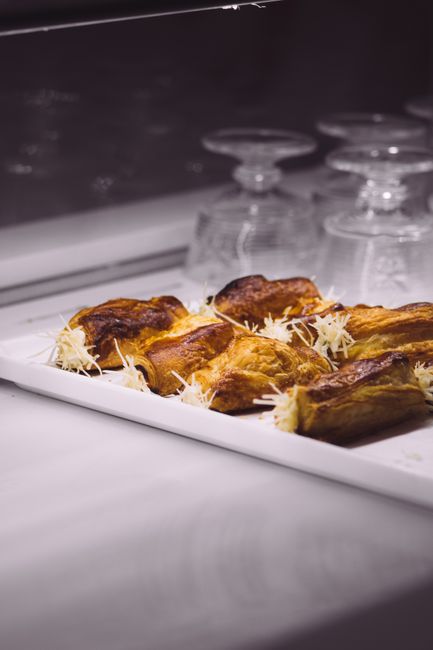
Pastelito de guayaba
A flaky puff pastry filled with sweet guava paste, sometimes mixed with cream cheese, baked until golden and glazed with sugar. Pastelitos are a breakfast and afternoon snack across Miami's Cuban bakeries, often eaten with cafecito. Bakeries sell trays for office parties. Each one costs about $1–2. Buy them warm in the morning.

Peruvian ceviche
Fresh raw fish cured in lime juice with red onion, chilli and coriander, served with sweet potato and large corn kernels. Miami's large Peruvian and South American communities have made ceviche one of the city's favourite dishes, especially in Brickell and Doral. A generous plate costs about $18–28 and pairs perfectly with a pisco sour.
Practical Travel Information
Transport & Accessibility
International Transport
Miami International Airport (MIA), about 13 km west of downtown, is one of the largest gateways to Latin America and the Caribbean, with direct flights to Europe and many US cities. Fort Lauderdale–Hollywood International Airport (FLL), 45 km north, often has cheaper domestic flights. Brightline high-speed trains link downtown Miami with Fort Lauderdale, West Palm Beach and Orlando International Airport in about 3.5 hours. Amtrak trains connect Miami with New York and Washington, D.C. PortMiami is the world's busiest cruise port, with ships to the Bahamas and the Caribbean.
Local Transport
Miami is spread out, and traffic can be heavy. The Metrorail links the airport with downtown, Brickell and Coconut Grove for about $2.25, while the free Metromover loops around downtown and Brickell. Metrobus routes connect the mainland with Miami Beach, and the free Miami Beach Trolley serves the island. Taxis and ride-hailing apps are widely available. Citi Bike stations operate in Miami Beach and downtown. Parking in South Beach is expensive and limited, about $4–6 per hour or more. Renting a car is useful for the Everglades and the Florida Keys, but not needed in South Beach.
Safety & Health
Personal Safety
Most areas visited by tourists are generally safe during the day and busy in the evening. Pickpocketing and bag theft can occur on crowded beaches, in nightclubs and at events, so keep belongings close. Be careful with drink prices and service charges in some South Beach bars and restaurants, and check bills. Avoid poorly lit areas at night and use ride-hailing after late outings. Swim only in front of lifeguard towers and respect warning flags, as rip currents can be dangerous. Follow official instructions during hurricanes and flooding. In an emergency, call 911.
Medical Services
Miami has excellent hospitals, including Jackson Memorial Hospital, one of the largest public hospitals in the United States and a Level I trauma centre, Mount Sinai Medical Center in Miami Beach and Baptist Hospital. Healthcare is very expensive without insurance, so buy travel insurance with medical cover. Urgent care clinics treat minor issues for about $150–250. Pharmacies such as CVS and Walgreens are easy to find. Tap water is safe. Strong sun, heat and humidity can cause sunburn and dehydration, so use sunscreen, drink water and rest in the shade. Mosquito repellent is useful in the Everglades.
Budget & Costs
Travel Costs
Miami is expensive, especially in South Beach during peak season. A hostel bed costs $40–80, a mid-range hotel $180–350 and a luxury beachfront hotel $450 or more, plus taxes of about 13–14% and frequent resort fees. A cafecito costs $1.50–3, a Cuban sandwich $10–15, dinner at a mid-range restaurant $40–80 per person and a cocktail in South Beach $18–25. A Metrorail ride costs $2.25, and Vizcaya about $25–30. A mid-range traveller should budget $250–400 per day in winter and less in summer.
Budget Tips
Visit in summer or early autumn, when hotel prices drop by up to half and Miami Spice offers fixed-price restaurant menus in August and September. Stay in North Beach, Mid-Beach or downtown instead of central South Beach. Eat at Cuban ventanitas and bakeries, where coffee and pastries cost a few dollars. Use the free Metromover and Miami Beach Trolley. Enjoy free activities such as the beaches, Wynwood's murals, Little Havana and sunset at South Pointe Park. Check bills for automatic service charges before adding a tip.
Culture & Traditions
Social Norms
Miami is relaxed, multicultural and stylish, and appearance matters more here than in many American cities, especially in South Beach and Brickell nightlife. Greetings are warm, often with a kiss on the cheek among friends, in Latin style. People often switch between English and Spanish in the same conversation. Tipping of 18–22% is expected, but many restaurants in tourist areas add an automatic service charge, so check the bill. Beachwear belongs on the beach; cover up in restaurants and shops. Punctuality is relaxed for social events, but business meetings start on time.
Cultural Activities
Explore the murals and galleries of Wynwood and the Design District, and visit Art Basel Miami Beach in December. Join the Calle Ocho Festival in March or a Friday night Viernes Culturales in Little Havana. Watch Inter Miami at Chase Stadium or the Miami Heat at the Kaseya Center. Dance to salsa at Ball & Chain in Little Havana. Visit the Little Haiti Cultural Complex for Caribbean art and music. Take a sunset boat cruise on Biscayne Bay past the homes of Star Island, and enjoy free concerts at the New World Center's outdoor WALLCAST screenings in Miami Beach.
Unique Experiences in Miami
Watch the sunset from South Pointe Park at the southern tip of Miami Beach, where giant cruise ships sail past the pier into the Atlantic. The park has a beach, a walkway and lawns. It is free, and the best time is around 18:00–20:00 depending on the season.
Drive the Overseas Highway to the Florida Keys, crossing 42 bridges including the Seven Mile Bridge, and snorkel at John Pennekamp Coral Reef State Park in Key Largo. Snorkel tours there cost about $40–60, and Key West is about 4 hours from Miami.
Take an airboat or kayak tour through the Everglades, gliding past alligators, wading birds and mangrove islands. Airboat rides cost about $30–60 outside the park, while ranger-led tours and the Shark Valley tram cost about $30. Go in winter for the best wildlife viewing and fewer mosquitoes.
Join a food walking tour of Little Havana, tasting cafecito, croquetas, empanadas and guava pastries while learning about Cuban exile history. Tours cost about $60–80 and last two to three hours. Finish with live salsa music at Ball & Chain, a historic club opened in 1935.
Snorkel or dive among coral reefs and shipwrecks in Biscayne National Park, about 1 hour south of downtown, where 95% of the park is underwater. Boat tours from the Dante Fascell Visitor Center cost about $70–150 and include snorkelling gear.
Travel Recommendations for Miami
Plan your trip around the season. Winter is dry and pleasant but expensive, while summer is hot, humid and stormy but ch…
Explore beyond the beach. Wynwood's art, Little Havana's culture, Vizcaya's gardens, the Everglades' wildlife and Key Bi…
Choose your neighbourhood carefully. South Beach is lively but noisy and expensive, Mid-Beach and North Beach are quiete…
Check restaurant and bar bills before tipping. Many tourist-area restaurants, especially on Ocean Drive, add an automati…
Respect the sun and the sea. Apply high-SPF sunscreen often, drink water, swim near lifeguard towers and check the colou…