Los Angeles
Updated October 19, 2026
Also known as: LA, L.A., City of Angels
Main Landmarks in Los Angeles

Griffith Observatory and Griffith Park
Griffith Observatory, opened in 1935 on the slopes of Mount Hollywood, offers the best free views of Los Angeles, the Hollywood Sign and, on clear days, the Pacific Ocean. Entry to the building and grounds is free, and planetarium shows cost about $10. On clear evenings, the public can look through the 12-inch Zeiss refracting telescope. The surrounding Griffith Park covers about 1,740 hectares, one of the largest urban parks in North America, with hiking trails, the Los Angeles Zoo and the Greek Theatre. Parking is about $10 per hour, so take the DASH Observatory bus. Arrive before sunset to watch the city lights come on.
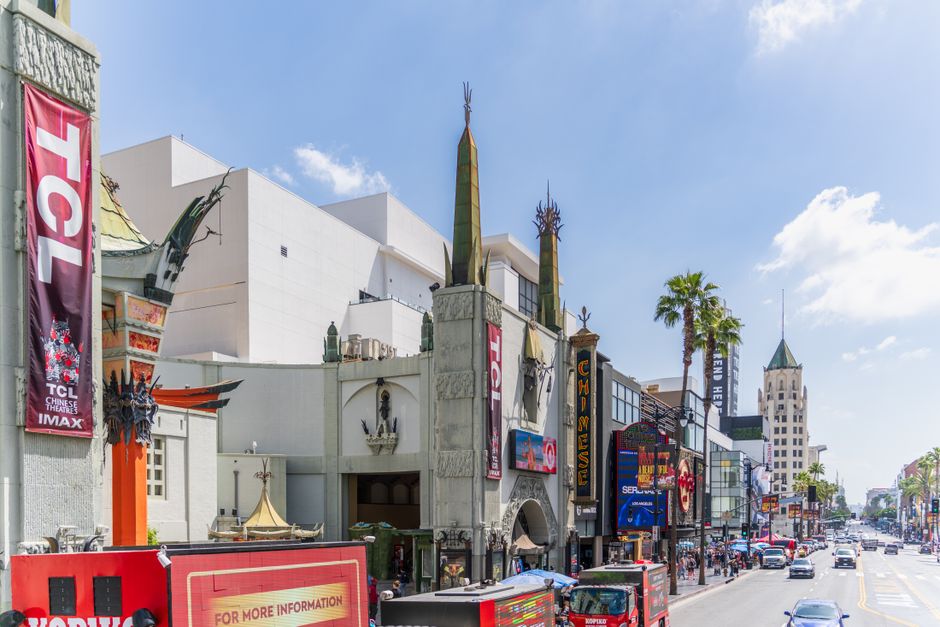
Hollywood Walk of Fame and TCL Chinese Theatre
The Hollywood Walk of Fame stretches about 2 km along Hollywood Boulevard and Vine Street, with more than 2,700 brass stars honouring stars of film, music, television, radio and theatre. The TCL Chinese Theatre, opened in 1927, has handprints and footprints of stars in its forecourt and still screens major premieres. Nearby, the Dolby Theatre hosts the Academy Awards. The area is busy, touristy and can feel gritty, with costumed characters seeking tips for photos. Visit in the morning for fewer crowds. For a better feel of old Hollywood, take a studio tour at Warner Bros. or Paramount, which cost about $70–80.

Santa Monica Pier
The Santa Monica Pier, opened in 1909, stretches about 500 m into the Pacific and marks the symbolic end of Route 66. Pacific Park on the pier has a solar-powered Ferris wheel and a roller coaster above the ocean, while the 1922 Looff Hippodrome houses a historic carousel. The wide sandy beach on either side is popular for swimming, sunbathing and beach volleyball. The 35 km Marvin Braude bike path runs along the coast from here to Venice and beyond. Entry to the pier is free. Visit at sunset, when the wheel lights up. The Metro E Line connects Santa Monica with Downtown in about 50 minutes.
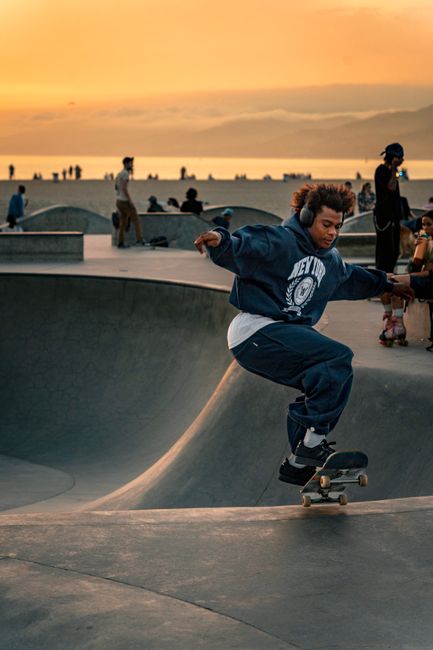
Venice Beach and Boardwalk
Venice Beach, founded in 1905 by developer Abbot Kinney as Venice of America, is famous for its colourful Ocean Front Walk, street performers, murals and the open-air Muscle Beach gym. Its skate park and basketball courts are busy all day. A few blocks inland, the Venice Canals, built in 1905, are lined with charming houses and footbridges. Abbot Kinney Boulevard has independent boutiques, cafés and restaurants. Rent a bike or skates to explore the beach path. The boardwalk can feel chaotic and has visible homelessness, so keep belongings close. Visit on a weekend afternoon for the full atmosphere.

Getty Center
The Getty Center, designed by Richard Meier and opened in 1997, sits on a hilltop in Brentwood with travertine buildings, gardens and views from the ocean to downtown. Its collection includes European paintings such as Van Gogh's Irises, illuminated manuscripts, photography and decorative arts. The Central Garden by artist Robert Irwin changes with the seasons. A small tram carries visitors up the hill from the car park. Admission is free, with parking about $25. Allow at least three hours, and visit the related Getty Villa in Pacific Palisades, which displays Greek and Roman antiquities and requires a free timed reservation.

Universal Studios Hollywood
Universal Studios Hollywood, opened as a studio tour in 1964, is both a working film studio and a theme park in the hills north of Hollywood. The famous Studio Tour takes trams through real film sets, including the Bates Motel from Psycho and the destroyed airplane set from War of the Worlds. Themed areas include the Wizarding World of Harry Potter, opened in 2016, and Super Nintendo World, opened in 2023. One-day tickets cost about $110–160 depending on the date, and Express passes about $200–300. Arrive at opening and do the Studio Tour early. The Metro B Line stops at Universal City.

LACMA and La Brea Tar Pits
The Los Angeles County Museum of Art (LACMA), on Wilshire Boulevard, is the largest art museum in the western United States, with more than 150,000 works from ancient times to the present. Outside, Chris Burden's Urban Light, an installation of 202 restored cast-iron street lamps from the 1920s and 1930s, is one of the most photographed spots in the city. Next door, the La Brea Tar Pits and Museum show Ice Age fossils and active excavations. Tickets cost about $20–30 for each. The surrounding Museum Row also includes the Petersen Automotive Museum and the Academy Museum of Motion Pictures. Visit Urban Light after dark.

Walt Disney Concert Hall and Downtown LA
The Walt Disney Concert Hall, designed by Frank Gehry and opened in 2003, is the home of the Los Angeles Philharmonic, with curving stainless steel walls and some of the best acoustics in the world. Free self-guided audio tours are available on many days, and a hidden rooftop garden is open to the public. Nearby on Grand Avenue, the Broad museum offers free admission to contemporary art, and the Museum of Contemporary Art stands opposite. Downtown also includes the historic Broadway theatre district, the Grand Central Market, opened in 1917, and the Bradbury Building. Take Angels Flight, a 1901 funicular, for $1.
History
Los Angeles was founded on 4 September 1781, when 44 settlers of Native American, African and Spanish descent established El Pueblo de la Reina de los Ángeles near the Tongva village of Yangna on the Los Angeles River. It grew slowly as a cattle town under Spain and Mexico, and came under United States control after the Mexican–American War in 1848. The arrival of the railway in 1876 and an oil boom in the 1890s brought rapid growth, and in 1913 the 375 km Los Angeles Aqueduct began bringing water from the Owens Valley, making a desert metropolis possible. Film studios moved to Hollywood from the 1910s, drawn by sunshine and space, and by the 1920s the city was the centre of the world's film industry. The 1932 and 1984 Summer Olympics put Los Angeles on the world stage, and aerospace, music and television turned it into an economic powerhouse. The city has also known deep tensions, including the Watts uprising of 1965 and the 1992 unrest. In January 2025 the Palisades and Eaton wildfires destroyed thousands of homes, and the city is now rebuilding while preparing to host the 2028 Olympic Games. About 3.9 million people live in the city and nearly 10 million in Los Angeles County.
Culture
Los Angeles is a vast, sprawling region of 88 cities and dozens of neighbourhoods rather than a single centre, and each has its own personality. Hollywood and the studios of Burbank give it a global reputation for film and television, but it is equally a capital of music, art and design, with world-class institutions such as the Getty, LACMA and the Broad. The population is very diverse: about half of residents are Latino, and the region has the largest Korean, Armenian, Thai and Filipino communities outside their home countries, visible in Koreatown, Thai Town and Little Armenia. This diversity shapes the food scene, from taco trucks to Korean barbecue. Car culture is part of daily life, but so is outdoor living, with surfing, hiking in the Santa Monica Mountains and beach volleyball. Angelenos are generally relaxed and informal, health-conscious and open to new trends. The city also faces challenges, including traffic, housing costs and homelessness.
Climate
Spring
11–24°C
March to May brings mild 20–24°C days, blooming jacaranda trees in May and green hillsides after winter rain. May and Ju…
Summer
17–29°C
June to September is warm and dry, with 26–30°C at the coast and 32–38°C in inland valleys. It is beach season in Santa …
Autumn
13–27°C
October and November are often warm and sunny, with 23–28°C days, fewer crowds and the warmest ocean temperatures of the…
Winter
8–21°C
December to February is mild, with 18–21°C days, cool nights near 8–10°C and most of the year's rain. On clear days, sno…
Fun Facts
The Hollywood Sign once said Hollywoodland
The Hollywood Sign was built in 1923 as a temporary advertisement for a housing development called Hollywoodland, with 1…
Fossils still bubble up in the city centre
The La Brea Tar Pits on Wilshire Boulevard are one of the richest Ice Age fossil sites in the world. Natural asphalt has…
The original city name is very long
The settlement founded in 1781 was called El Pueblo de Nuestra Señora la Reina de los Ángeles, often translated as the T…
Los Angeles has more museums than almost any American city
The Los Angeles region has more than 100 museums, from the Getty Center and LACMA to specialised ones such as the Peters…
The city has hosted the Olympics twice and will again
Los Angeles hosted the Summer Olympics in 1932 and 1984, and the 1984 Games were the first in modern times to make a lar…
Millions of cars and 800 km of freeways
Los Angeles County, home to about 10 million people, has around 8 million registered vehicles and more than 800 km of fr…
Local Cuisine in Los Angeles
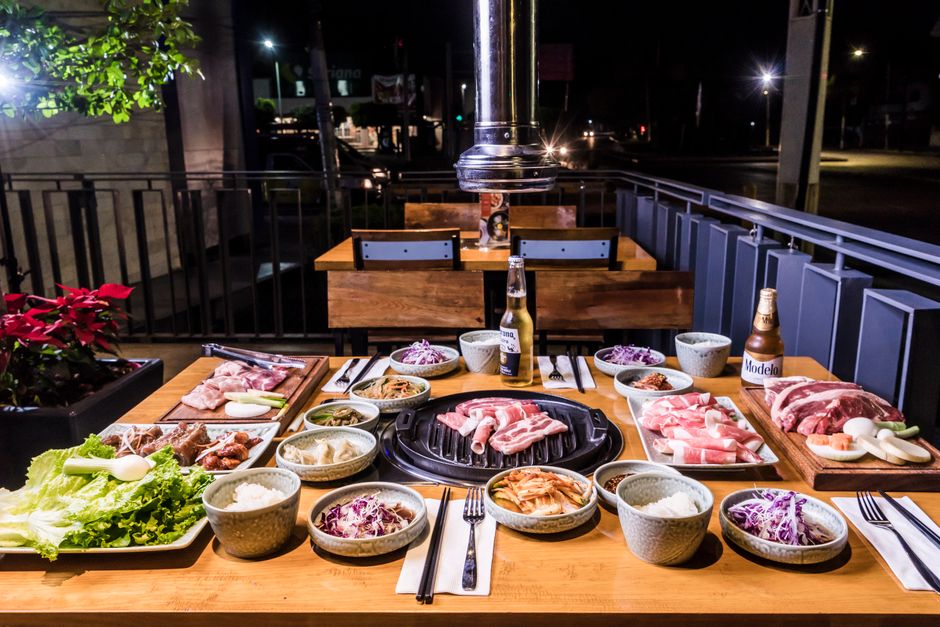
Korean barbecue
Thin slices of marinated beef and pork belly grilled at the table, eaten with rice, lettuce wraps, kimchi and dozens of small side dishes called banchan. Koreatown has one of the largest concentrations of Korean restaurants outside Korea, and many stay open until 02:00. All-you-can-eat Korean barbecue costs about $30–50 per person.

French dip sandwich
Thin slices of roast beef on a crusty French roll dipped in hot meat juices, often served with mustard and pickles. Two downtown restaurants, Philippe the Original and Cole's, both claim to have invented it in 1908. Philippe's still serves it with sawdust on the floor. A sandwich costs about $13–18.

Street tacos
Small corn tortillas filled with marinated al pastor pork, carne asada or grilled fish, topped with onion, coriander, salsa and lime. Taco trucks and stands across East LA, Boyle Heights and South Central serve them late into the night. Leo's Tacos Truck, famous for its rotating al pastor spit, is a local favourite. Tacos cost about $2–4 each.

Korean taco
A fusion taco with Korean barbecue short rib, spicy salsa, kimchi slaw and sesame, served in a corn tortilla. Chef Roy Choi's Kogi BBQ truck launched it in 2008 and used Twitter to announce its location, starting a national food-truck boom. Korean tacos cost about $4–6 each. Look for the truck on Instagram.

In-N-Out Double-Double
Two beef patties, two slices of cheese, lettuce, tomato and spread on a toasted bun from In-N-Out Burger, a California chain founded in 1948 in Baldwin Park, east of Los Angeles. Regulars order it Animal Style, with mustard-grilled patties, extra spread and grilled onions. A Double-Double costs about $6–7, one of the cheapest classic meals in the city.
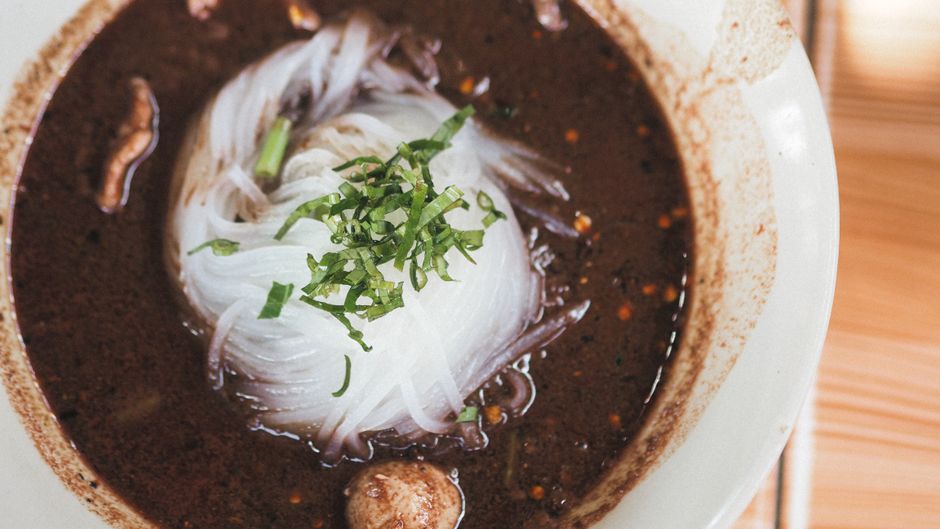
Thai Town boat noodles
Small, intensely flavoured bowls of noodles in a dark broth made with beef or pork, spices and blood, a street food from Bangkok's canals. Los Angeles has the largest Thai community outside Thailand, and Thai Town in East Hollywood was designated in 1999. Bowls cost about $3–4 each, and diners often order several.
Practical Travel Information
Transport & Accessibility
International Transport
Los Angeles International Airport (LAX), about 25 km south-west of Downtown, is one of the busiest airports in the world, with direct flights to Europe, Asia, Australia and Latin America. Other airports, including Hollywood Burbank (BUR), Long Beach (LGB) and Orange County John Wayne (SNA), offer convenient domestic flights. Amtrak trains from Union Station run along the coast on the Pacific Surfliner to San Diego and Santa Barbara, and the Coast Starlight continues to San Francisco and Seattle. Long-distance buses connect Los Angeles with Las Vegas in about 5 hours.
Local Transport
Los Angeles is spread over a huge area, so most visitors drive or use ride-hailing apps. The Metro network has six rail lines, including the B Line subway from Downtown to Hollywood and Universal City, and the E Line to Santa Monica, with fares of $1.75 paid using a TAP card or phone. Buses cover much of the region. Traffic is heavy, especially from 07:00 to 10:00 and 15:00 to 19:00, so plan trips outside rush hour. Parking costs $10–40 in popular areas. Bikes and e-scooters are useful in beach towns and Downtown.
Safety & Health
Personal Safety
Los Angeles is generally safe for visitors who use common sense. Popular areas such as Santa Monica, Beverly Hills, Malibu, the Getty Center and Griffith Observatory have low crime. Car break-ins are the most common issue for tourists, especially at trailheads, beaches and Hollywood car parks, so never leave anything visible. Downtown's Skid Row and parts of Hollywood Boulevard can feel unsafe at night. Be cautious on some Metro lines late in the evening. Earthquakes are possible: if one occurs, drop, cover and hold on. During wildfire season, follow official evacuation orders. In an emergency, call 911.
Medical Services
Los Angeles has excellent hospitals, including Cedars-Sinai Medical Center, Ronald Reagan UCLA Medical Center and Keck Medical Center of USC, all with 24-hour emergency departments. Healthcare is very expensive without insurance, so travel insurance with medical cover is essential. Urgent care clinics treat minor issues for about $150–250. Pharmacies such as CVS and Walgreens are easy to find. Tap water is safe to drink, although many locals prefer filtered water. Check air quality reports during heat waves or wildfires, and use sunscreen, as the sun is strong year-round.
Budget & Costs
Travel Costs
Los Angeles is expensive, especially for accommodation and getting around. A hostel bed costs $45–80, a mid-range hotel $180–300 and a luxury hotel in Beverly Hills or Santa Monica $450 or more, plus hotel taxes of about 14–16%. Street tacos cost $2–4, a casual lunch $15–25, dinner at a mid-range restaurant $40–80 per person and a cocktail $16–22. A Metro ride costs $1.75. Universal Studios costs $110–160 and studio tours $70–80. Car rental costs $50–90 per day plus parking. A mid-range traveller should budget $250–400 per day.
Budget Tips
Use free attractions such as Griffith Observatory, the Getty Center, the Broad, the beaches, Venice Canals and the Walk of Fame. Take the Metro to Hollywood, Universal City, Downtown and Santa Monica instead of paying for parking. Eat at taco trucks, Koreatown and Thai Town, where meals cost far less than in Beverly Hills or Santa Monica. Stay in one area to reduce travel time and cost. Visit in winter or late autumn for lower hotel prices, and avoid big events such as award shows and conventions.
Culture & Traditions
Social Norms
Angelenos are generally friendly, relaxed and informal, and casual clothing is acceptable almost everywhere, though trendy restaurants and clubs may expect smart outfits. People value personal space and healthy lifestyles, and fitness, yoga and organic food are part of daily life. Tipping of 18–22% is expected in restaurants. Traffic is a frequent topic of conversation, and locals often describe distances in minutes rather than kilometres. Respect privacy when you see celebrities, and avoid taking photos without permission. Always check before smoking, as rules are strict in public spaces and on beaches.
Cultural Activities
See a concert at the Hollywood Bowl, an outdoor amphitheatre opened in 1922, or the Los Angeles Philharmonic at the Walt Disney Concert Hall. Take a studio tour at Warner Bros. or Paramount, and watch a live television taping for free. Attend a Dodgers baseball game at Dodger Stadium or a Lakers game. Explore art at the Getty, LACMA, the Broad and the Hammer Museum. Celebrate Día de los Muertos in Boyle Heights or at Hollywood Forever Cemetery, and visit Olvera Street to learn about the city's Mexican roots.
Unique Experiences in Los Angeles
Join a food tour of Koreatown, Thai Town or Boyle Heights, tasting Korean barbecue, boat noodles or tacos al pastor with a local guide. Tours cost about $80–150 per person and last three to four hours, showing a side of the city most visitors miss.
Hike to the Hollywood Sign along the Mount Hollywood or Brush Canyon trails in Griffith Park, about 10 km round trip, for close-up views of the letters and the city. Start early in the morning, bring plenty of water and wear a hat, as there is little shade.
Watch a free television show taping in a Hollywood or Burbank studio, including sitcoms, game shows and talk shows. Book tickets online through official audience services several weeks ahead, and arrive early, as seats are given out on a first-come basis. Most tapings last two to four hours.
Drive the Pacific Coast Highway north from Santa Monica to Malibu, stopping at El Matador State Beach for sea caves and rock arches, and at Point Dume for whale watching from December to April. The drive is about 50 km one way and best at sunset.
Catch a summer evening concert at the Hollywood Bowl, where picnics and wine are allowed in many sections. Tickets range from about $15 to $200, and the season runs from June to September. Take the Bowl's park-and-ride shuttles to avoid traffic.
Travel Recommendations for Los Angeles
Respect the environment and fire rules. Do not smoke on trails or beaches, follow trail closures during fire season and …
Plan your days by area to avoid spending hours in traffic. Group Hollywood with Griffith Park and Universal City, Santa …
Use the Metro where it works. The B Line connects Downtown with Hollywood and Universal City, the E Line runs to Santa M…
Never leave anything visible in a parked car, even for a few minutes. Break-ins are common at beaches, trailheads and to…
Explore beyond Hollywood. Many visitors are disappointed by Hollywood Boulevard, while neighbourhoods such as Silver Lak…