Las Vegas
Updated October 19, 2026
Also known as: Vegas, Sin City, The Entertainment Capital of the World
Main Landmarks in Las Vegas

Sphere
Sphere is a 112 m high, 157 m wide spherical venue east of the Strip, opened in 2023 and covered outside with about 1.2 million LED pucks that turn it into a giant screen visible across the valley. Inside, a 15,000 m² wraparound screen, one of the highest-resolution in the world, surrounds about 17,500 seats, with haptic seats and powerful sound. It hosts concert residencies and immersive films such as Postcard from Earth, with tickets from about $100–200 for films and much more for concerts. Book in advance, as shows sell out. Watch the outside display from the High Roller or the Venetian's walkways for free.

The Neon Museum
The Neon Museum, founded in 1996 north of downtown, preserves more than 250 retired signs from the city's casinos, motels and businesses. Its outdoor Boneyard is best seen on an evening guided tour, when several restored signs are lit, including those of the Stardust and the Hard Rock Café guitar. The visitor centre occupies the shell-shaped lobby of the former La Concha Motel, designed in 1961 by Paul Revere Williams. General admission costs about $20–30, and night tours sell out days ahead. Bring water and wear closed shoes, as the ground is gravel. Photography is welcome, but professional shoots need permission.
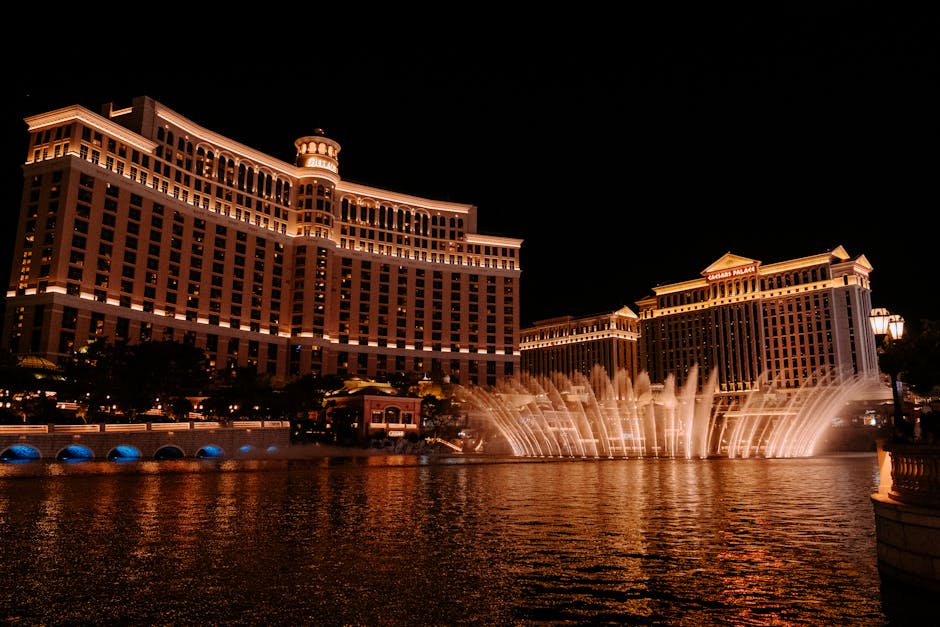
Las Vegas Strip and Fountains of Bellagio
The Las Vegas Strip is a 6.8 km stretch of Las Vegas Boulevard with some of the largest hotels in the world, including the Venetian, Caesars Palace, Bellagio, MGM Grand and Wynn. Walking it end to end takes two to three hours, with free shows along the way. The Fountains of Bellagio, opened in 1998, shoot water up to 140 m high to music every 30 minutes in the afternoon and every 15 minutes from 20:00 to midnight. The Venetian's indoor canals, the Flamingo's wildlife habitat and the Conservatory at Bellagio are also free. Use the pedestrian bridges to cross the boulevard, as jaywalking is dangerous and fined.

Fremont Street Experience
The Fremont Street Experience is a five-block pedestrian mall in downtown Las Vegas, covered by a 460 m LED canopy called Viva Vision. Free light-and-sound shows run every hour from early evening until about 01:00. Fremont Street was the original casino district, and historic casinos such as the Golden Nugget, the Binion's and the El Cortez still operate here, with lower table minimums than the Strip. The SlotZilla zip line flies riders under the canopy for about $50–80. Live bands play on stages each night. It can get rowdy and crowded after 22:00, so watch your belongings. The Mob Museum and the Neon Museum are nearby.
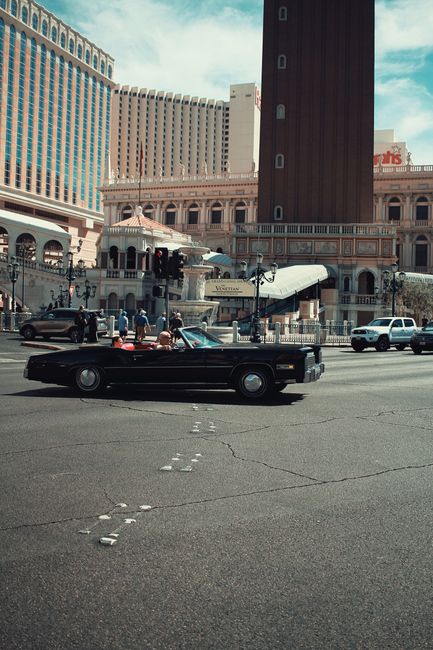
The Mob Museum
The Mob Museum, officially the National Museum of Organized Crime and Law Enforcement, opened in 2012 in a 1933 federal courthouse and post office downtown. One of its courtrooms hosted a 1950 session of the Kefauver Committee hearings on organised crime. Exhibits cover gangsters, the FBI and the role of the Mob in building Las Vegas, including the wall from the 1929 St. Valentine's Day Massacre in Chicago. The basement has a working distillery and a speakeasy bar. Tickets cost about $30–45, and interactive add-ons include a firearms simulator. Allow two to three hours, and combine it with Fremont Street.
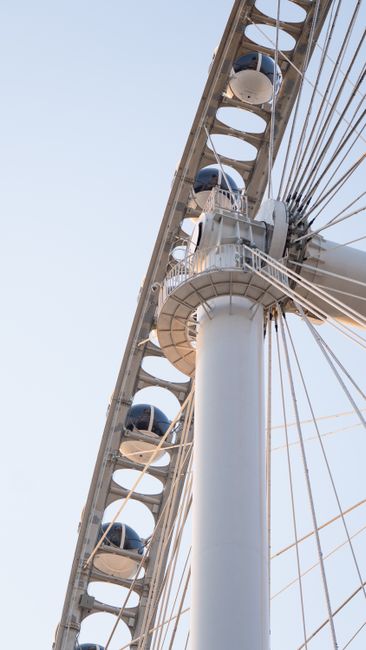
High Roller
The High Roller at the LINQ Promenade is a 167 m observation wheel, the tallest in North America when it opened in 2014. Its 28 glass cabins each hold up to 40 people, and one rotation takes about 30 minutes, with views over the whole Strip, the Sphere and the mountains around the valley. Tickets cost about $25–35 in the day and more at night, while happy hour cabins include an open bar for adults. Ride at sunset for daylight and city lights in one trip. The LINQ Promenade below has restaurants and bars, and the Fly LINQ zip line runs nearby.

Red Rock Canyon National Conservation Area
Red Rock Canyon National Conservation Area lies only 25 km west of the Strip, but feels like another world, with red and cream sandstone cliffs rising up to 900 m. A 21 km one-way scenic drive leads to more than 25 trails, including Calico Tanks and Ice Box Canyon, with petroglyphs and desert tortoises. Entry costs $20 per vehicle, and from October to May a timed-entry reservation is required for the scenic drive between 08:00 and 17:00. It is a world-class rock climbing destination. Visit early in the morning, especially from May to September, when afternoon heat can exceed 40°C.

Hoover Dam
The Hoover Dam, built between 1931 and 1936 on the Colorado River 50 km south-east of Las Vegas, is 221 m high and created Lake Mead, the largest reservoir in the United States by capacity. It used about 2.5 million m³ of concrete, and 96 workers died in its construction. Visitors can walk across the top, which straddles the Nevada–Arizona state line and two time zones in winter. Guided Power Plant and Dam tours cost about $15–30, and parking costs $10. For the best view, walk onto the Mike O'Callaghan–Pat Tillman Memorial Bridge, 270 m above the river. Arrive early to avoid tour bus crowds.
History
Las Vegas, Spanish for the meadows, took its name from the green springs that Spanish traders found in the Mojave Desert in 1829 on the route to California. The Southern Paiute had lived around the springs for centuries. Mormon settlers built a small fort here in 1855, which still stands as the Old Mormon Fort. The modern city was born on 15 May 1905, when the San Pedro, Los Angeles and Salt Lake Railroad auctioned 110 acres of land around its new water stop. Nevada legalised gambling in 1931, the same year work began on the Hoover Dam 50 km away, and thousands of dam workers spent their wages in the bars of Fremont Street. In 1946 mobster Bugsy Siegel opened the Flamingo on a highway south of town, starting what became the Strip. Organised crime financed many casinos until corporations led by Howard Hughes and others bought them in the late 1960s. The 1989 opening of the Mirage launched the era of mega-resorts, followed by the Luxor, Bellagio and Venetian. Today the city has about 680,000 residents, the metropolitan area about 2.3 million, and around 40 million visitors arrive each year.
Culture
Las Vegas lives around the clock: casinos never close, and many bars, restaurants and gyms run 24 hours. The Strip is built as a stage, with replicas of Paris, Venice, New York and ancient Egypt, and shows ranging from Cirque du Soleil to residencies by global pop stars. Food has become as important as gambling, with celebrity chef restaurants, steakhouses and a Chinatown along Spring Mountain Road that locals consider the best food district in town. Beyond the neon, about 2.3 million people live ordinary suburban lives in the desert, and many work in hospitality, entertainment and construction. Sport has transformed the city since 2017, with the Golden Knights in ice hockey, the Raiders in American football and a Formula One Grand Prix on the Strip each November. Weddings are a local industry: Clark County issues about 80,000 marriage licences a year, and chapels offer ceremonies with an Elvis impersonator. Downtown, Fremont Street and the Arts District keep the older, quirkier Vegas spirit alive.
Climate
Spring
10–33°C
March to May brings warm, dry days of 22–33°C and cool nights, the best weather for hiking at Red Rock Canyon and Valley…
Summer
26–42°C
June to September is extremely hot, with afternoons of 40–45°C and nights that rarely drop below 28°C. It is pool and ai…
Autumn
9–30°C
October and November are pleasant, with 20–30°C days and clear skies, ideal for day trips to the Hoover Dam and the Gran…
Winter
2–18°C
December to February is mild by day at 14–18°C but cold at night, sometimes near freezing. Snow occasionally falls on Mo…
Fun Facts
The Strip is not actually in Las Vegas
Most of the famous Las Vegas Strip lies outside the city limits, in the unincorporated towns of Paradise and Winchester …
The brightest light on Earth shines from a pyramid
The beam at the top of the Luxor pyramid, opened in 1993, is often described as the strongest light beam in the world. I…
Las Vegas was born at a land auction
The modern city began on 15 May 1905, when the San Pedro, Los Angeles and Salt Lake Railroad auctioned 110 acres of land…
Neon signs go to a museum when they retire
When old casinos are demolished, their giant neon signs often end up at the Neon Museum, founded in 1996. Its outdoor Bo…
The city recycles almost all its indoor water
Las Vegas gets about 90% of its water from Lake Mead on the Colorado River. Because nearly all water used indoors, inclu…
An expansion hockey team won the Stanley Cup
Las Vegas had no major professional sports team until the Vegas Golden Knights joined the National Hockey League in 2017…
Local Cuisine in Las Vegas

Spring Mountain Road Chinatown food
Bowls of steaming pho, rich tonkotsu ramen, Sichuan hot pot and late-night dim sum along Spring Mountain Road, a few minutes west of the Strip. The area grew from a single Chinatown Plaza in 1995 into a 5 km strip of Asian restaurants where chefs from the casinos eat after work. Most bowls cost $14–22, far less than on the Strip.
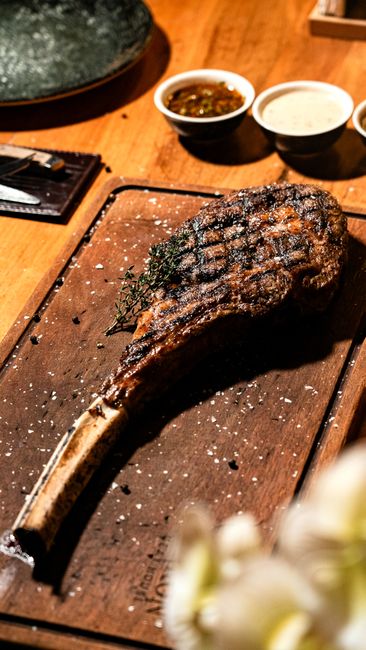
Prime rib special
Slow-roasted, pink prime rib with au jus and horseradish, served in older casino restaurants and coffee shops. The prime rib special is a Las Vegas tradition designed to draw players into the casino. Some locals' casinos and downtown restaurants still offer it for $20–30 with sides, open late into the night.
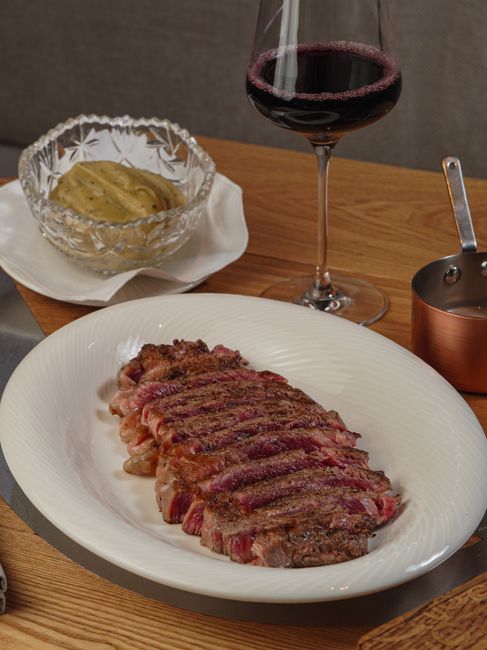
Steakhouse steak
Thick, dry-aged ribeye or porterhouse, seared at very high heat and served with creamed spinach, potatoes and a glass of red wine. The Strip has dozens of high-end steakhouses run by famous chefs, from Gordon Ramsay to Wolfgang Puck. A prime steak costs $70–150, while older casinos still offer steak specials for under $30.

Shrimp cocktail
A tall glass of chilled shrimp with tangy cocktail sauce and lemon, a classic downtown snack. The Golden Gate Hotel, open since 1906, began serving its famous shrimp cocktail in 1959 for 50 cents and has sold tens of millions since. It now costs about $5–8, one of the cheapest classic bites in town.

Las Vegas buffet
Huge all-you-can-eat spreads with crab legs, prime rib, sushi, Asian noodles and long dessert counters. The buffet began in the 1940s at the El Rancho as a cheap way to keep gamblers in the casino. Today top buffets such as Bacchanal at Caesars Palace and the Wicked Spoon at the Cosmopolitan cost about $50–90 per person, especially for weekend brunch.
Practical Travel Information
Transport & Accessibility
International Transport
Harry Reid International Airport (LAS), about 3 km from the Strip, is one of the busiest airports in the United States, with direct flights from Europe, Canada, Mexico and Asia, and hundreds of domestic routes. There is no passenger rail link to Las Vegas yet, although the Brightline West high-speed line to Southern California is under construction. Long-distance buses from operators such as Greyhound and FlixBus connect the city with Los Angeles in about 5–6 hours. Many visitors drive from Los Angeles in 4–5 hours on Interstate 15, or combine Las Vegas with a road trip to the national parks of Utah and Arizona.
Local Transport
The Strip looks compact but distances between resorts are long, and walking from one end to the other takes about two hours in the heat. The Las Vegas Monorail runs along the east side of the Strip from the MGM Grand to the SAHARA, with single rides around $6 and day passes around $15. The Deuce bus runs 24 hours along the Strip to downtown for about $8 per day. Taxis and ride-hailing apps are widely available, with pickup zones at each hotel. Free trams link some neighbouring resorts. Renting a car is useful for Red Rock Canyon, the Hoover Dam and national parks.
Safety & Health
Personal Safety
The Strip and Fremont Street are busy, well lit and heavily patrolled by police and casino security, so most visitors feel safe. The main risks are pickpocketing in crowds, scams by people offering free show tickets or club passes, and theft from unattended bags at pools and casino tables. Drink responsibly, never leave drinks unattended and use ID when asked. Some areas just off the Strip and parts of downtown away from Fremont Street can feel unsafe late at night, so use main routes. Heat is a serious danger in summer, so carry water at all times. In an emergency, call 911.
Medical Services
University Medical Center of Southern Nevada (UMC) is the main public hospital and Level I trauma centre, while Sunrise Hospital and Desert Springs Hospital also have 24-hour emergency rooms. Healthcare is expensive without insurance, so carry travel insurance with medical cover. Urgent care clinics treat minor problems for about $150–250. CVS and Walgreens pharmacies on the Strip are open late or 24 hours. Tap water is safe to drink, although some visitors dislike its mineral taste. Dehydration and heat exhaustion are the most common health problems for visitors from May to September.
Budget & Costs
Travel Costs
Las Vegas prices vary widely by day of the week and events. A mid-range Strip hotel costs $80–200 on weekdays and $200–400 on weekends, plus resort fees of $35–55 per night and taxes of about 13%. Downtown hotels are cheaper at $50–150. A buffet costs $35–90, a steakhouse dinner $80–150 and a casual meal $20–35. Cocktails on the Strip cost $18–25. Major shows such as Cirque du Soleil cost $80–250. A mid-range traveller should budget $200–350 per day, excluding gambling.
Budget Tips
Visit Sunday to Thursday, when hotel rates can fall by half compared with Friday and Saturday. Check for convention dates before booking, as large trade shows push prices up. Stay downtown or at off-Strip resorts for lower rates and table minimums. Eat in Chinatown on Spring Mountain Road or at food halls instead of Strip restaurants. Use the free shows, including the Bellagio fountains, the Fremont Street light show and the Bellagio Conservatory. Buy show tickets at discount booths for same-day deals. Set a strict gambling budget in cash and stick to it.
Culture & Traditions
Social Norms
Las Vegas is relaxed, and almost anything goes on the Strip, but some norms matter. Tipping is part of the economy: tip dealers when you win, $1–2 per drink to cocktail servers even when drinks are free while playing, valet staff $2–5 and housekeeping $3–5 per night. Do not take photos of people at gaming tables or in sportsbooks without permission. Dress codes apply in nightclubs and fine restaurants, usually no sportswear or flip-flops. Respect line order at taxi stands. Public intoxication, fights and drugs lead quickly to arrest.
Cultural Activities
See a Cirque du Soleil show such as O at the Bellagio or a residency at the Sphere. Learn the city's past at the Mob Museum and the Neon Museum. Watch a Golden Knights hockey game at T-Mobile Arena or a Raiders game at Allegiant Stadium. Explore the Arts District's galleries, vintage shops and breweries during First Friday each month. Take a gondola ride at the Venetian, see the seasonal displays at the Bellagio Conservatory and attend the Formula One Grand Prix in November. Many couples marry in one of the city's wedding chapels.
Unique Experiences in Las Vegas
Take a helicopter flight over the Strip at night, followed by a trip over the Hoover Dam and Lake Mead or a landing in the Grand Canyon West. Night Strip flights of 12–15 minutes cost about $150–250, while Grand Canyon tours with landing cost $400–700.
Hike Red Rock Canyon at sunrise, when the sandstone glows red and the desert is cool, then drive back to the Strip for breakfast. Book the timed-entry scenic drive reservation from October to May for $2 plus the $20 vehicle entry.
Take the guided night tour of the Neon Museum's Boneyard, where restored signs from the Stardust, the Moulin Rouge and other lost casinos glow in the dark. Tours last about 45 minutes and cost $30–40, so book several days ahead.
Drive 1 hour north-east to Valley of Fire State Park, Nevada's oldest state park, with fiery red sandstone, 2,000-year-old petroglyphs and the Fire Wave rock formation. Entry costs about $15–20 per vehicle for non-residents, and the park is best visited from October to April.
Get married or renew your vows in a classic chapel, sometimes with an Elvis impersonator as officiant. Clark County marriage licences cost about $100, and simple chapel packages start around $200–400, with ceremonies possible the same day. Bring photo ID to the licence office.
Travel Recommendations for Las Vegas
Plan your Strip days by area to avoid long, hot walks. Group the South Strip resorts, such as Mandalay Bay, Luxor and MG…
Use day trips to balance the city's intensity. The Hoover Dam is 50 minutes away, Red Rock Canyon 30 minutes, Valley of …
Protect yourself from the desert heat and dry air. Drink water often, use lip balm and moisturiser, and avoid walking lo…
Book shows and popular restaurants online in advance, especially on weekends. Check discount ticket booths and hotel app…
Set a gambling budget before you arrive and bring it in cash. Learn the rules of table games using free lessons offered …