Honolulu
Updated October 19, 2026
Also known as: The Big Pineapple, Gateway to the Pacific
Main Landmarks in Honolulu

Waikīkī Beach
Waikīkī Beach is a 3 km stretch of sand on Honolulu's south shore, backed by hotels, palm trees and the green crater of Diamond Head. Its gentle, long-rolling waves make it one of the best places in the world to learn surfing, and lessons cost about $80–150 for two hours. Outrigger canoe rides, stand-up paddleboarding and catamaran trips leave from the sand. The Royal Hawaiian, the pink hotel opened in 1927, and the Moana Surfrider of 1901 recall early tourism. Free hula shows are held at the Kūhiō Beach Hula Mound several evenings a week. Come early in the morning for calm water and quieter beaches.
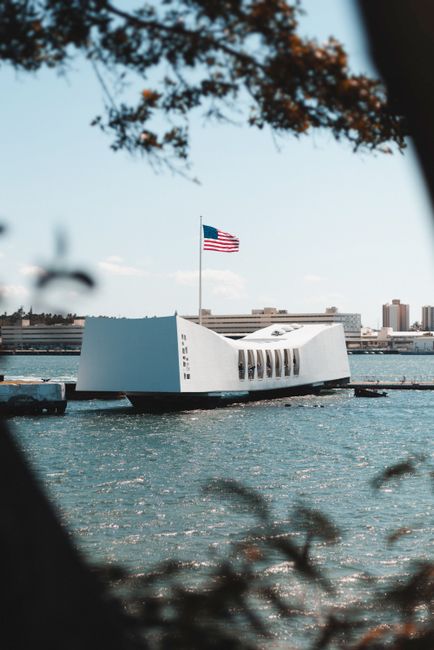
Pearl Harbor National Memorial
Pearl Harbor National Memorial, about 30 minutes west of Waikīkī, honours the attack of 7 December 1941, when 2,403 Americans were killed. The USS Arizona Memorial, a white structure built over the sunken battleship, is reached by a Navy boat, and oil still rises from the wreck where 1,102 crew lie. Entry to the visitor centre and Arizona programme is free, but timed tickets should be reserved online for a $1 fee. Nearby, the Battleship Missouri, where Japan surrendered in 1945, the USS Bowfin submarine and the Pearl Harbor Aviation Museum charge separate fees of about $30–40. Bags are not allowed, so bring only essentials.

Diamond Head State Monument
Diamond Head, called Lēʻahi in Hawaiian, is a volcanic tuff cone formed about 300,000 years ago and Honolulu's most famous landmark. A 1.3 km trail climbs about 170 m from the crater floor to the summit through tunnels, stairs and old military bunkers built in the early 20th century. From the top, views stretch over Waikīkī, the city and the Pacific. Out-of-state visitors must reserve online, with entry about $5 per person plus $10 for parking. Allow about 1.5–2 hours. Start early in the morning, as there is little shade and it gets hot. Bring water and wear good shoes.
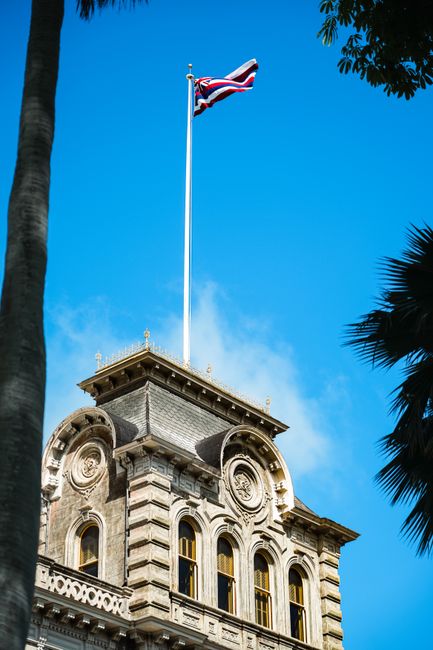
ʻIolani Palace
ʻIolani Palace, completed in 1882 in downtown Honolulu, was the home of King Kalākaua and Queen Liliʻuokalani, the last monarchs of the Hawaiian Kingdom. The palace had electricity and telephones before the White House. After the 1893 overthrow, the queen was held prisoner here. Restored rooms show the throne room, royal portraits and original furniture. Guided tours cost about $30 and self-led audio tours about $25; book ahead. Across the street stands the gilded King Kamehameha I statue, decorated with long lei on 11 June, Kamehameha Day. Visit the nearby Hawaii State Capitol and Washington Place as well.
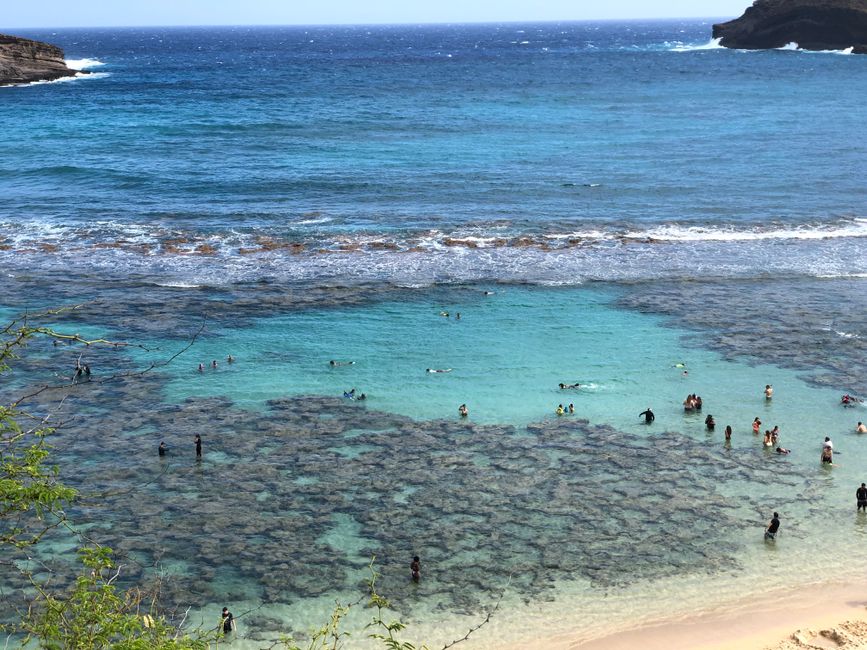
Hanauma Bay Nature Preserve
Hanauma Bay, about 30 minutes east of Waikīkī, is a curved bay inside a volcanic crater, protected as a marine reserve since 1967. Its shallow coral reef is home to around 400 species of fish and green sea turtles, making it the most famous snorkelling site on Oʻahu. All visitors watch a short conservation video before entering. Entry costs $25 for non-residents, plus $3 parking, and reservations open online two days ahead and sell out quickly. The preserve is closed on Mondays and Tuesdays. Go early, use reef-safe sunscreen and never touch or stand on the coral.
Bishop Museum
The Bishop Museum, founded in 1889 by Charles Reed Bishop in memory of his wife, Princess Bernice Pauahi Bishop, is the largest museum in Hawaii and holds the world's greatest collection of Hawaiian and Pacific artefacts. Highlights include royal feather cloaks, carved images of gods, a full-size sperm whale skeleton and the three-storey Hawaiian Hall, built of Hawaiian koa wood. A planetarium explains how Polynesians navigated by the stars. Admission costs about $35 for adults. The museum is in the Kalihi area, about 20 minutes from Waikīkī by car or bus. Allow at least three hours.

Mānoa Falls Trail
The Mānoa Falls Trail is a 2.6 km round-trip hike through tropical rainforest in the Mānoa Valley, just 15 minutes from Waikīkī. The path passes giant banyans, bamboo groves and ginger plants to a waterfall about 45 m high. Scenes from Jurassic Park and Lost were filmed in the valley. The trail is often muddy and slippery, so wear shoes with grip and bring insect repellent. Swimming under the falls is not allowed because of falling rocks and bacteria. Parking at the trailhead costs about $7. Nearby, the Lyon Arboretum has more than 5,000 tropical plant species.
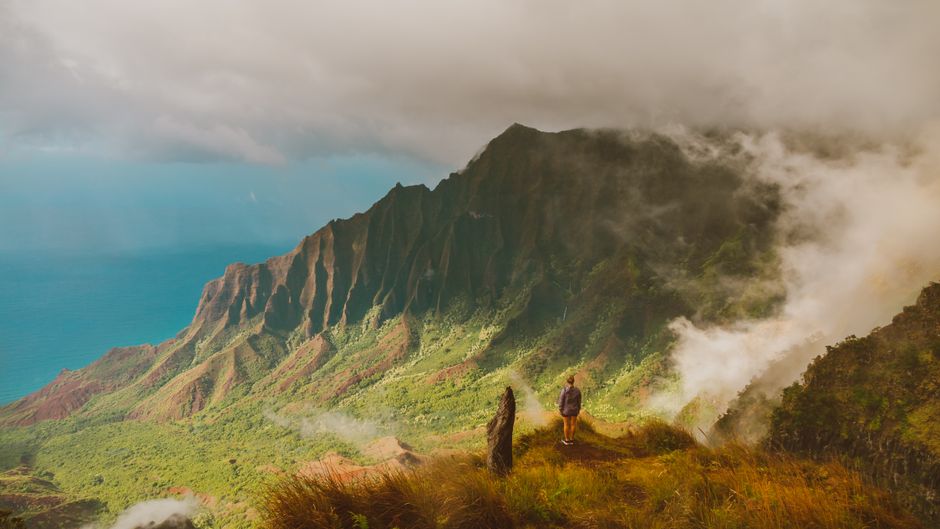
Nuʻuanu Pali Lookout
The Nuʻuanu Pali Lookout sits about 300 m above sea level on the cliffs of the Koʻolau Range, 20 minutes from downtown. It offers sweeping views of Oʻahu's windward coast, from Kāneʻohe Bay to Chinaman's Hat island. In 1795 Kamehameha I's forces won the Battle of Nuʻuanu here, a key step in uniting the Hawaiian Islands. Strong winds often blow through the pass, so hold on to hats. Parking costs about $7 for non-residents. Combine the stop with a drive along the scenic Pali Highway to Kailua and Lanikai beaches. Bring a light jacket, as it can be cool and rainy.
History
Polynesian voyagers reached the Hawaiian Islands by canoe around 1,000 years ago, navigating by stars, waves and birds. On Oʻahu, chiefs ruled districts that ran from mountain to sea, and the name Honolulu means sheltered bay in Hawaiian. In 1795 Kamehameha I conquered Oʻahu at the Battle of Nuʻuanu, where his forces drove defenders over the Pali cliffs, and he went on to unite the islands into one kingdom. Honolulu's deep harbour attracted whalers, traders and missionaries, and in 1845 King Kamehameha III made it the capital. Sugar and pineapple plantations brought workers from China, Japan, Portugal, Korea and the Philippines, shaping the islands' mixed population. In 1893 American businessmen overthrew Queen Liliʻuokalani, and the United States annexed Hawaii in 1898. On 7 December 1941 the Japanese attack on Pearl Harbor drew the United States into the Second World War. Hawaii became the 50th state in 1959, and jet travel soon turned Waikīkī into a major resort. Today about 350,000 people live in the city and around 1 million on Oʻahu.
Culture
Honolulu blends Native Hawaiian traditions with Asian, Polynesian and American influences, creating the most ethnically diverse city in the United States, where no single group forms a majority. The spirit of aloha, meaning love, compassion and welcome, shapes daily life, along with the idea of ʻohana, or extended family. Hawaiian language, once suppressed, has revived through immersion schools, and you will hear words such as mahalo (thank you) and pau (finished) everywhere. Locals speak Hawaiian Pidgin, a creole mixing English, Hawaiian, Japanese, Portuguese and other languages. Hula, both ancient kahiko and modern ʻauana, is a living art taught in hālau schools, and the ukulele, brought by Portuguese immigrants in 1879, became the sound of the islands. Food culture is famous for plate lunches, poke, spam musubi and shave ice. Surfing, born in ancient Hawaii and spread worldwide by Duke Kahanamoku from Waikīkī, remains part of everyday life. Flower lei are given to mark arrivals, graduations and celebrations.
Climate
Spring
20–28°C
March to May is warm and fairly dry, with 26–28°C days, cooling trade winds and sea temperatures around 24–25°C. It is o…
Summer
23–31°C
June to August is the warmest and driest period, with 29–31°C days, steady trade winds and sea temperatures of 26–27°C. …
Autumn
22–30°C
September to November stays warm, with 28–30°C days and the warmest sea of the year at about 27°C. It is a quieter, chea…
Winter
19–27°C
December to February is the high season, with pleasant 25–27°C days, cooler nights near 19°C and more frequent rain show…
Fun Facts
The only royal palace in the United States
ʻIolani Palace in downtown Honolulu, completed in 1882 for King Kalākaua, is the only official royal residence on Americ…
Waikīkī's sand was partly imported
Much of the famous sand on Waikīkī Beach has been brought in from elsewhere. Over the 20th century, development, sea wal…
Surfing's global ambassador came from here
Duke Kahanamoku, born in Honolulu in 1890, won three Olympic gold medals in swimming and spread surfing around the world…
Hawaii has its own time zone without daylight saving
Hawaii uses Hawaii–Aleutian Standard Time and does not observe daylight saving time, so its clocks never change. Honolul…
Hawaiian has only 13 letters
The Hawaiian alphabet has just 13 letters: five vowels, seven consonants and the ʻokina, a glottal stop marked with a re…
Spam is a beloved local food
Hawaii eats more Spam per person than any other US state, about 7 million cans a year. The canned meat arrived with Amer…
Local Cuisine in Honolulu

Poke
Cubes of raw fish, usually ʻahi tuna, seasoned with soy sauce, sesame oil, sea salt, seaweed and green onion. Poke has been eaten in Hawaii for centuries and is sold fresh by the pound in supermarkets and fish shops. A poke bowl with rice costs about $15–20. Ono Seafood and Fresh Catch are popular local spots.
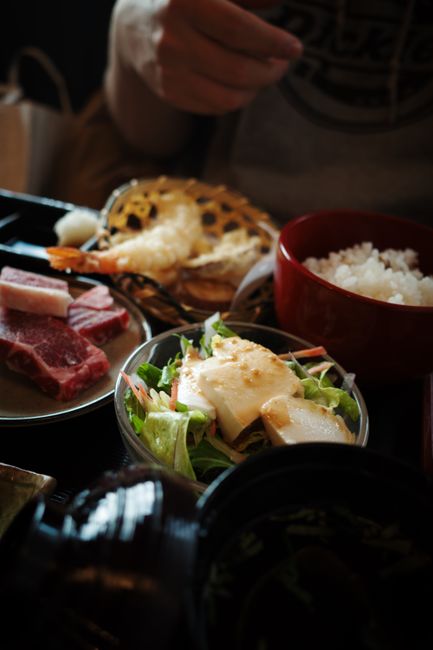
Plate lunch
A working-class meal born on the plantations, with two scoops of white rice, one scoop of macaroni salad and a main such as teriyaki chicken, kalua pork or chicken katsu. It reflects Hawaii's Japanese, Chinese, Filipino and Hawaiian roots. Rainbow Drive-In, open since 1961, is a classic. A plate lunch costs about $13–18.

Spam musubi
A block of rice topped with a slice of grilled Spam glazed in sweet soy sauce, wrapped in a strip of nori seaweed. It is a popular snack for beach days, sold in convenience stores, cafés and markets across Honolulu. It was inspired by Japanese onigiri. Each one costs about $2–4, making it one of the cheapest bites in the city.

Shave ice
Finely shaved ice, as soft as snow, soaked in colourful fruit syrups such as lilikoʻi, guava and coconut, often served over vanilla ice cream or sweet azuki beans. It came to Hawaii with Japanese plantation workers. Matsumoto's in Haleʻiwa and Waiola in Honolulu are famous. A cup costs about $5–9.
Kalua pig
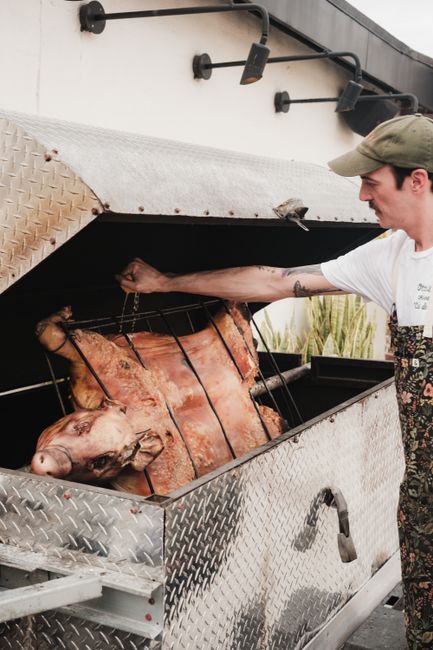
Whole pig slow-cooked for many hours in an imu, an underground oven of hot stones and banana leaves, until the smoky meat falls apart. It is the centrepiece of the traditional lūʻau, often served with poi, lomi salmon and haupia coconut pudding. Restaurants also serve it as part of a plate lunch for about $14–18.

Malasadas
Fried Portuguese doughnuts without a hole, rolled in sugar and sometimes filled with custard, chocolate or haupia coconut cream. They came to Hawaii with Portuguese plantation workers in the late 19th century. Leonard's Bakery, open since 1952, is the most famous spot in Honolulu. Each one costs about $1.50–3. Eat them hot.
Practical Travel Information
Transport & Accessibility
International Transport
Daniel K. Inouye International Airport (HNL), about 15 km west of Waikīkī, is the main gateway to Hawaii, with direct flights from many US mainland cities, Japan, South Korea, Australia, New Zealand and Canada. Flights take about 5–6 hours from California and around 11 hours from New York. Inter-island flights by Hawaiian Airlines and Southwest connect Honolulu to Maui, Kauaʻi and the Big Island in 30–50 minutes. Cruise ships, including Norwegian Cruise Line's Pride of America, stop at Honolulu Harbor near Aloha Tower.
Local Transport
TheBus is Oʻahu's public bus network, with fares of $3 or a $7.50 day cap with a HOLO card, and routes covering the whole island, including Pearl Harbor and the North Shore. The Skyline rail line, Honolulu's first metro, opened in stages from 2023 and runs in the western part of the city, with extensions toward downtown planned. Waikīkī Trolley lines link major sights. Biki bike-share stations are common in Waikīkī and downtown. Taxis and ride-hailing are easy to find. Traffic can be heavy at rush hour, especially on the H-1 freeway.
Safety & Health
Personal Safety
Honolulu is generally safe for tourists, but property crime is common. Never leave valuables in rental cars, even in the trunk, as car break-ins at beaches and trailheads are frequent. Keep an eye on belongings on the beach. Some areas have visible homelessness, which rarely affects visitors. Ocean safety is the biggest risk: swim at beaches with lifeguards, read warning signs and never turn your back on the sea, as waves and currents can be strong, especially on the north shore in winter. Stay on marked hiking trails and avoid closed ones. In an emergency, call 911.
Medical Services
Honolulu has good hospitals, including The Queen's Medical Center downtown, the state's main trauma centre, and Straub Medical Center, both with 24-hour emergency departments. Healthcare is very expensive without insurance, so travel insurance with medical cover is essential. Urgent care clinics in Waikīkī treat minor injuries for about $150–250. Pharmacies such as Longs Drugs (CVS) and Walgreens are easy to find. Tap water is safe. Strong sun can cause sunburn quickly, so use reef-safe sunscreen, wear a hat and drink plenty of water. Watch out for jellyfish about 8–10 days after a full moon.
Budget & Costs
Travel Costs
Honolulu is expensive. A hostel bed costs $50–80, a mid-range Waikīkī hotel $220–380 and a luxury beachfront hotel from $500, plus taxes of about 18–19% and resort fees of $30–60 per night. A plate lunch costs $13–18, a poke bowl $15–20, dinner at a mid-range restaurant $50–80 per person and a cocktail $15–20. A bus ride costs $3, Hanauma Bay $25, Diamond Head $5 plus parking and a lūʻau $150–250. A mid-range traveller should budget $280–450 per day, excluding car rental.
Budget Tips
Stay slightly away from the beachfront or choose hotels without resort fees. Eat at plate lunch spots, food trucks and supermarkets such as Foodland, where fresh poke is cheaper than in restaurants. Use TheBus with a HOLO card and its daily fare cap. Enjoy free beaches, sunsets, free hula shows at Kūhiō Beach and hikes such as Mānoa Falls. Rent a car only for days you leave Waikīkī. Visit in April–May or September–October for lower prices. Check happy hours in Waikīkī for cheaper food and drinks.
Culture & Traditions
Social Norms
Life in Honolulu is relaxed and follows island time, so be patient and friendly. Locals greet each other with aloha and thank with mahalo. Remove your shoes before entering homes. Respect sacred sites, called heiau, and never take lava rocks or sand as souvenirs. Do not touch or approach sea turtles and monk seals, as it is illegal and harmful; stay at least 3 m from turtles and 15 m from seals. Use reef-safe sunscreen, as some chemicals are banned. Tipping of 18–22% is expected. Drive politely, let others merge and avoid honking.
Cultural Activities
Attend a lūʻau with kalua pig, hula and fire-knife dancing, or watch the free hula show at Kūhiō Beach. Visit the Polynesian Cultural Center in Lāʻie, about an hour north, to learn about cultures from Samoa, Tonga, Fiji and Tahiti. Take a lei-making or ukulele lesson at Waikīkī hotels. Join the Aloha Festivals in September, the Merrie Monarch-inspired hula events, or King Kamehameha Day parades on 11 June. Explore Chinatown's markets and art galleries, and see Hawaiian quilts and royal artefacts at the Bishop Museum and ʻIolani Palace.
Unique Experiences in Honolulu
Drive or take TheBus to the North Shore to watch big-wave surfers at Waimea Bay, Banzai Pipeline and Sunset Beach in winter, when waves reach 6–9 m. Stop at Haleʻiwa town for shave ice and shrimp trucks. In summer the same beaches are calm for swimming and snorkelling.
Visit Pearl Harbor early in the morning and take the boat to the USS Arizona Memorial, then board the Battleship Missouri, where the Second World War ended. Reserve Arizona tickets online for a $1 fee. Allow a full morning to see the main sites.
Snorkel with tropical fish and green sea turtles at Hanauma Bay, a volcanic crater turned marine reserve. Entry costs $25 for non-residents, and reservations open two days ahead. Arrive early, use reef-safe sunscreen and keep your distance from turtles. Lockers and snorkel gear can be rented on site.
Watch humpback whales from a boat between December and April, when thousands migrate to Hawaiian waters to breed and give birth. Whale-watching cruises from Waikīkī and Kewalo Basin cost about $50–120 and last two to three hours. Sightings are common in January to March.
Take a surfing lesson on Waikīkī's gentle waves, where Duke Kahanamoku once surfed. Two-hour group lessons cost about $80–150, including board and rash guard, and most beginners stand up on their first day. Book a morning slot for calmer water and smaller crowds.
Travel Recommendations for Honolulu
Explore beyond Waikīkī. Kailua and Lanikai offer calm turquoise water and fewer crowds, the North Shore has big waves an…
Respect the ocean and wildlife. Swim at lifeguarded beaches, read warning signs, keep your distance from turtles and mon…
Plan for high costs. Choose hotels without resort fees, eat plate lunches and poke from supermarkets, and use TheBus wit…
Learn a little about Hawaiian culture and history before you go. Visit ʻIolani Palace and the Bishop Museum, use Hawaiia…
Book Hanauma Bay, Diamond Head and Pearl Harbor reservations online as early as possible. Hanauma Bay tickets open two d…