Chicago
Updated October 19, 2026
Also known as: The Windy City, Chi-Town, The Second City
Main Landmarks in Chicago

Millennium Park and Cloud Gate
Millennium Park, opened in 2004 on the edge of the Loop, is Chicago's most visited public space, home to Anish Kapoor's Cloud Gate, known as the Bean. The 10 m high sculpture is made of 168 polished stainless steel plates and reflects the skyline and clouds. Nearby, the Crown Fountain shows faces of local residents on two 15 m glass towers, and Frank Gehry's Jay Pritzker Pavilion hosts free concerts in summer. In winter, an ice rink opens in the park. Entry is free and the park is open daily from 06:00 to 23:00. Visit early in the morning for reflection photos without crowds.
Art Institute of Chicago
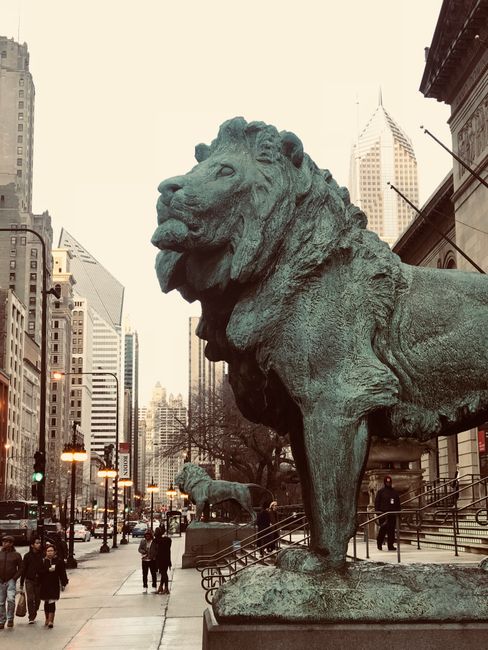
The Art Institute of Chicago, founded in 1879 on Michigan Avenue, is one of the oldest and largest art museums in the United States, with about 300,000 works. Highlights include Grant Wood's American Gothic, Edward Hopper's Nighthawks, Georges Seurat's A Sunday on La Grande Jatte and one of the best collections of Impressionist paintings outside Paris. The two bronze lions at the entrance are city icons. The Modern Wing by Renzo Piano, opened in 2009, connects to Millennium Park by a footbridge. Admission costs about $30–35 for non-residents. Allow at least three hours, and arrive at opening to see the most famous paintings.

Chicago Riverwalk and Architecture River Cruise
The Chicago Riverwalk is a 2 km promenade along the south bank of the Chicago River downtown, lined with cafés, wine bars, boat docks and public art. From here, architecture boat tours glide past more than 40 landmark buildings, including the Wrigley Building, Marina City's corn-cob towers and the Tribune Tower. The official Chicago Architecture Center River Cruise lasts 75 minutes and costs about $55–60, with expert guides. Cruises run from spring to November. Book a sunset cruise for the best light, and sit on the upper deck. Kayak tours on the river are another option for active travellers.

Willis Tower Skydeck
Willis Tower, completed in 1973 as the Sears Tower, rises 442 m and was the tallest building in the world for 25 years. Its Skydeck on the 103rd floor offers views of up to four states on clear days: Illinois, Indiana, Michigan and Wisconsin. The Ledge, glass boxes extending 1.3 m outside the building, lets visitors stand above the street 412 m below. Tickets cost about $32–40 depending on the time. Queues can be long on summer afternoons, so go early in the morning or near sunset. An alternative, 360 Chicago in the former John Hancock Center, has the TILT experience.

Navy Pier
Navy Pier, opened in 1916, stretches about 1 km into Lake Michigan and is one of the most visited attractions in the Midwest. It has restaurants, shops, the Chicago Children's Museum, the Chicago Shakespeare Theater and the Centennial Wheel, a 61 m Ferris wheel with enclosed gondolas and views of the skyline. Boat tours, speedboat rides and dinner cruises depart from the pier. Summer fireworks are held on Wednesday and Saturday nights. Entry to the pier is free, while the wheel costs about $20. Walk to the end of the pier for the best skyline views and fewer crowds.

Field Museum and Museum Campus
The Field Museum of Natural History, founded in 1893, is one of the largest natural history museums in the world, with about 40 million specimens. Its star is Sue, the most complete Tyrannosaurus rex skeleton ever found, and visitors also see Egyptian mummies, the man-eating lions of Tsavo and a hall of precious stones. It stands on the Museum Campus beside the Shedd Aquarium and the Adler Planetarium, all on the lakefront with superb skyline views. Admission costs about $30–45 for basic entry, more for special exhibitions. CityPASS can save money if you plan to visit several museums. Allow at least three hours.

Wrigley Field
Wrigley Field, opened in 1914 in the Lakeview neighbourhood, is the second-oldest ballpark in Major League Baseball and the home of the Chicago Cubs. Its ivy-covered outfield walls, hand-operated scoreboard and rooftop seats on surrounding buildings create an old-time atmosphere. The Cubs won the World Series in 2016, ending a 108-year wait. Tickets cost about $20–150 depending on the game, and stadium tours are available for about $30–40. The surrounding Wrigleyville area fills with bars before and after games. Take the Red Line to Addison station, as parking is very limited.

Lincoln Park and Lincoln Park Zoo
Lincoln Park is Chicago's largest public park, stretching about 11 km along the lakefront north of downtown, with beaches, ponds, gardens and paths for walking and cycling. Inside, the Lincoln Park Zoo, founded in 1868, is one of the oldest zoos in North America and one of the few major zoos that are completely free. The Lincoln Park Conservatory, opened in the 1890s, has a tropical palm house, also free. Nearby, North Avenue Beach offers volleyball and skyline views. The Lakefront Trail is perfect for cycling with a Divvy bike. Visit on a summer weekday morning.
History
Chicago grew where the Chicago River meets Lake Michigan, a key portage between the Great Lakes and the Mississippi used for centuries by the Potawatomi and other nations. The first non-Native settler was Jean Baptiste Point du Sable, a trader of African descent who built a farm here in the 1780s. Fort Dearborn was built in 1803, and Chicago was incorporated as a city in 1837 with about 4,000 people. Canals and railways turned it into the hub of the American Midwest, handling grain, timber and cattle from the prairies. The Great Chicago Fire of 8–10 October 1871 killed about 300 people and left 100,000 homeless, but the city rebuilt in stone and steel and pioneered the skyscraper. In 1893 the World's Columbian Exposition drew about 27 million visitors and introduced the first Ferris wheel. In 1900 engineers reversed the flow of the Chicago River to protect drinking water in the lake. The 20th century brought jazz and blues, Prohibition-era gangsters such as Al Capone, and the 1973 Sears Tower, now the Willis Tower. Today about 2.7 million people live in the city and around 9.4 million in the metropolitan area.
Culture
Chicago is known for its world-class architecture, but also for its working-class pride, friendly locals and fierce sports loyalties. Neighbourhoods have strong identities, from the Mexican murals and taquerias of Pilsen to the Polish bakeries of Avondale, the Greek tavernas of Greektown and the Black cultural heritage of Bronzeville, birthplace of much Chicago blues. Music runs deep: Chess Records recorded Muddy Waters and Chuck Berry here, and house music was born in Chicago clubs in the early 1980s. Comedy is another speciality, as The Second City theatre launched stars from Bill Murray to Tina Fey. The city's museums, including the Art Institute and the Field Museum, are among the best in the country. Summers are celebrated with beaches, festivals and outdoor concerts, while winters are long, cold and windy. In 2025, Chicago-born Robert Prevost became Pope Leo XIV, the first American pope, a source of local pride. Locals are proud of their deep-dish debates too.
Climate
Spring
2–20°C
March to May is changeable, from cold days near 5°C to warm afternoons above 20°C, with frequent rain and cool winds off…
Summer
18–29°C
June to August is warm and lively, with 26–30°C days, humid spells and summer storms. It is the best season for beaches …
Autumn
5–23°C
September and October are often the most pleasant months, with mild 15–24°C days, clear skies and colourful leaves in th…
Winter
-10–1°C
December to February is cold and windy, with -5 to 1°C days, nights often below -10°C and occasional heavy snow. Wind ch…
Fun Facts
The city is named after a wild onion
The name Chicago comes from shikaakwa, a word in the Miami-Illinois language for a wild garlic or onion plant that grew …
Engineers made the river flow backwards
In 1900, Chicago completed the Sanitary and Ship Canal and reversed the flow of the Chicago River, so that it ran away f…
The river turns green every March
Every year on the Saturday before St. Patrick's Day, Chicago dyes its river bright green in a tradition that began in 19…
The Ferris wheel was invented here
The first Ferris wheel was built for the World's Columbian Exposition of 1893 by engineer George Washington Gale Ferris …
The Windy City nickname may not be about wind
Chicago is breezy, but it is not even among the windiest cities in the United States. Many historians believe the nickna…
The first American pope comes from Chicago
In May 2025, Cardinal Robert Prevost, born in Chicago in 1955 and raised in the suburb of Dolton, was elected pope and t…
Local Cuisine in Chicago

Chicago-style hot dog
An all-beef frankfurter in a poppy seed bun, dragged through the garden with yellow mustard, bright green relish, onions, tomato slices, a pickle spear, sport peppers and celery salt. Ketchup is strongly discouraged by locals. The style grew from Depression-era stands in the 1930s. Famous spots include Portillo's and Superdawg. A hot dog costs about $5–8.

Italian beef sandwich
Thin slices of seasoned roast beef simmered in their juices, piled onto a long Italian roll and topped with spicy giardiniera or sweet peppers. Locals order it dipped, so the whole sandwich is soaked in gravy. It was created by Italian immigrants in the early 20th century and became famous worldwide through the television series The Bear. A sandwich costs about $10–15.
Deep-dish pizza
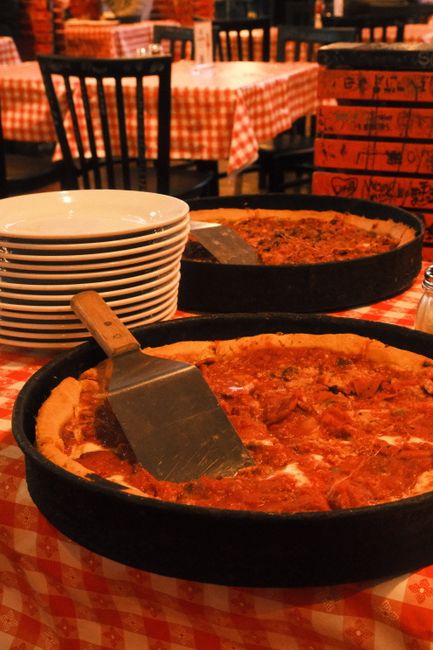
A tall, buttery crust filled with mozzarella, sausage and other toppings, with a chunky tomato sauce on top, baked in a deep pan. It was first served at Pizzeria Uno in 1943. Lou Malnati's and Giordano's are popular choices. It takes about 45 minutes to bake, so order early. A medium pizza costs about $25–35 and feeds two to three people.

Tavern-style pizza
A thin, crispy, cracker-like pizza cut into small squares, known as party cut, that many locals actually prefer to deep dish. It was born in neighbourhood taverns after World War II as a snack for drinkers. Toppings often include fennel sausage and giardiniera. A large pizza costs about $20–30 at classic spots such as Vito & Nick's.

Garrett Popcorn Chicago Mix
A sweet-and-salty mix of crunchy caramel corn and cheese popcorn, sold warm from Garrett Popcorn Shops, founded in Chicago in 1949. Queues often form outside the downtown shops on Michigan Avenue. It is a popular gift for visitors to take home. A small bag costs about $5–8, and larger tins are sold for travel.
Maxwell Street Polish
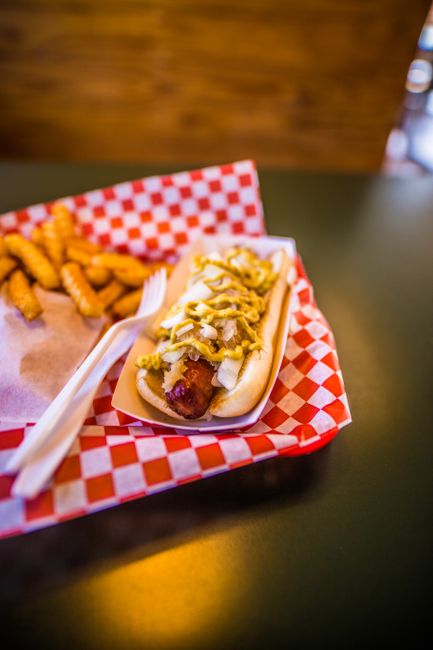
A grilled Polish sausage on a bun topped with grilled onions, yellow mustard and sport peppers, a classic from the old Maxwell Street market on the Near West Side, where it was created in 1939. Stands near the University of Illinois Chicago campus still serve it day and night. It costs about $6–9, a filling street-food meal.
Practical Travel Information
Transport & Accessibility
International Transport
O'Hare International Airport (ORD), about 27 km north-west of downtown, is one of the busiest airports in the world and a major hub for United and American Airlines, with direct flights to Europe, Asia and Latin America. Midway International Airport (MDW), 16 km south-west, mainly serves domestic flights. Chicago Union Station is the hub of the Amtrak network, with trains to New York, Washington, D.C., New Orleans, Los Angeles and Seattle, including the scenic California Zephyr. Long-distance buses connect Chicago with Milwaukee, Detroit and other Midwest cities.
Local Transport
Chicago has an excellent public transport system. The CTA 'L' trains run on eight colour-coded lines, including the Blue Line to O'Hare and the Orange Line to Midway, with fares of about $2.50 and buses at about $2.25. Pay with a Ventra card or a contactless bank card. Day passes cost about $5 for one day. Divvy bike-share has hundreds of stations, and the Lakefront Trail is ideal for cycling. Water taxis link Navy Pier, the Riverwalk and Chinatown in summer. Taxis and ride-hailing are easy to find. Driving downtown is slow and parking costs $20–50 per day.
Safety & Health
Personal Safety
Chicago's downtown, River North, the Magnificent Mile, the Museum Campus, Lincoln Park and other areas popular with tourists are generally safe, especially during the day and early evening. Violent crime is concentrated in specific neighbourhoods on the South and West Sides, far from most tourist sights. Watch for phone snatching and pickpocketing on busy streets and on 'L' trains, especially late at night. Avoid empty train cars and quiet platforms after dark. In winter, take care on icy pavements. Swim only at guarded beaches, as Lake Michigan can have dangerous currents. In an emergency, call 911.
Medical Services
Chicago has excellent hospitals, including Northwestern Memorial Hospital downtown, Rush University Medical Center and the University of Chicago Medical Center, all with 24-hour emergency departments. Healthcare is very expensive without insurance, so travel insurance with medical cover is essential. Urgent care clinics treat minor issues for about $150–250. Pharmacies such as Walgreens and CVS are easy to find. Tap water from Lake Michigan is safe and of good quality. In winter, protect yourself from frostbite with warm clothing, and in summer stay hydrated during heat waves.
Budget & Costs
Travel Costs
Chicago is cheaper than New York or San Francisco but still expensive. A hostel bed costs $40–70, a mid-range hotel $160–280 and a luxury hotel $350 or more, plus hotel taxes of about 17.5%, among the highest in the country. A hot dog costs $5–8, an Italian beef $10–15, a deep-dish pizza $25–35 and dinner at a mid-range restaurant $40–70 per person. An 'L' ride costs about $2.50, the Art Institute about $30–35, the Willis Tower Skydeck $32–40 and an architecture cruise $55–60. A mid-range traveller should budget $220–350 per day.
Budget Tips
Visit free attractions such as Millennium Park, the Lincoln Park Zoo and Conservatory, the Riverwalk, the Chicago Cultural Center and the lakefront beaches. Buy a CityPASS if you plan to visit several major museums. Use the 'L' and day passes instead of taxis. Eat hot dogs, Italian beef and tavern-style pizza at local spots rather than downtown tourist restaurants. Look for free summer concerts at the Pritzker Pavilion and Grant Park Music Festival. Visit in spring or autumn for lower hotel prices than in summer, and avoid major conventions.
Culture & Traditions
Social Norms
Chicagoans are known for being friendly, down-to-earth and proud of their city, often described with the phrase Midwestern nice. People hold doors, chat in queues and give directions willingly. On the 'L', let passengers off before boarding and remove your backpack in crowded cars. Tipping of 18–22% is expected in restaurants. Sports loyalties are serious: the North Side supports the Cubs and the South Side the White Sox. Never put ketchup on a Chicago-style hot dog in front of locals. Dress for the weather rather than fashion in winter.
Cultural Activities
See a comedy show at The Second City, where many famous comedians began. Listen to live blues at Buddy Guy's Legends or Kingston Mines, and jazz at the Green Mill, a 1907 club once frequented by Al Capone. Watch the Cubs at Wrigley Field, the Bears, the Bulls or the Blackhawks. Join Lollapalooza or the free Chicago Blues Festival in summer. Visit the National Museum of Mexican Art in Pilsen and the DuSable Black History Museum. Explore Chinatown, Greektown and Little Italy, and see the river turn green for St. Patrick's Day.
Unique Experiences in Chicago
Take the Chicago Architecture Center River Cruise, a 75-minute journey through the canyon of skyscrapers along the Chicago River with expert guides explaining more than 40 buildings. Tickets cost about $55–60, and cruises run from spring to November. Choose a sunset departure for golden light on the towers.
Step onto The Ledge at the Willis Tower Skydeck, a glass box extending 1.3 m outside the 103rd floor, with the street 412 m below your feet. Tickets cost about $32–40. Visit at sunset for both daylight and city lights, or early in the morning to avoid queues.
Cycle the Lakefront Trail, a 29 km path along Lake Michigan, with views of beaches, harbours and the skyline. Divvy bike-share day passes cost about $15–20. Stop at North Avenue Beach, Navy Pier and the Museum Campus along the way.
Catch an improv comedy show at The Second City in Old Town, where performers such as Bill Murray, Tina Fey and Stephen Colbert started their careers. Tickets cost about $30–60, and late-night improv sets are cheaper. Book ahead on weekends.
Spend an evening listening to live blues at Buddy Guy's Legends in the South Loop or Kingston Mines in Lincoln Park, where bands play until late. Cover charges cost about $15–25. Chicago blues shaped rock music, and this is the best place to hear it live.
Travel Recommendations for Chicago
Do the architecture river cruise early in your trip. It gives you a clear understanding of the city's layout and history…
Explore neighbourhoods beyond downtown. Pilsen has Mexican murals and food, Wicker Park and Logan Square have independen…
Use the 'L' and buses with a Ventra card or contactless bank card. Trains are fast and reach most attractions, including…
Plan around the weather. Summer and early autumn are best for the lakefront, festivals and cruises, while winter is very…
Try the local food beyond deep-dish pizza. Order a Chicago-style hot dog without ketchup, an Italian beef dipped with gi…